Mr. Heater MH540T Review — a compact propane heater that brings real heat to cold garages, patios, and tailgates
At a Glance
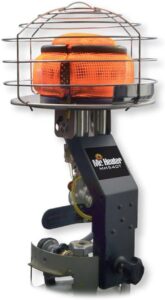
KEY FEATURES
- Heat output: 30,000 / 36,000 / 45,000 BTU (Low / Med / High)
- Runtime (manual estimate, 20 lb tank): ~14h (Low), ~12h (Med), ~9.5h (High)
- Coverage style: radiant "all-around" warmth; many users aim it by tilting the head toward seating zones
- Controls: Hi / Med / Lo regulator; push-button thermoelectric safety valve
- Safety: tip-over shutoff; very hot surfaces — keep clearances from combustibles (manual guidance)
- Portability: mounts to a standard propane tank — no cords, no extension leads
PROS
- “Massive” radiant heat for garages, patios, tailgates, camps
- No electricity needed — quiet operation with no fan
- 3 heat levels (Low / Med / High) for warm-up and maintaining comfort
- 540°-style coverage plus tilt helps aim warmth toward seating zones
- Easy to attach to a standard propane tank for quick setup
- Sturdy build; tip-over shutoff is appreciated
CONS
- Uses propane quickly on High; runtime varies widely
- Heat tends to rise unless you angle it or add a reflector
- Wind can cause flame-out unless you shield it
- First-time lighting can take patience (hold the button longer)
- Missing screws or a bent cage from shipping is mentioned in reviews
- Safety concern: very hot surfaces — keep kids and pets well away
Editor's Choice
Based on rigorous testing & Amazon customer feedback
🔥 Will This Heater Work For Your Room?
Answer a few quick questions about your space to see if this heater is a good match.
The Original 540-Degree 45,000 BTU Tank Top Radiant Propane Heater has a very specific personality: it doesn’t try to be subtle, and it definitely doesn’t try to be “smart.” It’s the kind of heater people buy because they’re tired of freezing in the garage, tired of a cold patio ruining the vibe, or tired of loud forced-air heaters that sound like a leaf blower with ambition.
This review is built from what owners consistently report after using it in real places — garages, workshops, screened porches (with ventilation), campsites, tailgates, and outdoor pop-up setups.
TL;DR verdict
If you want a lot of radiant heat without electricity, this is one of the most-loved “strap it to a propane tank and get warm” solutions out there. People rave about the heat output, the simplicity, and how fast it makes a cold space feel usable.
Just don’t expect miracles in wind, and don’t expect “gentle background warmth.” This thing is more like: step back two feet or you’ll start negotiating with the thermostat gods.
The kind of heat it delivers (and why it feels different)
Most electric space heaters warm the air. This heater warms you — and anything nearby — with radiant heat. That’s why customers keep describing it as “campfire-like” and why it can feel intense even when the air temperature hasn’t fully caught up yet.
In garages and workshops, that radiant effect is exactly what people want. Multiple owners describe flipping it on, doing a quick warm-up on High, and then dropping down to Low once the space is comfortable.
Outdoors, the same thing applies: it’s less about heating the entire world and more about creating a warm zone where people naturally gather.
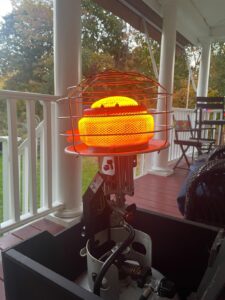
Heat direction: “360°” is real, but aiming still matters
One of the most repeated user tips is also the simplest: tilt the head toward people.
A lot of owners say the warmth is noticeable all around, but the strongest heat tends to rise, so you get better results when you angle it toward chairs, a workbench, or the area where everyone’s standing. Some people even get creative and add a DIY reflector to push heat down and outward — basically turning “nice heat” into “why am I sweating in December?”
If you’re using it for a group, the popular move is to keep it more upright so everyone gets a share. If you’re using it for one side of a space, tilting it makes a bigger difference than most people expect.
Real-world speed: why people keep calling it a “life saver”
The most consistent praise is how quickly it changes the mood of a cold space.
Garage users often describe going from “I can see my breath” to “okay, I can work” in a short window — especially compared to electric options that take longer to feel effective in larger, drafty areas. Tailgaters and outdoor event folks describe it as the reason they can stay outside longer without layering up like they’re crossing Antarctica.
There’s a pattern in the comments: people don’t just like it — they buy a second one, or they buy it as a gift after friends experience it once.
Noise: blessedly simple, blessedly quiet
A lot of folks compare it to torpedo-style heaters or anything forced-air. The difference is immediate: no fan roar, no “engine room” sound, no rattling duct vibe.
You’ll still hear that it’s operating, but customers consistently describe it as quiet enough for conversation, which is exactly what you want on a patio or at a tailgate.
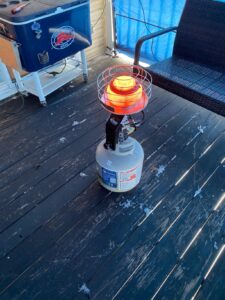
Propane use: the tradeoff for big heat
Here’s the honest part: big heat costs fuel.
Plenty of owners say it runs through propane faster than they’d like on High. Others are perfectly happy with the runtime because the heat is so strong they don’t need to run it on High for long. A common strategy is:
- High for a quick warm-up
- Medium for “get comfortable”
- Low for maintaining the zone
A few people also mention dialing the tank valve carefully to fine-tune output, but if you’re not comfortable doing that, stick with the built-in settings and focus on positioning.
Wind and weather: the thing no one can fully cheat
The number one “outdoor reality check” is wind.
Some users report flame-outs on windy days, and many say it works best when you can shield it — under a canopy (with safe spacing), near a wall that blocks gusts, or simply positioned so it’s not taking wind head-on. If you’re buying it for open, windy spaces, plan for that and treat wind protection as part of the setup.
Ease of use: easy overall, but the first ignition can test your patience
Most owners describe setup as quick: attach it, tighten connections, and you’re basically there.
The part that catches people is lighting the first time. Several reviews mention needing to hold the button longer until the burner glows more fully — and that after the first “break-in” style light, it starts much faster going forward.
Also worth knowing: a few buyers mention the connection and threading can feel awkward at first, and more than one person warns about the reverse-thread behavior on certain fittings. If you’re setting it up in a freezing garage with numb fingers, you’ll understand why people bring that up.
Build quality and durability: mostly strong, with a few outliers
The dominant theme is “this feels heavy duty.” People like the solid feel, and a lot of buyers report using it season after season.
That said, a minority report issues: occasional weld failures, guards breaking after lots of heating cycles, or flow-safety/regulator quirks that needed a replacement part. Customer service experiences are often positive in those cases — several owners say parts were replaced quickly — but it’s still worth knowing those stories exist.
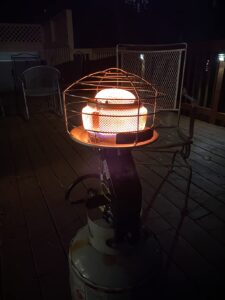
Safety: read this part like you mean it
Customers are very clear about two things:
- It gets extremely hot.
- It sits at a height that can be risky around kids and pets.
People love the warmth, but several reviews basically say: “I wouldn’t run this around small kids.” That’s not drama — it’s realism.
Owners who use it in garages or semi-enclosed areas frequently mention cracked doors, fresh airflow, and CO detectors. The manufacturer also emphasizes ventilation and safe clearances in the manual.
If your use case involves kids, pets, tight spaces, or anything flammable nearby, this is not the heater you casually “set and forget.”
Who this is for
You’ll probably love it if you want:
- Big radiant heat for a garage, workshop, patio, tailgate, or camp setup
- A heater that works without electricity
- Quiet operation and simple controls
- Something that creates a warm “gather here” zone fast
You should skip it (or choose a different style) if you need:
- Gentle, background warmth for long periods without burning fuel
- A heater that performs the same in open wind
- Something you feel comfortable using around small kids or curious pets
- True “whole space heating” for large, open-plan areas
Pros & Cons Analysis
Based on extensive testing and Amazon customer feedback
Pros
- "Serious heat" for garages and workshops — many people say it turns a cold 2-car garage into t-shirt / hoodie weather fast, especially on High to start, then Low to maintain
- Instant radiant warmth (no fan noise) — owners love the quiet, "campfire-like" radiant heat for tailgates, porches, pop-ups, and job sites
- Great for small groups — many say 3–5 people can sit around it and feel warmth, especially in sheltered spots
- 3 heat settings are genuinely useful — people like having Low / Med / High for warm-up vs. maintaining comfort
- Easy setup for most — lots of "up and running in 5 minutes," "simple to attach," and "minimal assembly" feedback
- Portable in a practical way — users like that it mounts to a standard tank so there's no tall tower to store; detach it and hang it in the garage
- Feels sturdy / "heavy duty" — many describe it as solid, well-made, and stable on the tank
- Tip-over shutoff earns trust — people mention peace of mind for tailgates and family use; several saw it shut down when bumped or tilted
- Customer service is often praised — some buyers report fast replacement parts (valves/regulators/guards) when issues popped up
- Works when power is out — people like having real heat without electricity for outages or remote spots
Cons
- Propane can disappear fast — frequent mentions that it "burns through" tanks on High; runtime claims vary a lot depending on wind, temp, and how hard you run it
- Heat often rises up — a common surprise: a lot of heat shoots upward unless you tilt it toward people; several wished for a top reflector to push heat down
- Wind is a real limiter — some report occasional flame-outs on windy days and say you need to shield it or position it carefully
- "Low isn't low enough" for some — multiple buyers wished for a lower-than-low setting to sip fuel and prevent overheating small spaces
- First light can be fiddly — a repeated theme: the first ignition may require holding the button longer until the burner glows fully, then it's easier later
- Bulky + tank hauling — the unit itself is compact, but transporting it means transporting a propane tank, which some call awkward for travel
- Packaging / cosmetic damage happens — some received bent cages, scuffed parts, or banged-up components from weak packaging
- Safety anxiety (especially with kids) — multiple reviewers call out "red hot metal at face level," and recommend extreme caution around children/pets
- Reliability is mixed for a minority — reports include stuck flow-safety mechanisms, occasional "won't light," weld/guard failures, or needing replacement after a couple years
- Not for enclosed indoor spaces — owners repeatedly mention ventilation and CO concerns; some still use it in garages but stress cracked doors + detectors (see manual notes)
Our Verdict
This heater's popularity makes sense. People don't talk about it like a gadget — they talk about it like a tool that fixes a real problem: I want to be outside / in the garage / at the game without freezing.
If you respect what it is (high-output radiant heat) and plan for what it isn't (wind-proof, kid-proof, "whole world heater"), the MH540T earns its reputation the old-fashioned way: it shows up, it works, and it makes cold nights feel doable.
Frequently Asked Questions
Is this heater actually 'hot enough' for a two-car garage?
Many customers say yes — it can take the chill off quickly and make a 2-car garage comfortable, especially if you start on High and then drop to Low. Several note it can feel almost too strong up close.
Does the heat go 360 degrees or mostly upward?
In real use, people say you feel warmth around the unit, but a lot of heat naturally rises. Owners get better results by tilting the head toward where they're sitting, or by adding a DIY reflector to push heat downward.
How hard is it to light the first time?
A common tip from reviewers: the first light can take longer. You often need to hold the gas-release/safety button until the burner glows evenly, then later starts are much faster.
Is it loud?
Compared with torpedo-style forced-air heaters, customers describe this as quiet. You'll know it's on, but there's no fan roar.
How long does a 20 lb tank last in real life?
The manual lists up to ~9.5 hours on High, with longer runtimes on Medium and Low, but customer reports vary widely. Wind and running on High nonstop can shorten runtime noticeably.
Does wind affect it?
Yes. Some reviewers report occasional flame-outs on windy days. The best workaround is shielding it from wind and aiming it so the thermocouple is opposite the wind direction (a tip also called out in the manual).
Is it safe around kids and pets?
Customers strongly advise caution. The burner area gets red-hot and sits around face level when mounted on a tank. Tip-over shutoff helps, but most owners keep kids and pets well away.
Can I use it inside a garage or enclosed porch?
Many reviewers do — but they stress ventilation and CO detectors. The manufacturer warns this is an unvented heater that requires adequate ventilation and should not be used in living quarters or enclosed areas without proper airflow.
What are the most common 'gotchas' during setup?
A few buyers mention missing screws (sometimes attached to the instruction sheet), awkward bracket alignment, and that the POL connection uses a left-hand thread — so it tightens 'lefty tighty.'
Why won't it light or why does gas stop flowing?
Some owners describe a flow-safety mechanism that trips if the tank valve is opened too quickly. Opening the propane valve slowly and following shutdown steps (turning off the tank first) helped in several reports.
Technical Specifications
| Brand | Mr. Heater |
|---|---|
| Model / SKU | MH540T (ASIN: B01BE8FVUK) |
| Heater type | Portable outdoor propane radiant heater |
| Form factor | Tank top (mounts to propane cylinder) |
| Heating method | Radiant |
| Heating element | Radiant burner head |
| Max heat output | 45,000 BTU (≈ 13,200 W equivalent) |
| Fuel type | Propane (LP) |
| Coverage (manufacturer claim) | 100 sq ft |
| Speeds / levels | 3 heat settings: 30,000 / 36,000 / 45,000 BTU (Low / Med / High) |
| Heating head / coverage style | 360° burner head + 180° multi-directional bracket (tilting) |
| Ignition / valve type | Push-button thermo-electric valve; match light backup (per product info) |
| Noise level | Not specified (radiant — no fan; users often describe it as quiet) |
| Oscillation | No (tilt/aim bracket instead of oscillation) |
| Controls | Manual control knob (Hi / Med / Lo) |
| Timer | No |
| Power source | Gas-powered (propane) (no electricity needed) |
| Mounting / placement | Mounts directly to a 20 lb propane tank (cylinder mount) |
| Indoor use | Outdoor use only |
| Dimensions (D × W × H) | 10.4" × 10.4" × 17.5" |
| Weight | 5.62 lb |
| Color | Black / Silver |
| Special features | Adjustable temperature, adjustable tilt head, noiseless (no fan), tip-over protection |
| Safety certification | Not specified |
| Included in the box | Heater (tank-top head) (propane tank not included) |
| Warranty | 2-year limited |
| Recommended room types / uses | Outdoor patios, decks, tailgating, camping, job sites, garages/workshops (with appropriate ventilation and safety precautions) |
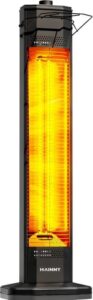
HAIMMY UEH520 Review — Fast, quiet infrared heat outside
There’s cold, and then there’s patio cold — the kind where you tell yourself you’ll only sit outside for five…
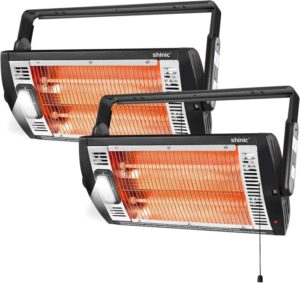
Shinic QGW15-602 Review — Quiet Ceiling Heat for Garages
There’s cold, and then there’s garage cold — the kind where your fingers stop cooperating and even holding a wrench…
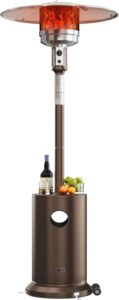
EAST OAK UR48BN1 Patio Heater Review — Big Warmth, Handy Table Top, Real-World Quirks
Some patio heaters are basically outdoor decor that happen to glow. Others become the spot everyone drifts toward with a…
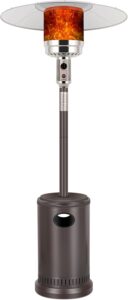
Hykolity Patio Heater Review — Big 50,000 BTU Heat, Wheels, and the Wind Question
Hykolity patio heater review: the cozy-maker for small patios (if you secure it) There are two kinds of “chilly evening”…


