HAIMMY UEH520 Review — Fast, quiet infrared heat outside
At a Glance
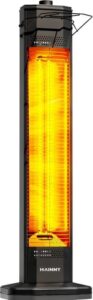
KEY FEATURES
- Power / Coverage: 1500W (600W / 900W / 1500W), best treated as a warm-zone heater up to ~120–150 sq ft*
- Heat levels: 3 levels (low/medium/high) (some customers mention 9-step control on their unit)
- Aim/Mounting: floor-standing tower design (directional radiant heat — no oscillation noted by customers)
- Controls: on-unit control + remote control (customers also mention a timer)
- Work light: Not included
- Safety: tip-over protection, overheat protection, safety guard (listing also mentions a UL-certified power cord)
PROS
- Heats up fast and feels warm within seconds.
- Quiet, fan-free warmth works well for conversation.
- Remote control makes it easy to adjust from your seat.
- Stable base plus tip-over shutoff feels safer around pets and kids.
- Slender tower design fits small patios, porches, and corners.
- Strong in enclosed porches and garages when drafts are controlled.
CONS
- Heat can feel short-range — expect best results within a few feet.
- A few owners report buzzing or startup noise that ruins the "silent" vibe.
- Remote use can be confusing, and some report remote failures.
- May not turn on if the safety switch doesn't press fully on soft carpet.
- No oscillation, so warmth stays directional instead of spreading around.
- Drafty spaces and wind cut performance fast unless you run multiple units.
Editor's Choice
Based on rigorous testing & Amazon customer feedback
🔥 Will This Heater Work For Your Room?
Answer a few quick questions about your space to see if this heater is a good match.
There’s cold, and then there’s patio cold — the kind where you tell yourself you’ll only sit outside for five minutes… and then your shoulders start creeping up to your ears.
That’s where the HAIMMY UEH520 shows up in a lot of real-life setups. People plug it in on a screened porch, park it near a patio chair, or roll it into the garage for a workout. The common thread is pretty simple: they want quick warmth in one place, not a whole-home heating overhaul.
Here’s what to know up front: this is infrared radiant heat. Think “warm spotlight,” not “whole-room furnace.” When you’re in front of it, it can feel great. Step away, and the effect drops off fast — and that’s not a defect as much as it’s the nature of radiant heaters.
Quick verdict
If you want quick, quiet warmth for a covered patio, screened porch, balcony corner, or a garage hangout, the UEH520 does what a 1500W radiant tower should do. Customers love the fast heat, the fan-free silence (most of the time), and the convenience of a remote. Just know going in: coverage is the catch. This shines as a warm-zone heater, not a magic wand for big, drafty outdoor spaces — and a small number of owners report reliability hiccups like buzzing or a heater that stops heating until it’s unplugged.
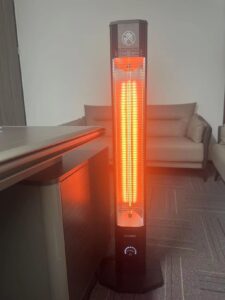
What the heat feels like in real life
The warmth hits you fast. Buyers regularly describe feeling it within seconds, and a few compare it to that “sun on your skin” comfort rather than the dry blast you get from some fan heaters.
That’s the upside of infrared: it warms you (and nearby surfaces) directly. So if you’re sitting in a chair with the heater aimed your way, you can feel cozy even if the air around you still feels crisp.
The catch is the same thing that makes it nice: it’s directional. This isn’t the kind of heater that gradually raises the temperature of every corner of a space. It’s more like standing near a campfire — great when you’re close, less impressive once you step off to the side.
Coverage — the realistic story
Coverage is where expectations can make or break your experience. Some customers are genuinely thrilled using it in enclosed patios and screened porches. You’ll see people describe it keeping a small porch comfortable, or helping them actually enjoy winter evenings outside.
On the other hand, a few owners say the heat only projects a few feet. One person using it near a hot tub liked it, but still wished they’d bought something hotter because they had to stand closer than expected in temps in the 30s.
So what’s the pattern? Enclosure matters a lot. A screened porch with plastic panels, an enclosed three-season room, or a garage with the door shut tends to be the sweet spot. The more open air and wind you introduce, the more you’re basically trying to heat the outdoors — and 1500 watts can only do so much.
If your goal is “take the edge off” in the exact spot you’re sitting, this makes sense. If your goal is “heat my whole deck like it’s my living room,” you’ll probably want multiple heaters or a different type of setup entirely.
Real-world setup tips (the stuff people learn fast)
Treat it like a warm-zone tool. Put it near where you sit or stand most. Radiant heat rewards good placement more than raw wattage.
Drafts are the enemy. Screened porch panels, closed doors, and wind breaks make a bigger difference than people expect.
Use high to warm up, then dial down. A lot of owners say they crank it at first, then lower the setting to maintain comfort without feeling like they’re overdoing it.
Make sure the base is on a firm surface. One customer points out the safety switch under the unit may not fully engage on some carpets, and the heater won’t run unless it’s properly pressed.
Think about your circuit before you buy multiples. If you plan to run more than one heater on a porch, some buyers found they needed more available amperage.
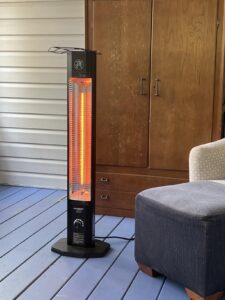
Controls and daily ease of use
Day-to-day, this is a “plug it in and go” heater. Customers like that you don’t have to babysit it — you choose a heat level and you’re warm quickly.
The remote is a big part of the appeal. Plenty of people love adjusting heat from their chair, and some mention a dedicated place to store the remote so it doesn’t vanish into the couch cushions.
That said, the remote experience isn’t perfect for everyone. One owner flat-out called it poorly designed and not intuitive, especially with minimal instructions. Another person had a remote that didn’t work — though they also mention customer service replacing it quickly, which is the kind of detail you want to hear when you buy a heater for everyday comfort.
Quick note on “how many heat levels?”
The product info lists 3 heat levels (600W/900W/1500W), but customers sometimes describe 9-step control and even refer to “level 9.” That suggests there may be variants floating around under a similar listing or naming. Bottom line: check what your specific unit says on the control panel, and don’t be surprised if the “levels” language varies.
Build quality and reliability — the honest story
This is where the picture gets mixed.
On the good side, lots of owners call the heater sturdy and well-built for the price. People mention a stable base, a solid feel once assembled, and safety features that actually matter in real homes — especially if you’ve got dogs, kids, or a narrow porch walkway. There are also buyers who liked it enough to purchase a second one for another space, which is usually a good sign.
Now for the less fun part: a few customers report reliability issues. One person said the heating element died quickly after limited use. Another described inconsistent operation where it would stop heating and only work again after being unplugged for a while. Someone else mentions a heater that stopped heating, then started working again after resting for a day — which is the kind of “huh?” story that makes you want to keep your return window in mind.
Noise complaints show up here too. Most people describe it as quiet, but a small group says their unit developed a buzzing sound, sometimes loud enough to be a deal breaker. One buyer even returned it specifically because the buzzing wasn’t what they signed up for when they picked a fan-free radiant heater.
So what’s the practical takeaway? Quality control seems a little inconsistent. You might get a unit that runs great for seasons. You might get one that acts up early. Inspect it when it arrives, test every setting, and don’t ignore new noises or odd behavior — that’s when returns and warranty support matter most.
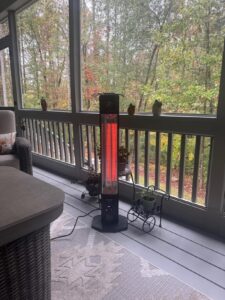
Noise — quiet enough for work, sleep, and conversation?
For most people, the big win is the lack of fan noise. Owners talk about using it for porch conversations, quiet mornings, and relaxed evenings without the constant whoosh you get from blower heaters.
But it’s not universally silent. A few people report buzzing — sometimes right away, sometimes after months. If you’re planning to use this in a bedroom, home office, or anywhere you’re sensitive to sound, it’s worth testing early while you can still swap it if your unit ends up being one of the noisy ones.
In other words: often quiet, occasionally not. That’s the real-world story customers tell.
Safety features that actually matter
The safety features get real praise here. Tip-over shutoff and overheat protection are exactly what you want in a portable heater you might use around pets, kids, or tight outdoor spaces.
A top guard also gets mentioned as a nice touch — especially by buyers using it around family or in busy porch setups.
One practical thing to remember: safety features can sometimes look like “the heater is broken” when they’re actually just doing their job. The base safety switch note is a good example — if the heater is on an uneven or soft surface and the switch isn’t properly pressed, it may refuse to run. Annoying in the moment, but it’s also the kind of design that helps prevent accidents.
Where owners are actually using it
Customer setups are all over the map, which is honestly a good sign for a portable heater:
- Screened porches and enclosed patios show up constantly, including three-season spaces people are trying to turn into “almost year-round.”
- Garages and man caves are popular — workouts, projects, and just hanging out without freezing.
- Balconies and small decks come up because the slim tower design doesn’t eat up floor space.
- Hot tub areas show up a lot for that warm-up moment after you get out.
- Indoor rooms like offices and craft rooms come up too, especially for people who’d rather warm the room they’re in than crank central heat.
It’s pretty versatile — just remember that “versatile” doesn’t mean “all-powerful.” Placement and enclosure still matter.
Maintenance notes
There isn’t a ton to maintain, but a little common sense goes a long way. Keep the heater clean and free of dust buildup, especially around the heating area and guards. If your unit ever develops a new buzzing sound or starts acting inconsistent, many owners would tell you the same thing: don’t ignore it — test it, document it, and reach out while you still have support options.
You’ll probably be happy if you want:
- Quick, directional warmth for a covered patio chair or screened porch seating area
- A fan-free heater that usually stays quiet during conversation
- A portable tower that can move between porch, garage, and indoor rooms
- A heater you can turn on high to warm up fast, then dial down
- Tip-over and overheat protection for peace of mind around pets and kids
- A slim footprint that fits balconies and tight corners
- A warm-zone tool for hot tub nights and chilly mornings outside
You might want to skip it if you need:
- True whole-space heating for a big, drafty garage or open deck
- Heat that spreads around the room via oscillation (customers say it doesn’t)
- Guaranteed “always silent” operation (a few units buzz)
- A thermostat-style heater that cycles automatically to hold a set temperature
- A product where reliability feels bulletproof (some owners report early failures or quirks)
Pros & Cons Analysis
Based on extensive testing and Amazon customer feedback
Pros
- Instant "sun-on-skin" warmth — buyers describe feeling heat within seconds, which is exactly what you want on a cold porch morning or post–hot tub cooldown.
- Quiet enough for conversation — many people like that there's no fan blast, so it doesn't drown out dinner talk or a movie night outside.
- Remote control convenience — lots of users love changing heat from the couch or patio chair, and some appreciate a dedicated spot to store the remote.
- Multiple heat settings feel genuinely useful — customers talk about cranking it high to warm up fast, then backing down to maintain comfort.
- Sturdy, stable base — owners with pets mention feeling safer because it's tough to knock over, and tip-over shutoff adds another layer of confidence.
- Easy assembly for most people — several buyers say setup takes about 10–15 minutes and the pieces fit together securely.
- Works well in enclosed / covered spaces — screened porches, lanais, enclosed patios, and garages are where customers report the best results.
- Useful safety features — tip-over and overheat shutoff get called "well thought out," especially around kids, pets, and tight porch walkways.
- Portable, slim footprint — buyers like that it tucks into a corner and is light enough to move between porch, garage, and indoor rooms as needed.
- Can be a cost-saver vs heating the whole home — some people use it to warm the rooms they're actually in, instead of blasting central heat everywhere.
Cons
- Coverage is more "zone heat" than whole-space — some owners say it only really reaches a few feet, and you'll need to stand closer than expected in colder temps or breezy areas.
- Not always silent in real life — a handful of customers mention buzzing or a new noise on startup, which is extra annoying because there aren't moving parts to "explain" it.
- Remote experience can be hit-or-miss — a few owners call it confusing or poorly explained, and others report a dud remote (even when the heater itself is strong).
- Listing vs real-world settings mismatch — the product info mentions 3 levels, but some buyers describe 9 steps on their unit, which can be confusing when you're buying accessories or comparing models.
- Safety switch can prevent startup on soft flooring — one customer points out the bottom safety button may not fully engage on certain carpets, so the heater simply won't run until it's on a firm surface.
- Instructions aren't always detailed enough — a few owners wanted clearer assembly/operation guidance, and one mentioned leftover screws or a screw that didn't seat perfectly.
- Wind and drafts steal the heat — people in breezier setups (or true outdoor exposure) say performance drops fast unless you're very close or running multiple units.
- Reliability isn't perfect — some customers report heating elements dying early or the unit needing an unplug "reset" before it heats again.
- No oscillation / rotation — multiple owners wish it rotated to spread warmth; as-is, you're working with a fixed direction of radiant heat.
- Returns can be frustrating — at least one buyer reports a pricey return label and extra hassle packing a large item, which stings more when the unit fails early.
Our Verdict
The HAIMMY UEH520 makes the most sense when you treat it like what it is: a portable radiant tower that creates a warm spot where you're sitting or working. In enclosed patios and screened porches, people describe it as the difference between "we went inside after 10 minutes" and "we stayed out for the whole game." In garages, it's often used to make workouts and projects tolerable without heating the entire house.
If you want fast, fan-free warmth — and you're okay with directional heat and the fact that a small number of owners report noise or reliability issues — this is a solid pick for covered outdoor spaces and garage comfort. Test it early, aim it smart, and you'll get the best version of what 1500 watts of radiant heat can offer.
Frequently Asked Questions
How much area does the HAIMMY UEH520 really heat?
Most owners describe it as a warm-zone heater. In enclosed porches and garages it can make a seating area comfortable, but in open or windy setups you will feel it best within a few feet.
Does it heat up quickly?
Yes. Customers regularly mention feeling warmth within seconds, more like sun-on-skin heat than slow whole-room warming.
Is it actually quiet?
Many buyers call it quiet because there is no fan. A smaller group mentions buzzing or a new noise over time, so if you are sensitive to sound, test it early.
Why will the heater not turn on sometimes?
A few owners point to the tip-over safety switch at the base. If it is not fully pressed (some carpets can do this), the unit may not operate until placed on a firm, level surface.
Does it oscillate or rotate?
No. Multiple customers specifically wish it rotated, so plan on directional heat and aim it at the spot you want warmed.
How useful is the remote control?
When it works as expected, people love adjusting heat from a chair. Some say the remote is not intuitive or lacks clear instructions, and a few report a remote that fails.
Is it okay to leave outside in the rain?
The listing notes IPX5 water resistance and customers mention using it through damp conditions like light drizzle. Still, most people treat it like a covered-patio heater and avoid leaving it fully exposed long-term.
Will it trip breakers?
At full power it is a typical 1500W heater, so it can stress older circuits if you run other big loads on the same line. Some porch setups needed more available amperage when using multiple heaters.
Does it have a thermostat that turns heat on and off automatically?
Customers commonly mention heat levels and a timer, but not an auto thermostat that cycles to maintain a set temperature. Many people warm up on high, then dial it down to maintain comfort.
What if it stops heating or needs to be unplugged to work again?
A few owners describe inconsistent behavior where unplugging and letting it rest helps it restart. If you see that pattern, it is usually a sign to contact support while you are still within return or warranty windows.
Is it good for hot tub setups and winter patios?
Many buyers like it near a hot tub or on a covered patio because it is quick and directional. The catch is distance — in colder temps you may need it closer than you expected for that post-soak comfort.
Technical Specifications
| Brand | HAIMMY |
|---|---|
| Model / SKU | UEH520 (ASIN: B0FPG2JC9V) |
| Heater type | Portable indoor/outdoor electric infrared radiant patio heater |
| Form factor | Tower (floor-standing) |
| Heating method | Radiant (infrared) |
| Heating element | Dual carbon heating elements (listed) |
| Max heat output | 1500 W |
| Voltage | 120 V |
| Amperage | 12.5 A |
| Coverage (manufacturer claim) | Not specified |
| Temperature range | Not specified |
| Speeds / levels | 3 levels: 600W / 900W / 1500W |
| Noise level | Not specified (customers describe as quiet) |
| Oscillation | No (fixed-angle design) |
| Controls | On-unit controls + remote control (remote commonly included) |
| Timer | Not specified (listing mentions timer; varies by version) |
| Power source | Corded electric |
| Mounting / placement | Free standing (floor mount base) |
| Dimensions (D × W × H) | 8.3" × 5.9" × 34" |
| Weight | Not specified |
| Color | Black |
| Special features | Fast heating, 3 heat levels, IPX5 waterproof, Tip-over protection, Overheat protection, Portable handle, Flame-retardant power cord (listed) |
| Safety certification | UL certified (listed) |
| Included in the box | Patio heater (remote included per listing/common customer feedback) |
| Warranty | Up to 3-year warranty / extended warranty (listed) |
| Recommended room types / uses | Screened porch, covered patio, balcony, enclosed patio, garage/man cave, office, basement craft room, hot tub area |
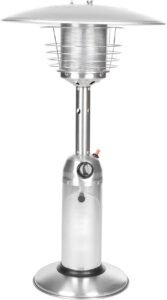
Fire Sense 60262 Tabletop Patio Heater Review — Cozy Up Close, Best Out of the Wind
A small patio heater that works best when you use it the “right” way There’s a specific kind of outdoor…
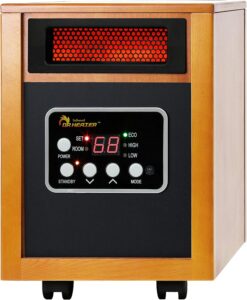
DR. INFRARED HEATER DR-968 Review: quiet warmth that feels stronger than its size
Cold rooms are annoying for a very specific reason — they usually aren’t the whole house. It’s the upstairs bedroom…
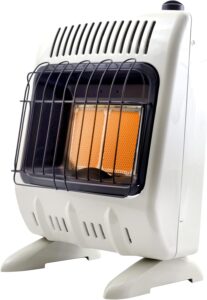
Mr. Heater 10,000 BTU Vent Free Radiant Natural Gas Heater Review: simple backup heat for the rooms you actually use
There’s cold, and then there’s power-outage cold — the kind where the furnace stops, the plug-in heater is useless, and…
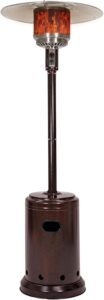
Amazon Basics Patio Heater Review — Big Warmth, Real-World Quirks (Assembly, Wind, Fuel Use)
Amazon Basics patio heater review: the “outside season extender” people actually use There’s a moment every fall where you want…


