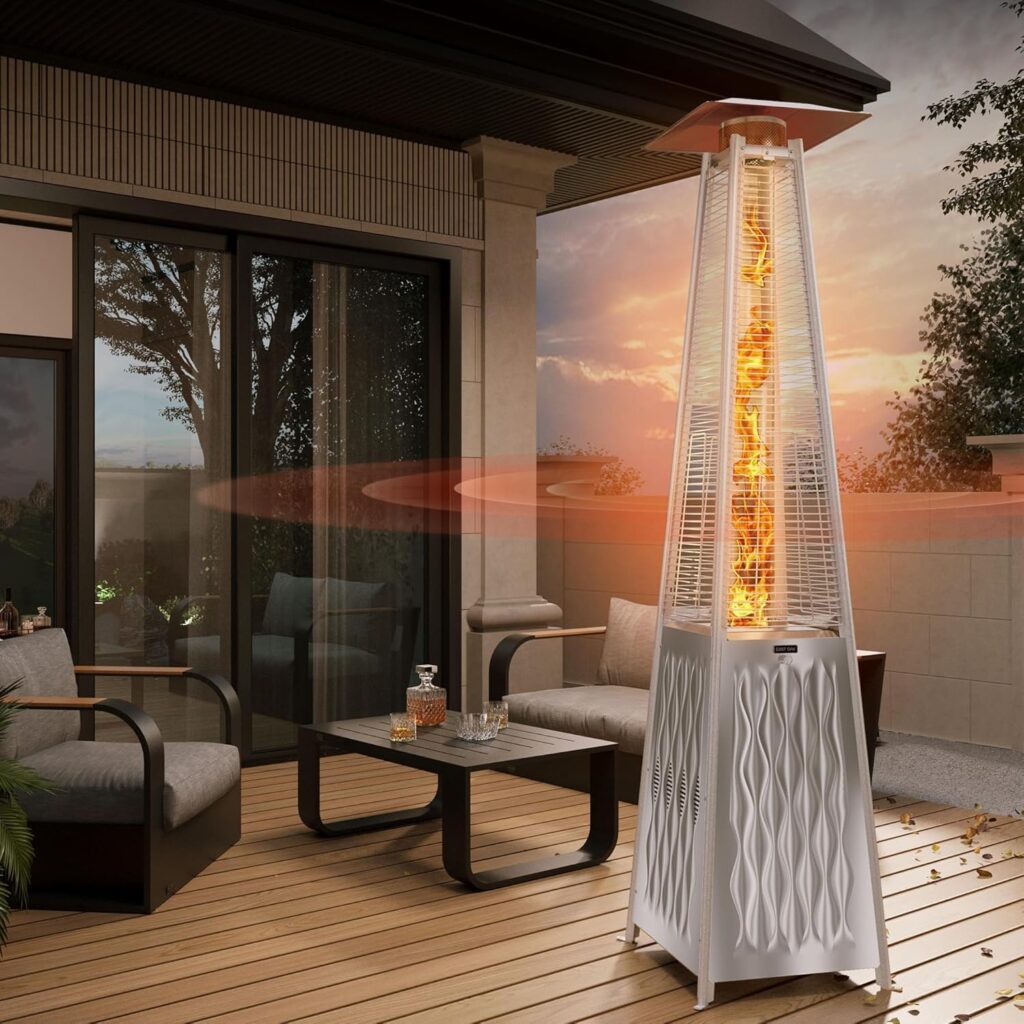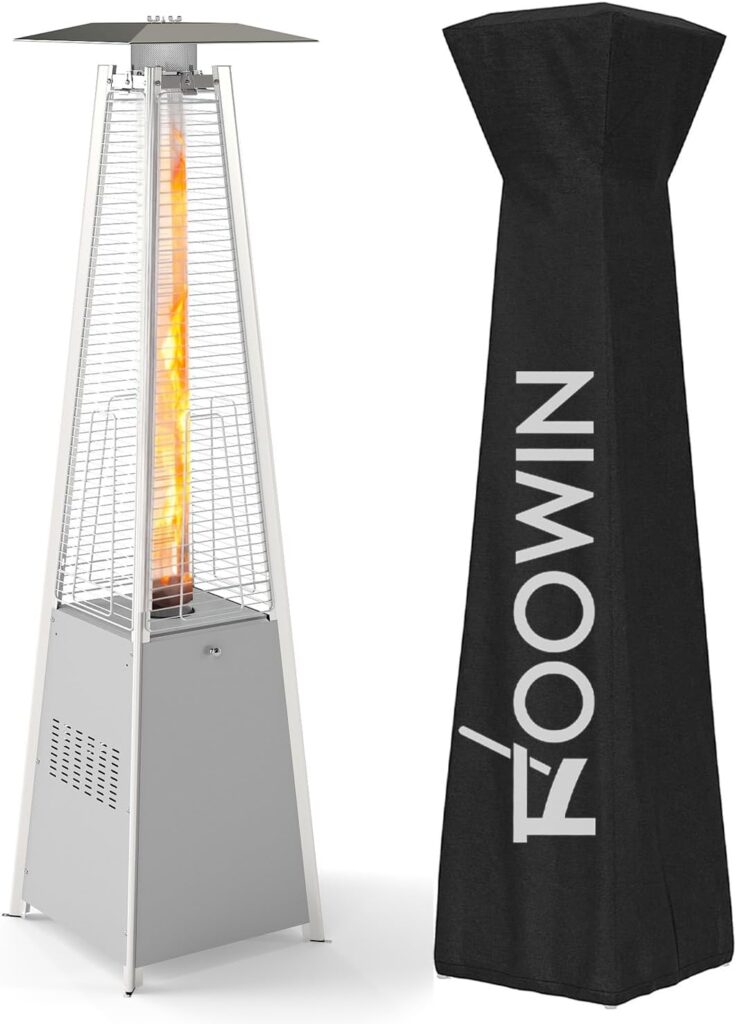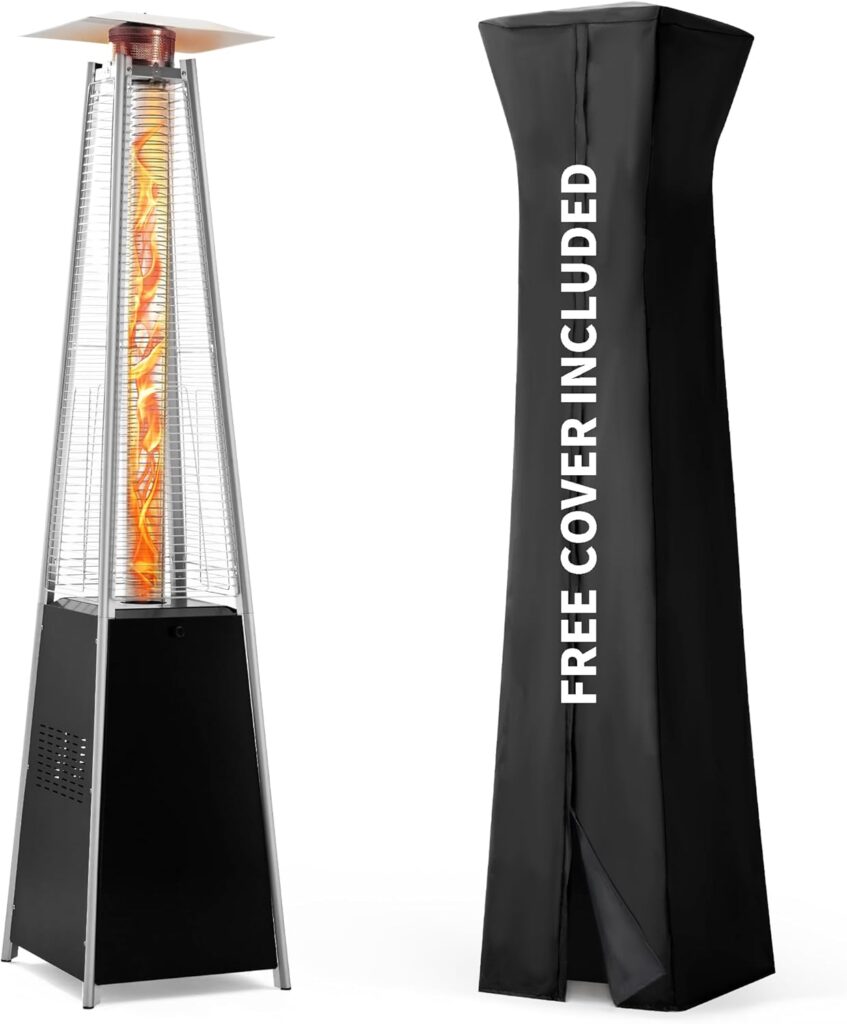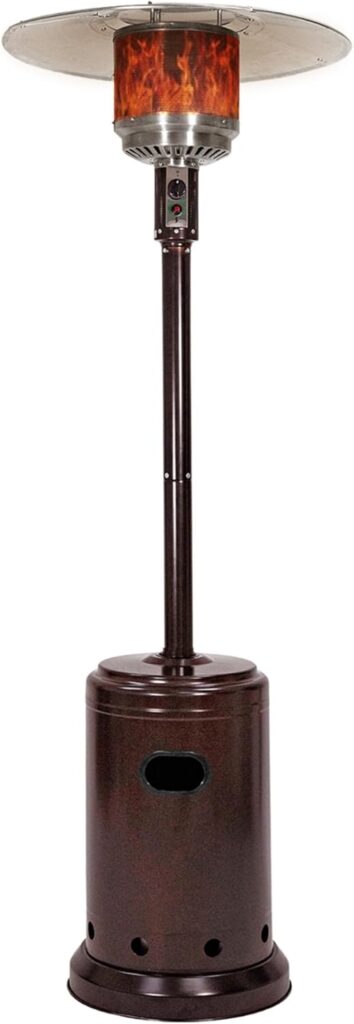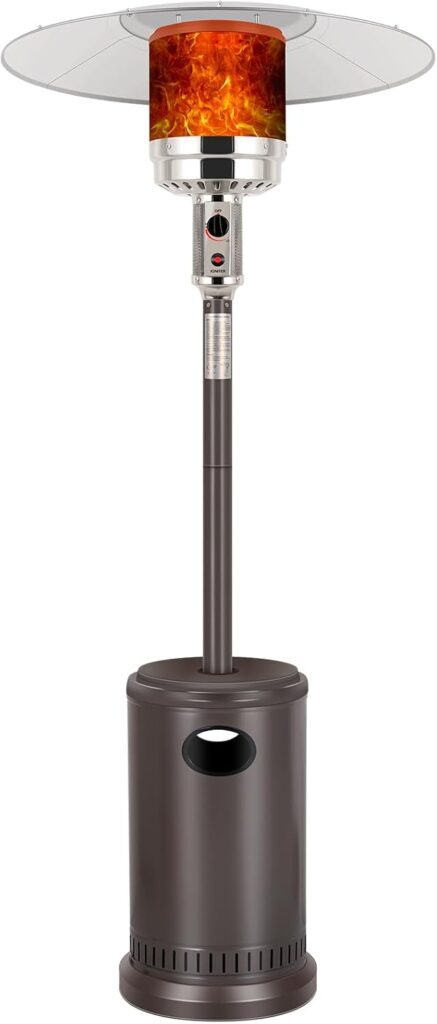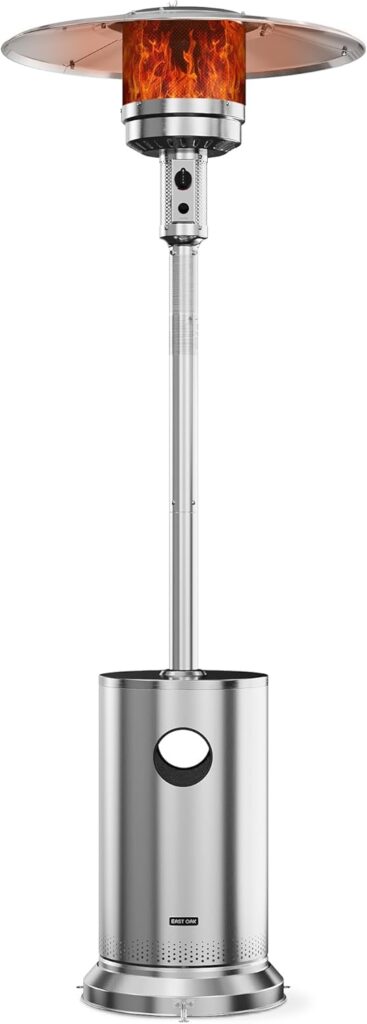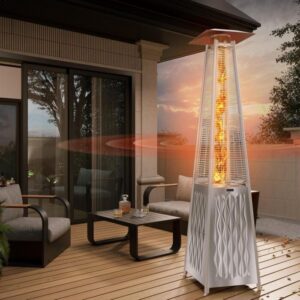
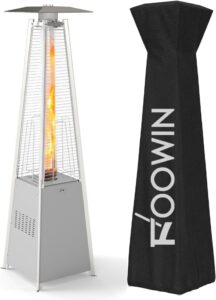
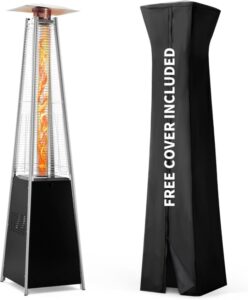
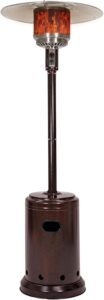
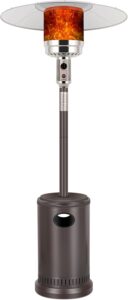
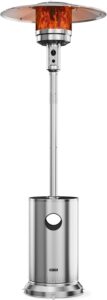
Patio heaters are the classic “one more hour outside” upgrade. Then you run into the surprisingly personal choice: do you want a heater that looks like a fire feature, or one that just makes the whole table feel warmer? A pyramid “glass tube flame” heater and a tall propane patio heater with the traditional “mushroom” reflector can both run on propane, both live on patios year after year, and both promise comfort. Real life is where they split — heat pattern, wind behavior, footprint, and how people naturally gather around them. Pick the style that matches how you actually hang out, and you’ll use it way more.
Choose a mushroom heater if…
- You want the most “everybody feels it” warmth — especially for a patio heater for dining table setups
- Your space is breezy and you’re shopping for a mushroom patio heater windy patio situation
- You host groups and want a wider heat zone for mingling
- You prefer function-first gear that’s familiar and straightforward
Choose a pyramid heater if…
- You want patio heater ambiance as much as heat — that “fireplace vibe” is the point
- Your seating is a cozy cluster (conversation set, loveseat + chairs)
- You’ve got a smaller patio and want a heater that doubles as a centerpiece (best patio heater for small patio vibes)
- You don’t mind being picky about placement, wind, and upkeep
Most people are happiest when…
They treat either heater as zone heat, place it where people actually sit, and stop expecting one unit to warm an entire backyard. Honestly, placement beats specs most nights.
The real-life difference
Both are “zone heaters,” not whole-yard heaters
Customers report the same learning curve with both styles: the heater works best when you build your seating around it. If your chairs are scattered across a big deck, you’ll get pockets of warmth and pockets of “why is it still cold?” That’s normal — propane patio heaters shine in a defined hangout zone, not open-air sprawl.
Where the heat goes
Mushroom (reflector-top) heaters throw heat downward and outward, creating a wider “heat umbrella.” People sitting around a table often say it warms shoulders and upper body first — you feel it above you, not just at knee level.
Pyramid heaters put the flame in a vertical glass tube, which changes the feel. Owners say the heat tends to be more noticeable when you’re closer to the unit, and the visual flame makes the whole experience feel warmer even when the air is chilly. When folks talk about pyramid patio heater heat output, they’re often reacting to the heat pattern, not just the burner size.
Wind: what changes, what doesn’t
Wind steals comfort from both styles. The difference is how forgiving they are about it. Many buyers mention mushroom heaters can still feel decent in a light breeze if you keep people under the reflector zone. Pyramid heaters can be more finicky in gusty spots — the warm pocket shifts faster, and you notice it because the heater is built around that visible flame moment.
Pyramid patio heaters
What owners love
That “warm glow” is the main character. A recurring observation is that pyramid heaters feel like décor, not equipment. People describe a cozy, loungey vibe — the kind of mood lighting that makes the patio feel like an outdoor living room.
They pull people in. Buyers describe guests naturally drifting toward the heater, almost like it’s a fire pit. If your goal is conversation seating and a centerpiece, a glass tube patio heater nails that social gravity.
Great for small hangout zones. Pyramid heaters often “punch above their weight” on smaller patios because everyone’s already close. When the seating is tight, you don’t need a giant heat umbrella — you need a warm focal point.
Common complaints
Wind can mess with comfort fast. Customers consistently mention that a pyramid heater feels best when it’s sheltered. On exposed patios, the heat can feel uneven — one seat is cozy, another is chilly, and everyone keeps scooting around.
The glass tube makes people nervous. Even if the tube is designed to handle heat, owners say they still treat it like a fragile part. Moving the unit, storing it, or even assembling it can come with a little “please don’t crack” anxiety.
Assembly quirks show up more often. Pyramid frames have more panels, more screws, and more “why doesn’t this line up?” moments. Lots of buyers get there in the end, but it’s not always a breezy 20-minute build.
Tip-over worry is real. A pyramid heater can look a bit top-heavy, especially when the wind kicks up. The catch is it might be stable but still feel sketchy until you add weight or place it in a calmer corner.
Heat can be more ‘close-range’ than people expect. Some owners expect the flame tube to heat like a big overhead dome. What they get is more like “stand or sit near it and you’re happy,” not “every seat feels equal.”
Best use cases
- Cozy seating clusters (conversation sets, sectionals, two chairs + coffee table)
- Aesthetic-first patios where vibe matters as much as temperature
- Sheltered spaces (corners, near walls, under cover with good clearance)
- Photo-worthy setups — if you care about ambiance, this style delivers
Practical tips (placement, wind screens, distance, covers, tube care)
Put it where people already hang out. If you park it 10 feet away “just to be safe,” you’ll mostly enjoy the view, not the warmth. Most buyers end up placing it close enough that you can feel heat without roasting your shins.
Use simple wind blocking. A fence line, railing, outdoor curtains, or a well-placed screen can make a huge difference. You’re not trying to build a bunker — just reduce cross-breeze through the seating zone.
Give the tube breathing room. Keep it away from traffic paths, kid/pet chaos, and tight corners where someone will bump it. That lowers the glass anxiety and makes the setup feel calmer.
Cover it when it’s off-duty. Owners say a cover keeps the frame from looking dusty and keeps the glass clearer longer. It’s one of those “set-it-and-forget-it features” moves — five seconds now saves you cleaning later.
Keep the tube clean for the best flame look. Smudges and soot show up fast on glass. A quick wipe (when fully cool) keeps that flame crisp and makes the heater feel higher-end.
Mushroom patio heaters (reflector-top)
What owners love
That classic “heat umbrella” is simple and effective. Many buyers mention the mushroom style feels more functional — turn it on, pull chairs under the halo, and you’re good. It’s not as much of a “figure it out” heater.
Better group comfort — especially for dining. If you’re shopping for a patio heater for dining table, this is often the easier win. People sitting around a table tend to feel like they’re sharing the same warmth instead of fighting for the best seat.
Familiar design, fewer surprises. Owners say expectations match reality: it’s a heater, it heats, and it does the job. You’re not paying extra for a flame show, so it’s easier to judge it purely on warmth and practicality.
Common complaints
Tank access can be annoying. Lots of mushroom heaters hide the propane tank in the base, which looks tidy, but swapping tanks can be awkward. Buyers describe doors that feel flimsy, latches that take a knack, or not much room for hands.
Igniters can get finicky over time. A common theme is “it lights most of the time… until it doesn’t.” Many owners end up learning a routine — slow gas on, wait a beat, then ignite — and keep a long lighter handy just in case.
Height and clearance matter more than you think. These are tall. People mention having to rethink placement under pergolas, near umbrellas, or under low patio roofs. Clearance planning is part of patio heater safety with this style.
It’s not as ‘cozy’ visually. Heat-first people don’t care. Ambiance-first people sometimes do. A mushroom heater feels like patio equipment, not a fire feature — that’s the trade.
Best use cases
- Dining table coverage and longer sit-down meals
- Larger patios where you need a wider comfort zone
- Entertaining (standing, chatting, moving around)
- Heat-first setups where you want function over vibe
Practical tips (reflector alignment, leveling, anchoring/weighting)
Align the reflector properly. If the reflector is slightly off, the heat can feel weirdly directional. Tightening everything evenly and keeping it centered helps the “umbrella” feel more consistent.
Level the base. On pavers or uneven decking, a slight tilt can make the unit feel unstable. A flat spot makes a big difference in confidence — and that matters when people are walking around it.
Add weight if wind is part of your life. Owners say a weighted base or anchoring solution takes the anxiety out of breezy nights. It’s also a smart move for safety if kids, pets, or crowded gatherings are in the mix.
Arrange seats under the halo, not near it. Most complaints about weak heat come from seating that’s just outside the warm zone. Move chairs a foot or two inward and it often feels like a different heater.
Warmth vs ambiance: picking the style you’ll actually use
If warmth is the priority
Go mushroom more often than not. The wider overhead pattern is simply easier for real groups, especially at a table. If your goal is “everyone stays outside longer,” this style usually delivers fewer complaints.
If vibe is the priority
Pyramid is the easy pick. People buy it because they want a visible flame and a warm glow, and owners say it changes the mood of the patio instantly. You’re paying for the feeling, not just BTUs.
If your patio is windy
Mushroom tends to be less moody about breezes, especially when you can keep people under the reflector. Pyramid can still work on a windy patio, but you’ll care more about a sheltered corner or wind blocking.
If you’ve got a small patio
Pyramid often makes sense because it doubles as a centerpiece and the seating is naturally close. Mushroom can still work, but clearance and traffic flow matter more — nobody wants a tall unit in the middle of a tight walkway.
Footprint, stability, and day-to-day living
Footprint and layout
Pyramid heaters look substantial, but they can be easier to tuck into a seating area because they feel like furniture. Mushroom heaters take vertical space and demand overhead clearance, so placement options can shrink fast on covered patios.
Stability vibes
Even stable heaters can feel unstable, and that affects how often people use them. Feedback suggests pyramid owners often add weight for peace of mind. Mushroom owners do the same in windy areas — it’s just less visually dramatic.
Maintenance and upkeep
Mushroom heaters usually win for “low drama” maintenance. Pyramid heaters ask a bit more of you — keeping glass clean, covering it, being careful when moving it. If you love the look, that extra effort feels worth it.