Mr. Heater 10,000 BTU Vent Free Radiant Natural Gas Heater Review: simple backup heat for the rooms you actually use
At a Glance
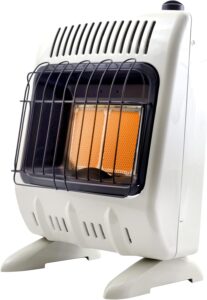
KEY FEATURES
- Power / Coverage: 10,000 BTU/hr, rated up to ~300 sq ft*
- Heat levels: 2 settings (Low / High) plus pilot
- Aim/Mounting: wall mount or floor-secure placement with brackets; fixed forward-facing radiant heat
- Controls: on-unit gas control knob with built-in Piezo ignition
- Work light: No
- Safety: Oxygen Depletion Sensor (ODS), indoor-safe vent-free design per manufacturer, no electricity required
- Size / Weight: 19.25" D × 11.25" W × 23" H, 15.5 lb, Multi
PROS
- Fast, direct radiant warmth works really well in small enclosed spaces.
- No electricity required makes it genuinely useful for outage backup heat.
- Wall mounting is simple enough for many homeowners.
- Piezo ignition keeps daily use simple and fuss-free.
- Fanless operation keeps things quiet in living areas and work zones.
- Strong value for supplemental heat when your room matches the heater's size.
CONS
- It won't heat a large drafty room evenly, especially with high ceilings.
- You still need a proper natural gas hookup and careful vent-free placement.
- Some buyers replace the included anchors and screws with better hardware.
- Controls stay basic — just pilot, low, and high rather than full thermostat-style convenience.
- The warmth feels strongest right in front of the heater, not across every corner.
- A bad unit can spoil the experience, so quality control is worth watching.
Editor's Choice
Based on rigorous testing & Amazon customer feedback
🔥 Will This Heater Work For Your Room?
Answer a few quick questions about your space to see if this heater is a good match.
There’s cold, and then there’s power-outage cold — the kind where the furnace stops, the plug-in heater is useless, and suddenly one room in the house becomes mission control.
That’s exactly the kind of situation where the Mr. Heater F299811 10,000 BTU Vent Free Radiant Natural Gas Heater starts to look smart. Buyers keep coming back to the same reasons: it throws direct warmth fast, it doesn’t need electricity, and it can take the edge off in the parts of the house you actually live in.
Here’s the thing, though — this heater makes the most sense when you treat it like a small-space or zone-heating tool, not a magic box that fixes every cold corner in a big drafty home. Customers who use it in a living room, insulated shop area, mini home, or upstairs room tend to sound happy. People expecting whole-house comfort from one compact gas heater usually don’t.
Quick verdict
If you want quiet, direct warmth without relying on electricity, this heater does what it’s supposed to do. It lights easily, heats fast, and works especially well in smaller enclosed spaces where the warmth has a chance to stay put.
The catch is that it’s still a basic radiant gas heater. You get low, high, and pilot — not a fancy digital control setup. And while it can feel impressively warm in front of it, coverage depends a lot on insulation, ceiling height, and how realistic your expectations are.
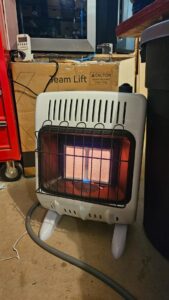
At a glance
| Category | Take |
|---|---|
| Best for | Small rooms, living areas, insulated work zones, backup heat during outages |
| Heat style | Direct radiant warmth — strongest where you sit or stand in front of it |
| Noise | Very quiet |
| Controls | Simple on-unit knob with Piezo ignition |
| Power outage use | Excellent — no electricity required |
| Main limitation | Not ideal for large, open, or tall drafty spaces |
| Installation note | Straightforward for many buyers, but some replace the included hardware |
Performance snapshot
| Area | Rating | What that means in real life |
|---|---|---|
| Direct warmth | 4.7 / 5 | You feel the heat fast when you’re in front of it |
| Small-room heating | 4.3 / 5 | Works well in enclosed, reasonably insulated spaces |
| Whole-room comfort | 3.8 / 5 | Can do it in the right room, but not in every setup |
| Quietness | 4.9 / 5 | No fan noise is a big plus |
| Ease of use | 4.4 / 5 | Ignition and daily control are simple |
| Install hardware quality | 3.4 / 5 | Heater gets better feedback than the included anchors and screws |
What the heat feels like in real life
This heater is all about radiant heat, and that matters. It doesn’t warm a room the same way a fan-forced electric heater does. Instead, it throws warmth outward so you feel it on your body and nearby surfaces first.
That usually means it feels quicker and more immediate than you’d expect from something this size. A few owners say they had to turn it down pretty soon after starting it because it heated their space faster than expected. One buyer using it in a 10 x 25 insulated area said it warms so fast on high that low becomes the better setting pretty quickly.
The feel is closer to sitting near a warm stove than using a tower heater across the room. That can be a huge plus when you want a cozy occupied zone. It also means this heater shines more when you’re using the room intentionally — reading in a living room chair, working at a desk in a shop, hanging out in one end of a mini home — rather than trying to create perfectly even heat from wall to wall.
That’s not a weakness. It’s just the reality of how this style of heater works.
Coverage — the realistic story
Mr. Heater says this model heats up to 300 square feet, and that’s believable in the right setup. But “up to” is doing a lot of work there.
A tight, enclosed room gives this heater a chance to shine. A leaky room with tall ceilings gives it a much harder job. One customer said the radiant warmth could be felt from about 15 feet away in a living room, which sounds promising. Another owner said it heated a 12′ x 40′ mini home very well. Those are the kinds of real-world wins that make this heater appealing.
That said, not every room plays nice with radiant gas heat. One very unhappy buyer said the unit felt like it only made sense on high in a room with 10-foot vaulted ceilings. That lines up with what you’d expect — more air volume and more upward heat drift can make a small heater feel weaker than the spec sheet suggests.
Coverage reality check
| Room / setup | What to expect |
|---|---|
| Small insulated living room | Strong supplemental heat, possibly enough to make the room feel very comfortable |
| Mini home / compact enclosed space | Can work surprisingly well if insulation is decent |
| Upstairs room or bonus room | Good fit if you want targeted warmth without heating the whole house |
| Insulated shop corner or desk area | Very good zone heater |
| Large open room | Less convincing unless you’re only heating one part of it |
| Tall ceiling / drafty space | Performance drops fast |
The sweet spot tends to be smaller indoor spaces where people actually sit still for a while. That’s where radiant heat feels worth it.
Why people buy this heater in the first place
A lot of gas heaters promise warmth. This one has a more specific appeal.
It keeps working when the power goes out
That’s a big deal. Buyers mention emergency heat more than once, and you can see why. When the power is off, even a cheap electric space heater becomes dead weight. This heater doesn’t care. If you’ve got natural gas and a proper setup, you still get heat.
It’s quiet
No fan means no constant hum. No rattly blower. No air noise. In a living room or a work area where background sound gets annoying, that matters more than people realize.
It heats fast
Customers regularly describe it as quick to warm up. That direct radiant feel helps a lot here. You’re not waiting forever for warm air to build up.
It’s simple
Some heaters are overloaded with modes you never use. This one keeps it basic. Turn it on, light it, pick your setting, and you’re done.
Controls and day-to-day use
Daily use seems pretty friendly. The Piezo ignition gets good feedback, and buyers often say it’s easy to light. That’s the kind of feature you end up appreciating every single winter day.
The main control setup is simple: pilot, low, and high. That simplicity is part of the appeal. There’s less to fuss with, and not much to learn.
Still, simple doesn’t mean perfect. This is not the kind of heater that gives you a rich thermostat experience or lots of set-it-and-forget-it features. A few owners mention having to pay attention and adjust it manually depending on how warm the room gets. One buyer was pretty clear that if you want a version with fuller thermostat-style behavior, you’ll want a different model.
Another detail worth knowing: one owner pointed out that low and high don’t seem to work like separate burner tiles switching on one by one. Instead, both appear active, with the high setting simply burning stronger. That’s useful context if you’re shopping based on how finely you want to tune the heat.
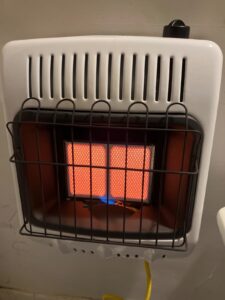
Installation and setup — mostly easy, with one gripe
Most buyers make installation sound pretty manageable. Clear instructions help, and wall mounting seems straightforward for anyone reasonably handy.
Where things get a little less polished is the included hardware. One customer had trouble with the supplied wall anchors and screws and ended up using better metal wing bolts from storage. After that, the install went smoothly.
That tells you something important: the heater itself gets better feedback than every little piece that comes with it.
Setup tips that actually matter
- Use better wall hardware if yours looks weak. It’s a cheap upgrade and can save you frustration.
- Think about where you’ll sit or stand. Radiant heat matters most in the occupied zone.
- Don’t assume “up to 300 sq ft” means every kind of 300 sq ft room. Insulation and ceiling height change the story fast.
- Keep a carbon monoxide detector nearby. That’s just smart with any indoor fuel-burning appliance.
- Read the manual before using it in bedrooms or bathrooms. Local rules and installation requirements can vary.
Build quality and reliability — the honest story
This is where the picture gets a little mixed.
On one hand, buyers often describe the heater as sturdy enough, effective, and worth the money when used the right way. A few owners even mention prior experience with the same brand lasting for years in garages or other spaces, which gives this model some borrowed credibility. That kind of long-term brand trust doesn’t happen by accident.
On the other hand, the feedback isn’t spotless. One buyer says they received a malfunctioning heater and had such a bad experience that they wanted nothing to do with it. That kind of complaint doesn’t mean most units are bad, but it does mean I wouldn’t treat quality control as a guaranteed win.
Here’s how I’d put it: the design seems sound, but you still want to inspect your unit carefully when it arrives. Check the finish, check the hardware, follow the setup directions, and don’t ignore anything that looks off.
Reliability scorecard
| Strengths buyers mention | Complaints buyers mention |
|---|---|
| Easy ignition | Occasional bad unit out of the box |
| Good heat output for size | Included hardware can feel cheap |
| Quiet, no-fan design | Basic controls may feel limiting |
| Solid brand reputation for some owners | Not forgiving in the wrong room setup |
That’s a fair summary of the experience. Plenty of people get exactly what they wanted. A few clearly do not.
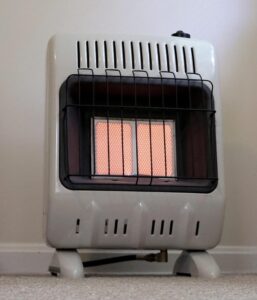
Odor, comfort, and everyday livability
One thing that stands out in the positive feedback is that many owners describe the heater as clean-running, with little to no odor once it’s operating properly. Some specifically mention there’s no black smoke and no smell.
That matters because vent-free gas heat makes people nervous, and honestly, that caution is reasonable. The better user experiences here suggest that when installed and used correctly, the heater can feel surprisingly unobtrusive in everyday use.
Comfort-wise, the heater is best when it’s helping you avoid the “heat the whole house for one room” loop. That’s where it feels smart. If central heat is struggling in one area, or you want a warmer zone without blasting the whole home, this model makes a lot more sense.
Who this heater is for
You’ll probably be happy if you want:
- backup heat that still works when the power is out
- direct, quiet warmth in a room you actively use
- a natural gas heater for a small living area or insulated room
- a wall-mounted supplemental heater that doesn’t need electricity
- simple controls with easy lighting
- a zone-heating solution that takes the edge off quickly
- solid value without paying for a bunch of extra features
You might want to skip it if you need:
- even heat across a large open space
- strong performance in a tall, drafty room
- precise thermostat-style control
- a premium install kit right in the box
- a heater you can treat like a plug-and-play electric unit
Pros & Cons Analysis
Based on extensive testing and Amazon customer feedback
Pros
- Strong heat for the size — Customers consistently mention that this little heater punches above its weight in small rooms, enclosed living areas, and insulated work zones. A few owners say they had to turn it down quickly because it warms up fast.
- No electricity required — A common reason people buy it is backup heat during outages. Owners like that it keeps working when the power is down, which makes it appealing for emergency use.
- Easy ignition — Buyers often call out the Piezo igniter as simple to use, especially for daily on-off use or leaving it on pilot between heating sessions.
- Wall mounting is straightforward — Several owners say installation is pretty simple and the included instructions are easy to follow. For basic wall mounting, this seems approachable for handy users.
- Radiant heat feels direct and immediate — People describe the warmth as something you can feel quickly, even several feet away. That direct heat is a big plus when you want comfort in one part of the room.
- Clean-running experience for many owners — A recurring observation is that buyers report little to no odor once it's running properly. Some specifically say there's no black smoke and no noticeable smell.
- Good fit for supplemental heating — Buyers use it to take the edge off in living rooms, mini homes, insulated shops, and small upstairs spaces without cranking central heat for the whole property.
- Quiet operation — Since there's no fan, this avoids the constant hum you get from many electric space heaters. That makes it better for calm indoor spaces where noise would get annoying fast.
- Strong value for the job — Owners who use it in the right kind of room often say it's worth the money. It's especially appealing for people who want low-cost supplemental heat from natural gas.
- Brand trust helps — Some owners mention using the same brand for years in garages or other spaces without trouble. That kind of long-term familiarity gives this model a little extra confidence.
Cons
- Not a whole-house fix — The catch is that buyers who expect it to heat a large, open, or vaulted space evenly can end up disappointed. One unhappy owner felt it only made sense on high in a tall room.
- Still needs a proper gas setup — You're not dealing with a plug-in appliance here. Installation, gas supply, and safe placement matter more than they do with a basic electric heater.
- Startup can feel a little abrupt — One owner mentions a small puffing effect at ignition before the flame settles down. It doesn't seem to be a deal-breaker, but it's part of the real experience.
- Included hardware gets mixed feedback — Our only real gripe from customer feedback is that some of the supplied anchors and screws feel cheap. A few people ended up swapping in better hardware.
- Heat is strongest in its line of fire — Like most radiant heaters, this shines when you're in front of it. Step off to the side or try to heat every corner, and the effect drops off.
- Vent-free design still makes some buyers cautious — Even when it runs clean, some users are very aware that this is an unvented gas heater. It's the kind of product that makes safety-conscious buyers pay close attention to room setup and ventilation guidance.
- Basic controls limit "set-it-and-forget-it" use — You get two heat settings and pilot, but not the kind of smart control setup some people want. A few owners point out that you'll still need to manage it manually.
- Heat tends to rise — One buyer notes that even though it's radiant, a lot of the warmth still moves upward. That matters in taller spaces or if your seating area isn't lined up well with the heater.
- Quality control doesn't look perfect — At least one buyer received a malfunctioning unit and had a very bad experience. That doesn't define every purchase, but it's a reminder to inspect it carefully when it arrives.
- Floor setup takes extra attention — The product can be secured for floor placement, but feet are not included. If you're planning something other than a straightforward wall install, read the box contents closely.
Our Verdict
The Mr. Heater F299811 works well when your expectations match the product. It’s a compact vent-free radiant natural gas heater made for small-space comfort, quiet operation, and backup heat when electricity isn’t an option. Used that way, it makes a lot of sense.
It’s better for focused warmth than broad, perfectly even heating. Buyers who install it in the right room and use it as supplemental heat tend to sound satisfied. Buyers who expect it to overpower drafts, vaulted ceilings, or oversized rooms usually end up frustrated.
So, is it worth it? For the right setup, yes. If you want a simple gas heater that lights easily, stays quiet, and gives you real warmth without depending on the grid, this one has a lot going for it. Just give it the kind of room it can actually win in.
Frequently Asked Questions
Does the Mr. Heater F299811 really heat 300 square feet?
It can feel very effective in a small, enclosed, reasonably insulated room, but real-world coverage depends a lot on ceiling height, drafts, and layout. Buyers using it for zone heat or supplemental heat tend to be happier than people expecting whole-room heat in a large open space.
How fast does this heater warm up?
Customers say the warmth comes on quickly. Several owners mention feeling the radiant heat fast enough that they turn it down soon after startup in small rooms.
Can I use this heater during a power outage?
Yes — that is one of its biggest selling points. Since it does not need electricity, many buyers use it as backup heat when the power goes out.
Does it make noise?
It is generally a very quiet heater because there is no fan. Most of the experience is silent heat rather than the constant hum you get from many electric space heaters.
Does it smell while running?
Many owners say they notice little to no odor once it is running properly, and some specifically mention no black smoke. That said, any vent-free gas heater should be installed and used exactly as directed, and a slight startup smell can happen.
Does this model have a true thermostat?
Do not buy it expecting a digital set-it-and-forget-it thermostat. In everyday use, owners mostly talk about pilot, low, and high operation, with manual adjustment based on room comfort.
What is the difference between the low and high settings?
One owner points out that both burner tiles can light on both settings, with the high setting simply burning stronger. So think of it as two output levels, not one tile on versus two tiles on.
Is installation easy?
Wall installation sounds fairly straightforward for many buyers, especially with the included instructions. The one thing that comes up more than once is that some people prefer to replace the included anchors or screws with sturdier hardware.
Can it be floor mounted right out of the box?
It can be secured for floor placement with included mounting brackets, but the product listing says feet for floor mounting are not included. Check your setup before assuming it works like a freestanding cabinet heater.
Is it a good heater for a garage or shop?
It can be a solid fit for an insulated work area or a specific zone inside a shop, especially if you want quiet heat without electricity. It is less convincing in large, open, or drafty garage spaces where the warmth can drift upward or get lost.
What safety basics matter most with this vent-free heater?
Use it exactly as the manual requires, follow local code, keep proper clearances, and install a carbon monoxide detector in the area. Buyers who respect the fact that this is a fuel-burning indoor heater tend to have a better experience than those who treat it like a simple plug-in unit.
Technical Specifications
| Brand | Mr. Heater |
|---|---|
| Model / SKU | F299811 |
| Heater type | Indoor vent-free radiant natural gas space heater |
| Form factor | Cabinet |
| Heating method | Radiant |
| Heating element | Radiant burner tiles |
| Max heat output | 10,000 BTU/hr |
| Voltage | N/A (no electricity required) |
| Amperage | N/A |
| Coverage (manufacturer claim) | Up to 300 sq ft |
| Temperature range | Not specified |
| Speeds / levels | 2 heat settings; Low / High plus pilot mode |
| Noise level | Not specified (fanless operation) |
| Oscillation | No (fixed-position design) |
| Controls | On-unit gas control knob + Piezo ignition |
| Timer | No timer |
| Power source | Natural gas |
| Mounting / placement | Wall mount or floor-secure placement with included brackets (feet not included) |
| Dimensions (D × W × H) | 19.25" × 11.25" × 23" |
| Weight | 15.5 lb |
| Color | Multi |
| Special features | Adjustable temperature, Piezo ignition, Oxygen Depletion Sensor (ODS), no electricity required, vent-free operation, indoor-safe supplemental heat |
| Safety certification | Not specified |
| Included in the box | Heater, Wall mounting hardware, Mounting brackets |
| Warranty | 1-year limited warranty |
| Recommended room types / uses | Living room, bathroom, mini home, insulated shop desk area, small-room supplemental heat, emergency backup heat |
Briza 1500W Infrared Patio Heater Review — Quiet Spot Heat for Patios and Garages
If you’ve ever tried warming an outdoor space with a basic electric heater, you already know the disappointment: lots of…
WhisperHeat DSK1300 Under Desk Warmer Review: quiet comfort for cold feet and long workdays
Cold feet can make an otherwise normal workday feel miserable. You can be wrapped in a sweater, drinking something hot,…
Encyclpo 11-E0300 Review — Fast, Quiet Infrared Tower Heat
There’s cold, and then there’s “why did I come out here?” cold — the kind you get on a covered…
Homeleader ETL Portable Radiant Heater Review: quick warmth for the rooms you actually use
There’s cold, and then there’s small-room winter cold — the kind that hits when your bedroom still feels chilly after the furnace…


