Finding the best wall-mounted infrared heaters sounds easy until you actually start comparing them. This category is full of overlap — some models are true wall bars, some can also hang from the ceiling, and some are really patio heaters that just happen to work well in garages and workshops too. That means the wrong pick can leave you with a heater that looks good on paper but does not match your space at all.
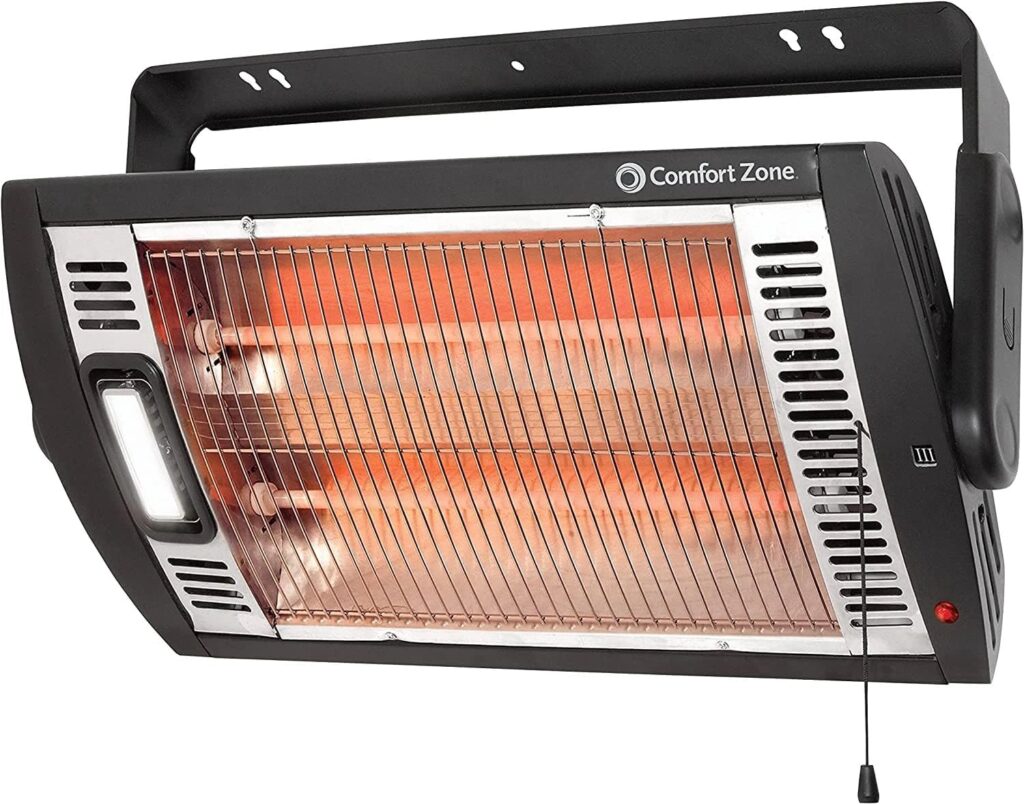
That’s why this shortlist stays tight. These three picks make the most sense if you want mounted infrared heat that saves floor space and works for real use cases like covered patios, garage bays, bench areas, and compact work zones. One quick honesty check up front: the Comfort Zone is technically a ceiling-mounted heater, not a pure wall bar, but it belongs here because it solves the same problem — getting heat off the floor and aimed where you need it.
Quick comparison
| Heater | Best for | Mounting options | Heat settings | Weather rating | Controls | What stands out |
|---|---|---|---|---|---|---|
| Comfort Zone Ceiling-Mounted Dual Quartz Heater | Workbench zones, indoor garage spots | Ceiling | 2 heat settings | Indoor-focused | Pull cords | Simple overhead heat plus built-in halogen light |
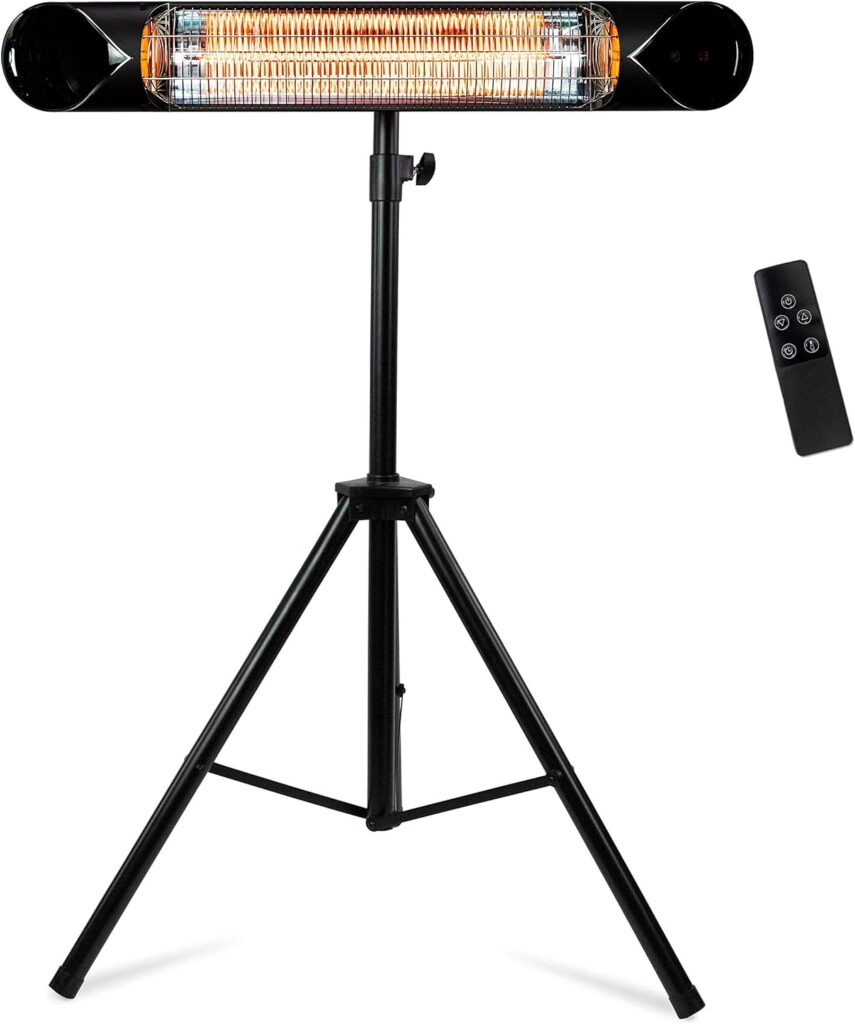
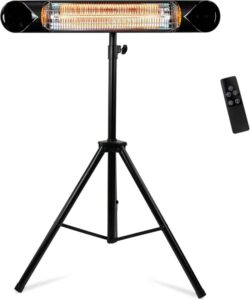
| Briza 1500W Infrared Patio Heater | Best all-around flexibility | Wall, ceiling, tripod | 900W / 1200W / 1500W | IP55 | Remote + 1-9 hr timer | Most versatile setup in the group |
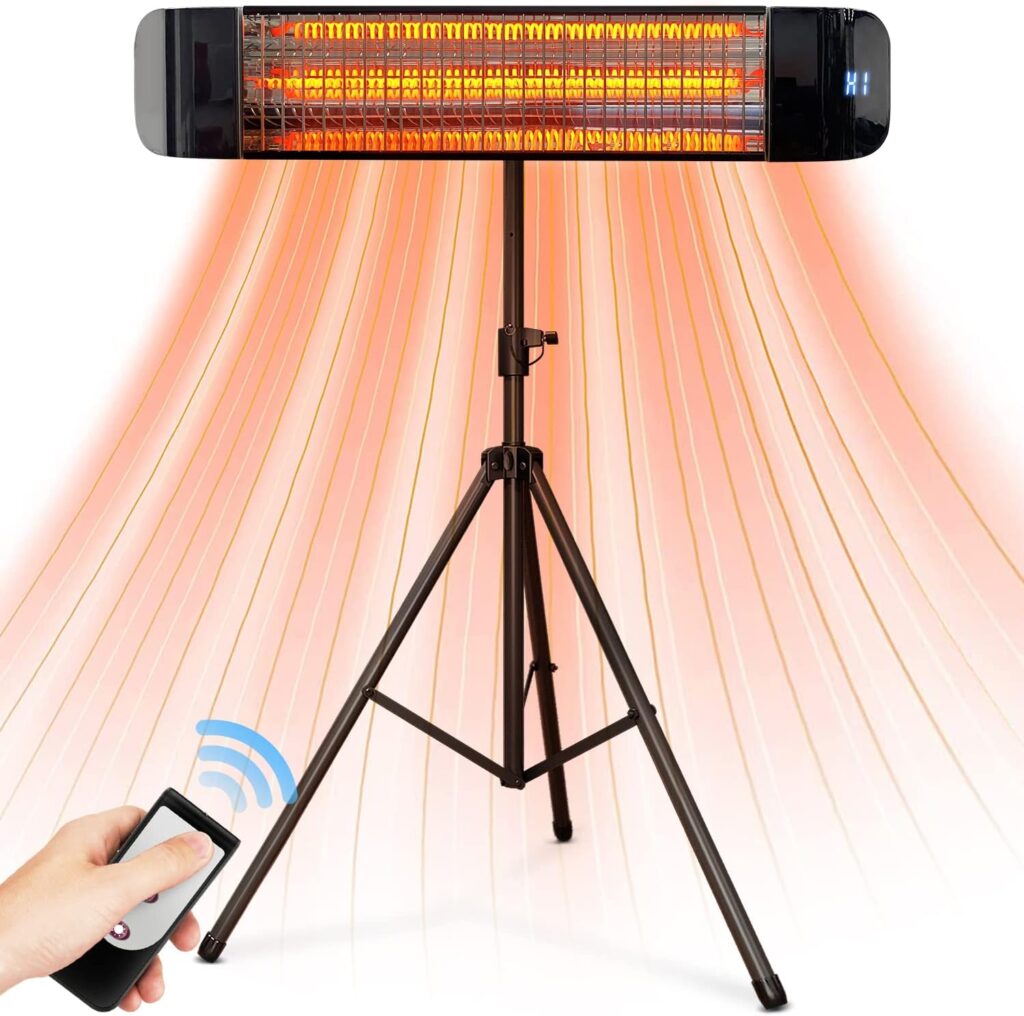
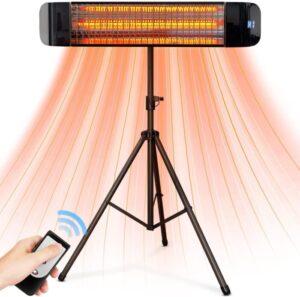
| Paraheeter QHA-15DB | Best smart-style convenience | Wall, ceiling, tripod | 900W / 1500W | IP65 | Remote | Strong outdoor rating with flexible install |
How We Chose These Heaters
I focused on heaters that make sense in real mounted-heater situations, not just products with broad marketing claims. That meant looking at mounting flexibility, outdoor-readiness, control convenience once the heater is installed high up, and whether the design clearly fits spot heating instead of pretending to be whole-room magic. Safety basics mattered too — things like overheat protection, tip-over shutoff on tripod setups, certification, and sensible placement guidance.
What to Consider When Buying
1) True wall-mounted heater or mounted spot heater?
This is the first thing to get right. A lot of people search for “wall-mounted infrared heater” when what they really need is mounted spot heat for a patio, garage, or workspace. Briza and Paraheeter fit that better because they are built around patio-style infrared bar heating with flexible installation. Comfort Zone is even more specialized — it is really an overhead work-zone heater.
If you want clean-looking indoor room heat, these are not all equal. If you want targeted warmth where you stand, sit, or work, they make much more sense.
2) Mounting flexibility matters more than the brochure makes it sound
Wall mounting is great when you already know exactly where the heat needs to land. Ceiling mounting is often better in garages and workshops because the heater stays out of the way and can aim down at your main work area. A tripod is valuable when you are still testing the layout or want one heater to cover more than one job over time.
That is why Briza is the easiest all-around recommendation. It gives you room to experiment first. Paraheeter does something similar. Comfort Zone is less flexible, but it is more purpose-built for overhead indoor bench heat.
3) Controls get a lot more important once the heater is mounted high
Remote control is not fluff on a mounted heater. It is basic usability. Briza gives you remote control, a timer, and three heat levels. Paraheeter gives you remote control with low and high modes. Comfort Zone keeps things simpler with pull-cord controls, which is fine for a garage corner but less convenient if the heater is mounted above you and used every day.
That usually comes down to personality. Some people want simple and durable. Others want less ladder-climbing and less reaching.
4) Safety and placement are not optional details
The CPSC says portable heaters should be kept at least three feet away from combustible materials, plugged directly into a wall outlet rather than an extension cord or power strip, and never left on while sleeping. Paraheeter’s own manual also repeats the three-foot clearance guidance and says the unit should be securely mounted or used on the provided tripod.
Mounted heaters can feel safer because they are off the floor, but that does not remove fire risk. It just changes where the risk sits — walls, curtains, stored boxes, overhead clearance, and cords all matter more.
5) Running costs — a quick reality check
You are not buying huge efficiency differences here. All three are electric infrared heaters in roughly the same output class, so the bigger differences are placement, control, and weather suitability — not miracle savings. Still, variable settings do matter because lower output can be enough when you are heating one person or one bench zone instead of a whole area.