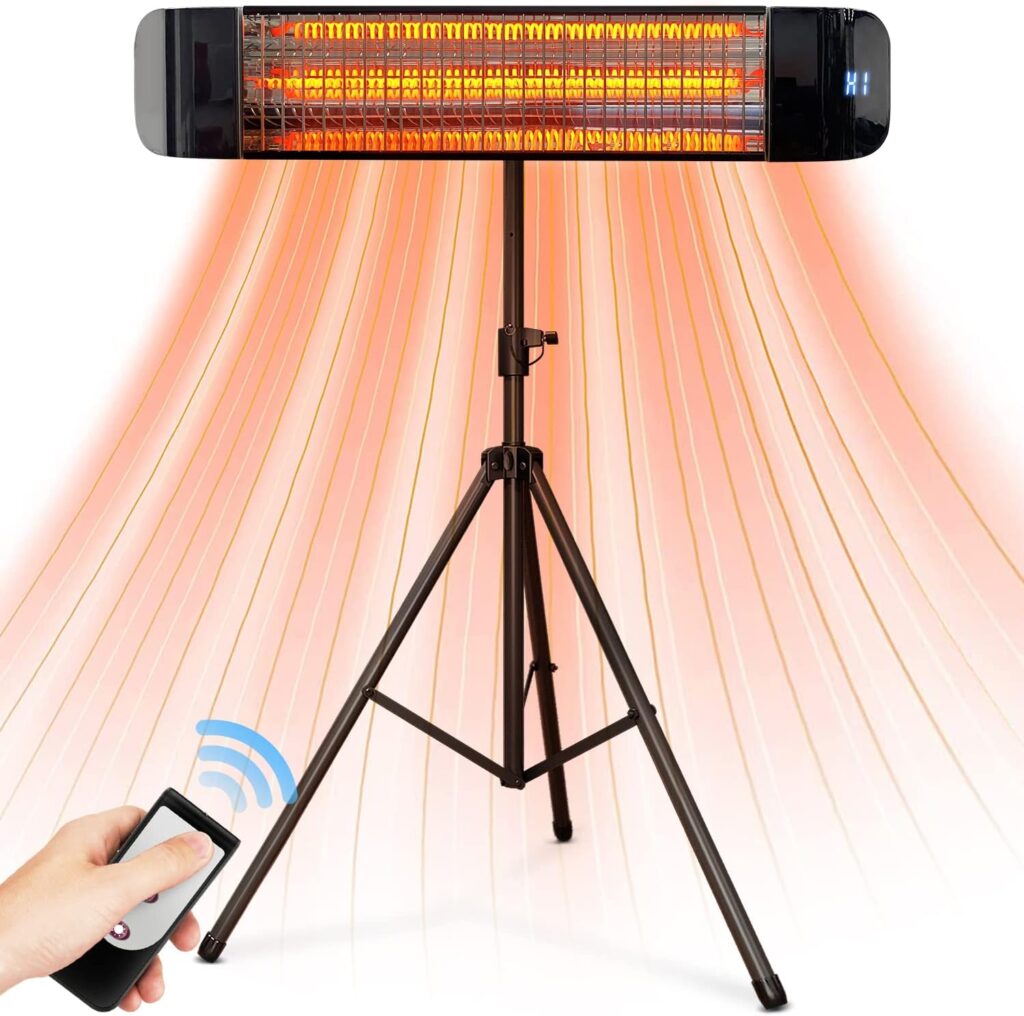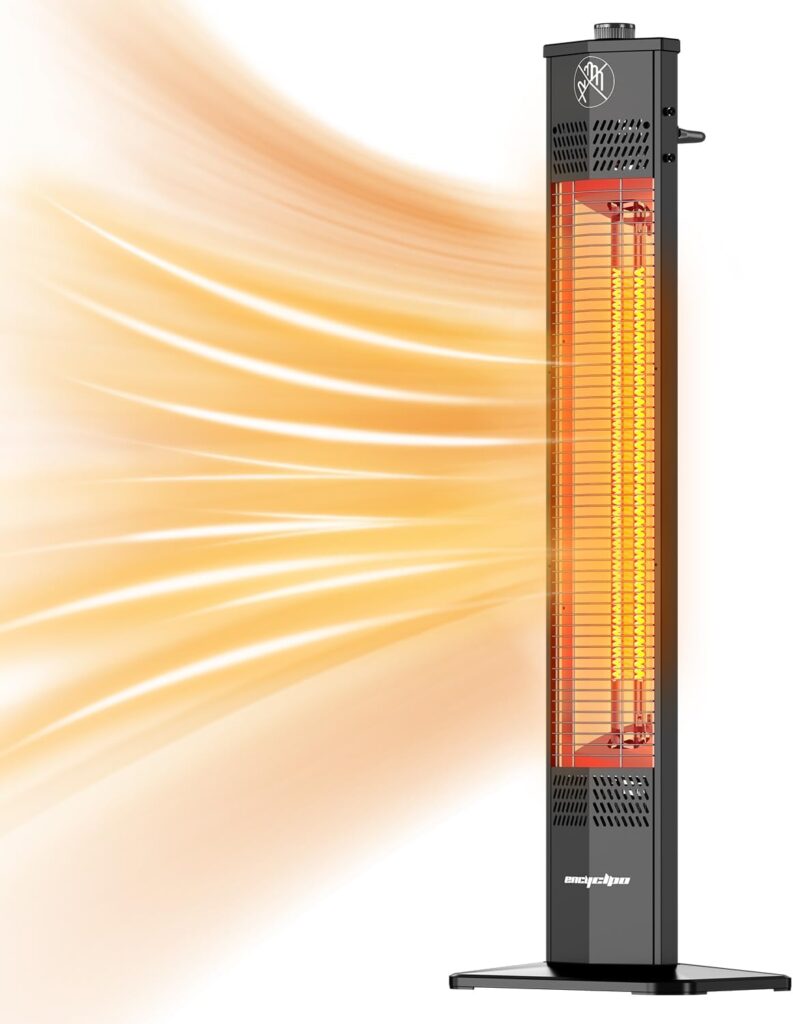
When it gets chilly outside, the hard part isn’t finding a patio heater — it’s finding one that actually feels warm where you’re sitting. Electric infrared heaters are great at that “instant comfort” thing, but only if you buy the right style for your space. A wall-mount can be perfect under a covered patio… and totally annoying if you need to move it around. A tripod heater can feel amazing — but you’ll need the floor space, and wind can still steal comfort if you’re fully exposed.
This guide is built for real patios and real routines: quick weeknight dinners outside, a covered porch hang, a garage workbench, or a breezy patio where you just want some warmth without propane tanks. We narrowed it down to six infrared picks that cover different setups, budgets, and “how you actually use the space” needs.
How we chose these heaters
We prioritized heaters that deliver the core promise of infrared patio heat — fast, quiet, “feel it on your skin” warmth — without locking you into one specific setup. Most plug-in electric patio heaters top out around 1500W (about 5,200 BTU), so the difference comes from how that heat is aimed, mounted, and controlled, not from magical extra power. We also looked for practical value: multiple heat levels, weather resistance (when claimed), and safety basics like overheat/tip protection (especially for portable and tower styles).
What to consider before you buy
Covered patio vs open-air patio
Infrared works best when it can “hit” you and nearby surfaces — think of it like sunlight. Under a roof, pergola, awning, or gazebo, it usually feels dramatically better because the heat isn’t fighting moving air as much. On a fully open, windy patio, expect short-range comfort: you’ll feel warm close to the heater, but the “radius” shrinks fast when the breeze picks up.
Pick the right form factor for how you hang out
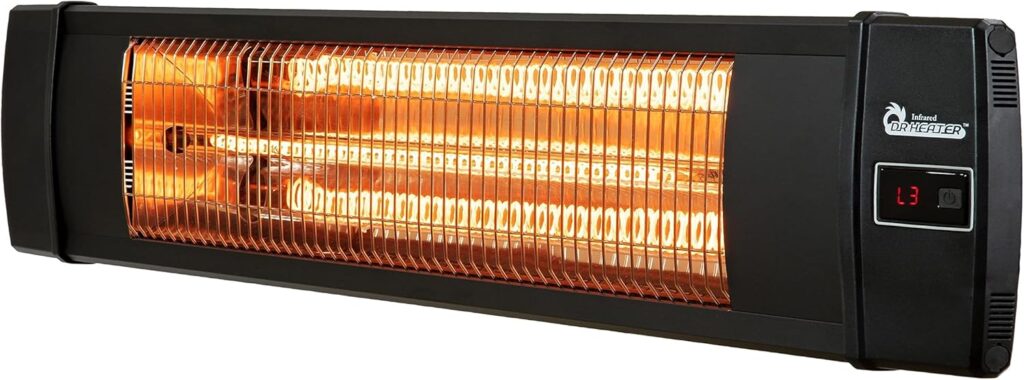
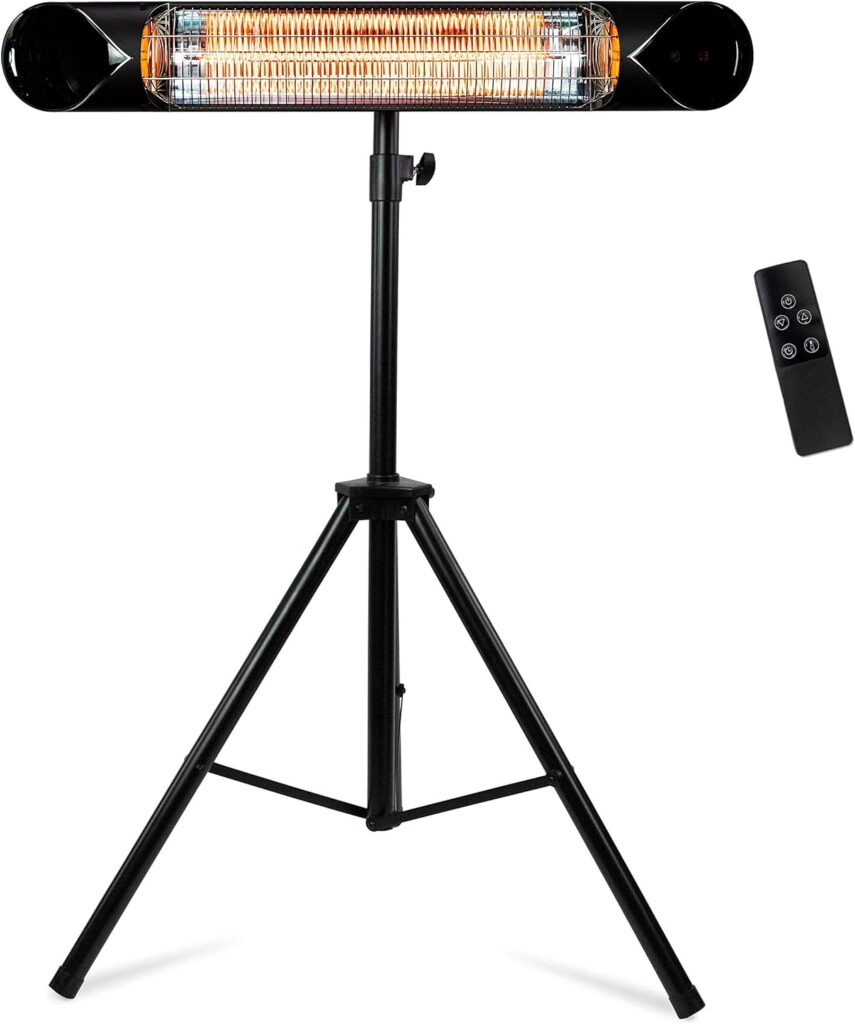
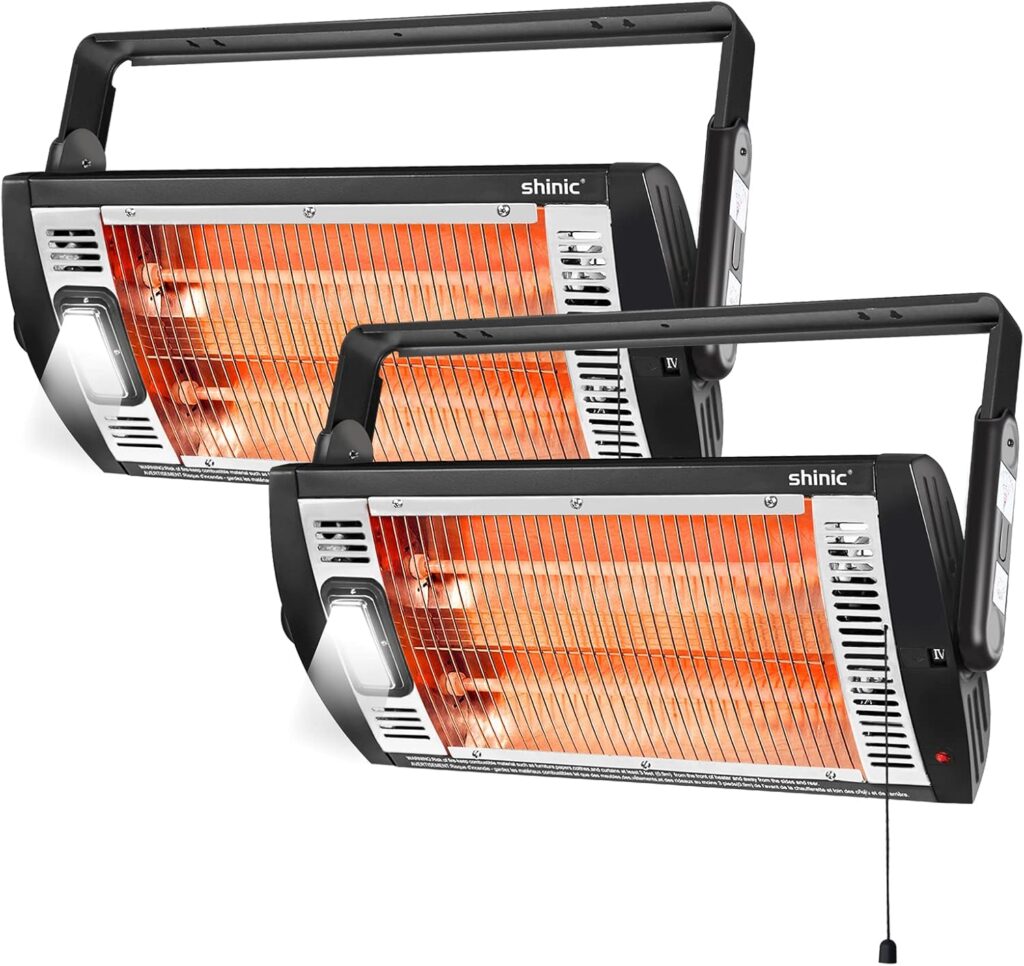
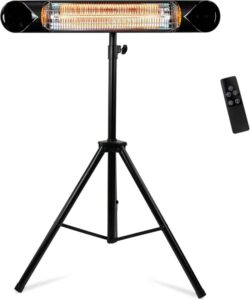
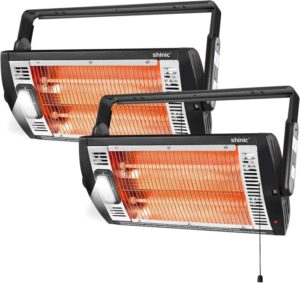
- Wall / ceiling mount: Best when your seating area stays put. You get heat without a floor footprint, and you don’t trip over legs or bases. (DR-238, Shinic/PowerZone, Briza).
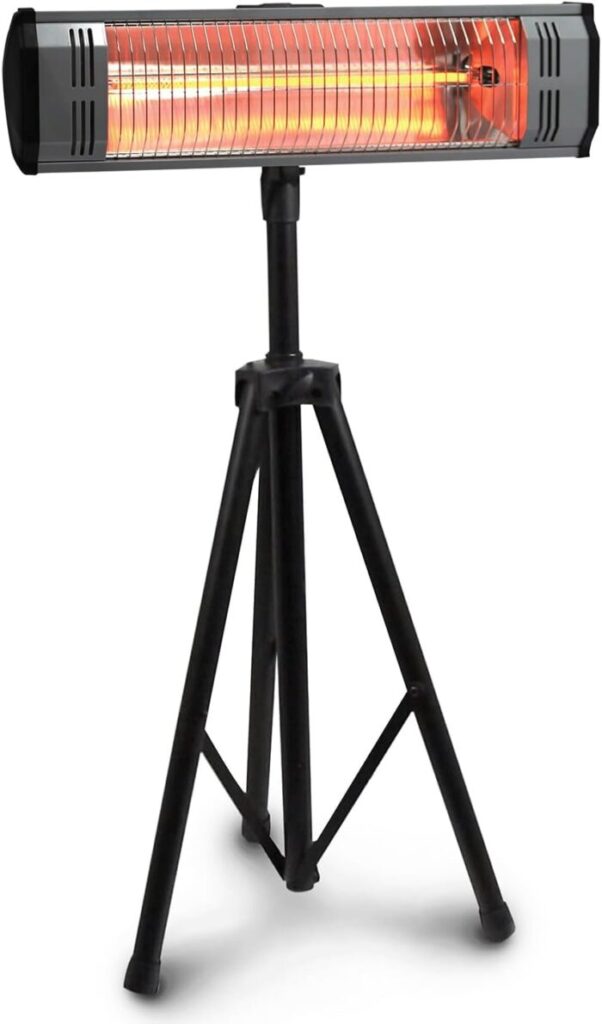
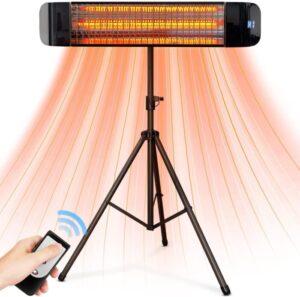
- Tripod / directional portable: Best when you want to aim heat at a couch today, a grill station tomorrow, and a garage workbench the next day (Heat Storm Tradesman).
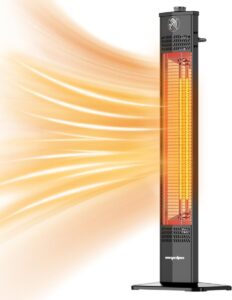
- Tower / freestanding: Nice for small patios where you want a compact vertical heater near chairs, but you still want the option to move it (Encyclpo).
Heat settings matter more than you think
Most of these are in the same power class, so multiple heat levels are how you avoid “too hot up close” or “not enough unless I’m hugging it.” Models like the DR-238 and many Briza setups commonly list 900/1200/1500W steps. If you mainly use your patio in shoulder seasons (50s–60s °F), lower settings can feel more comfortable — and easier on the electric bill.
Weather ratings: useful, but still read the fine print
You’ll see IP ratings like IP55 (Briza, DR-238 listings) and IP65 (Paraheeter listings/manuals). Treat these as helpful signals, not a license to ignore common sense. “Weather-resistant” usually means splashes and dust — not sitting unprotected in driving rain forever. When in doubt, follow the manual’s placement guidance and use a covered outlet.
Safety and placement basics you shouldn’t skip
Infrared heaters get hot where the element is — so placement matters.
- Keep clearance from umbrellas, curtains, furniture, and plants, and follow the manufacturer’s clearances (they vary by model).
- Avoid extension cords if possible; 1500W draws a lot of current.
- For ceiling/wall installs, mount into solid structure and don’t “wing it” on questionable anchors.
- If you’re heating near kids/pets, mounting overhead is often the calmer, safer day-to-day setup.