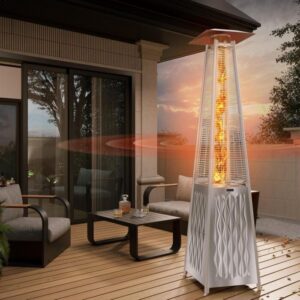
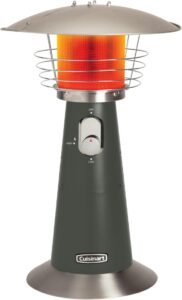
Propane still wins when your patio is truly “open air.” No cords to trip over, no hunting for an outlet, and you can roll the heat exactly where people gather. The catch is that outdoor heat behaves like a moody guest: wind steals it, seating layout decides who feels it, and a heater’s footprint can either fit your space… or dominate it.
That’s why the “best propane patio heater” isn’t just about chasing the biggest BTU number. Higher BTU can mean more potential heat output, but real comfort comes from heat pattern (wide vs close-range), wind behavior, stability, and how you actually use the space — lounging sectionals, a patio heater for dining table nights, or a small deck where every inch matters.
Below, we’ll help you pick the right style (mushroom, pyramid, or tabletop), then share our favorite freestanding propane patio heater picks from the product pool — each with clear pros, cons, and the little “ownership realities” that buyers mention after the first few chilly evenings.
Quick picker: Choose mushroom / pyramid / tabletop if…
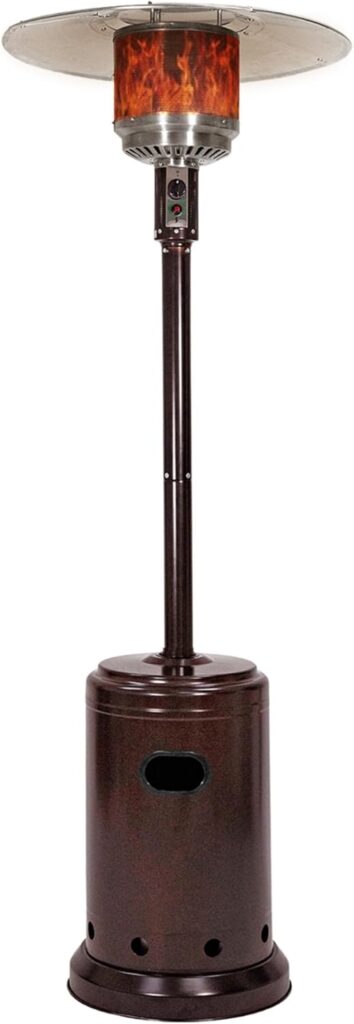
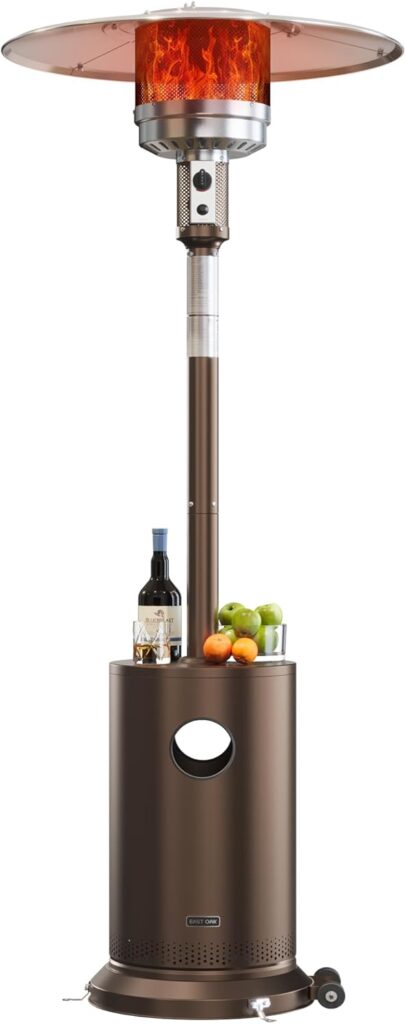
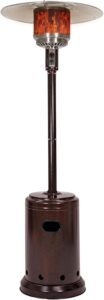
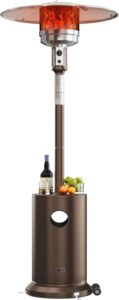
Choose a mushroom patio heater if…
- You want the most familiar, “wide-ish” warmth for mixed seating (lounging + mingling).
- You’re trying to warm people, not create a centerpiece.
- You need a propane patio heater for windy patio use and want something that behaves predictably with placement.
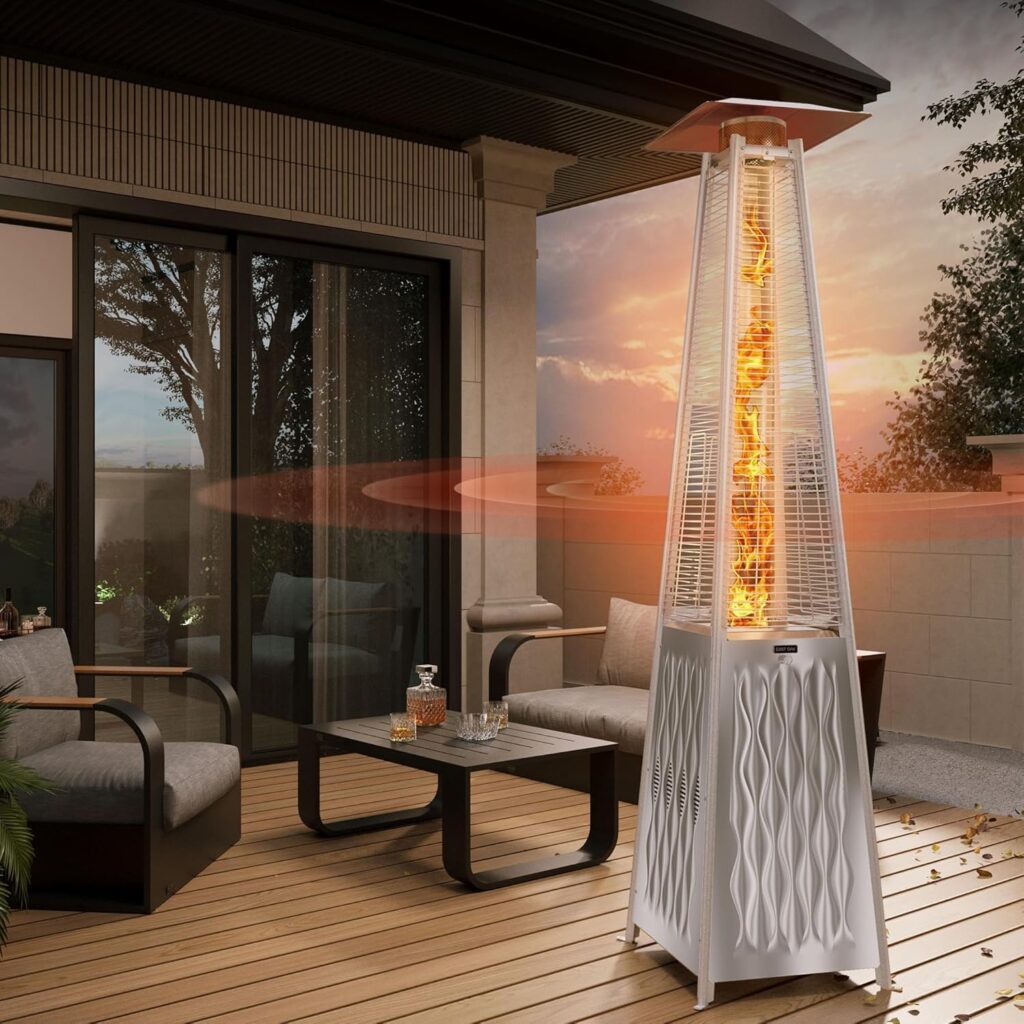
Choose a pyramid patio heater if…
- You want ambience as much as heat (the visible flame is the whole point).
- Your setup is more “hang out near the heater” than “everyone gets equal warmth.”
- You like modern looks and don’t mind a bigger visual footprint.
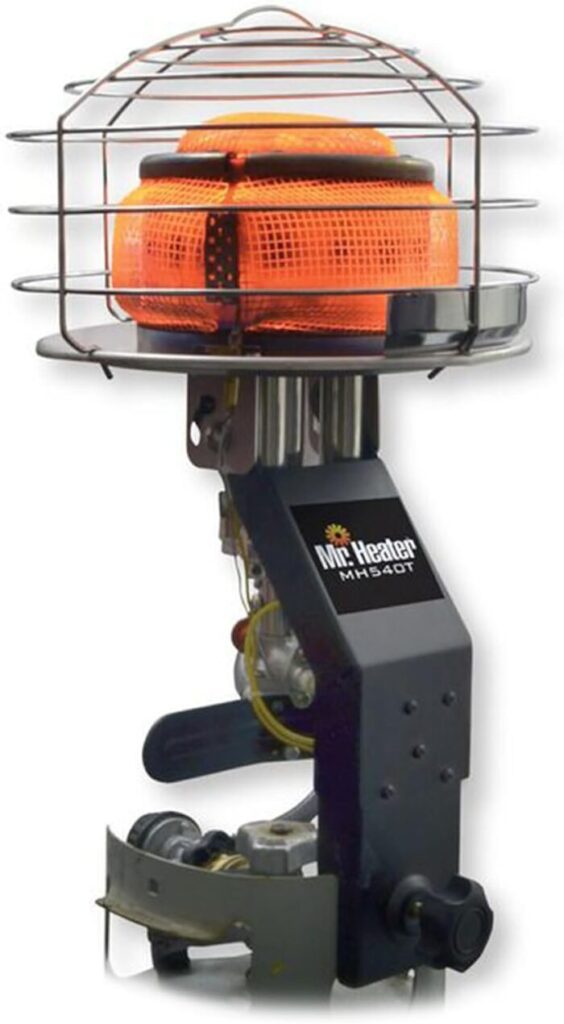
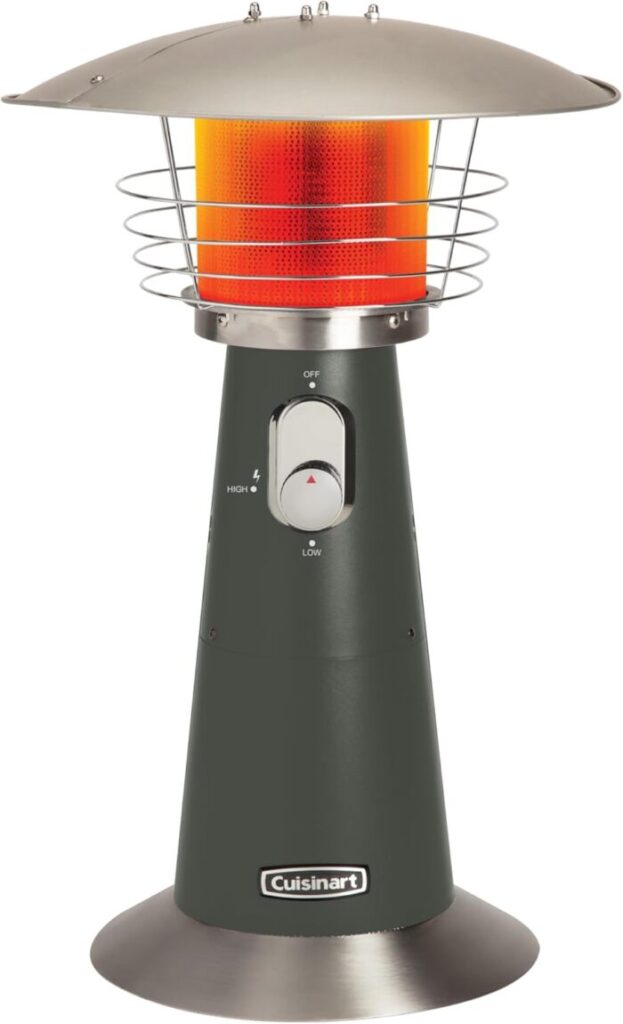
Choose a tabletop propane patio heater if…
- Your space is small (balcony, bistro set, compact deck).
- You want “hands-and-upper-body” warmth right at the table.
- You’d rather add a second small heat source than commit to a tall freestanding unit.
Buying guide: how to choose a propane freestanding heater that feels good outside
Heat pattern: wide vs close-range
- Mushroom patio heater: wider downward pattern, best for groups circling the heater.
- Pyramid patio heater: more “feature heat” and glow; often feels best when seated closer.
- Tabletop propane patio heater: intimate, close-range comfort — perfect for small tables.
Wind behavior + placement tips
- Put the heater upwind of the seating zone, so warmth drifts toward people.
- Use existing structures as wind breaks: railings, walls, privacy screens.
- If your patio is consistently breezy, prioritize stability and don’t expect long-distance warmth.
Footprint & clearance (especially under pergolas/overhangs)
Freestanding propane patio heaters need breathing room. Always follow the manufacturer’s clearance guidance, especially above the reflector/flame area. If you’re using a heater under a covered patio, only do so if the manual allows it, and keep generous clearance and ventilation.
Stability: base weighting, wheels, kid/pet homes
A common theme is that people underestimate how “tippy” tall heaters can feel until a gust hits or someone bumps the base. Look for:
- Base weighting options (sand/water or integrated weight systems)
- A wide base footprint
- Tip-over shutoff protection
In homes with kids or pets, treat stability as a must-have, not a nice-to-have.
Ignition & controls (what people like / complain about)
Many buyers love simple, reliable ignition — but complain when it takes multiple tries or feels finicky in wind. Practical tips:
- Keep the ignition area clean and dry
- Turn gas on slowly and follow the lighting steps exactly
- If it struggles in breezes, reposition rather than forcing repeated ignitions
Maintenance & longevity (the stuff that keeps it working next season)
Don’t ignore wobble: Tighten hardware after the first few uses (heat cycles can loosen fasteners).
Use a cover: It’s the easiest way to slow rust, water intrusion, and burner issues.
Clean burners periodically: Dust and debris can affect performance; a gentle brush helps.
Watch for spider webs: Gas appliances attract them; webs can cause ignition problems.
Check connections: Before each season, inspect hose/regulator fittings and test for leaks safely.
Store smart: If your winters are harsh, store in a dry space when possible — especially pyramids with glass components.