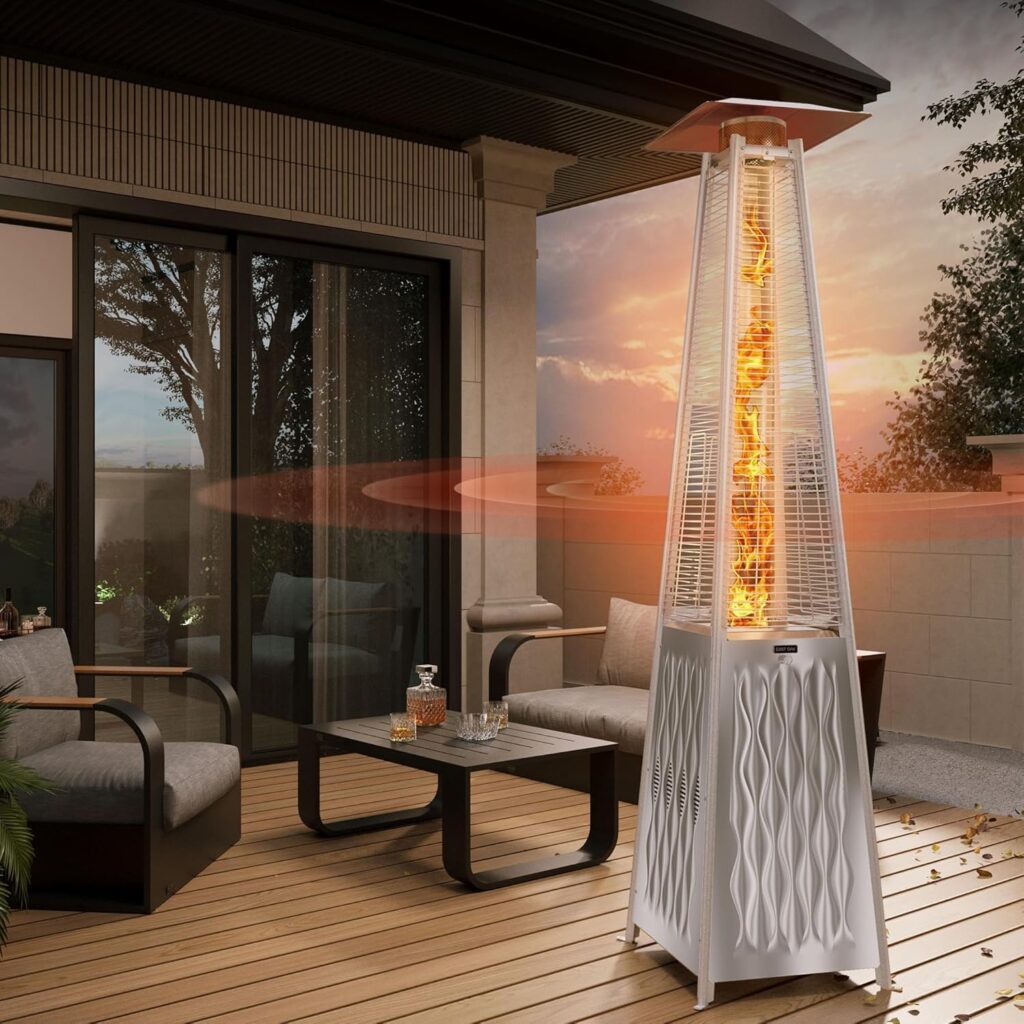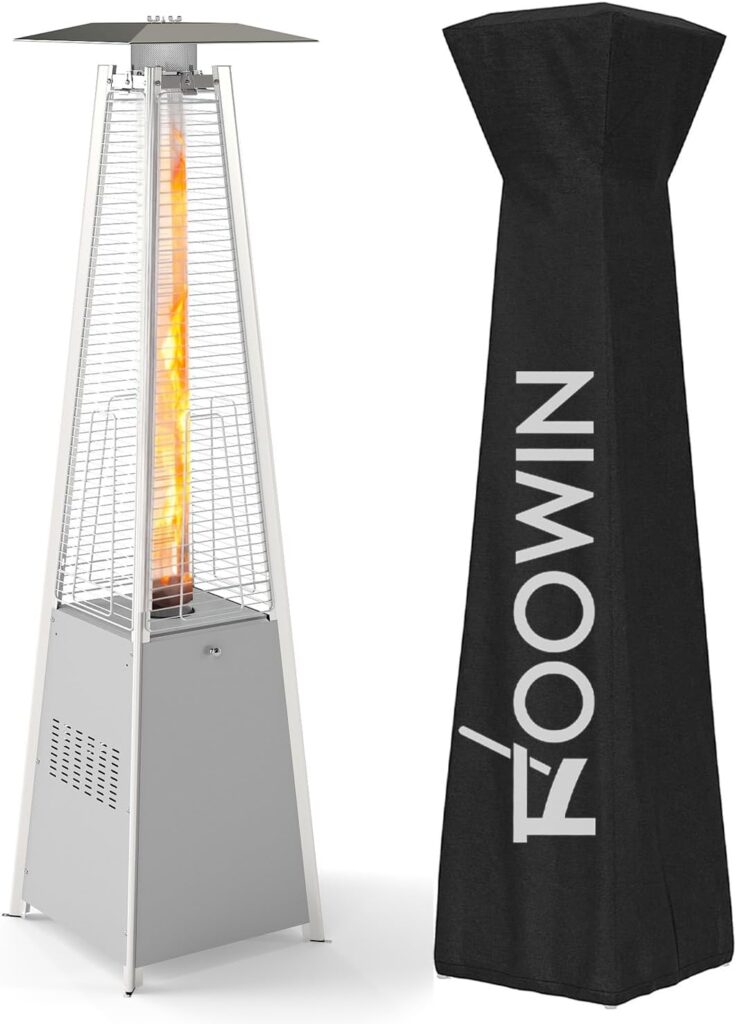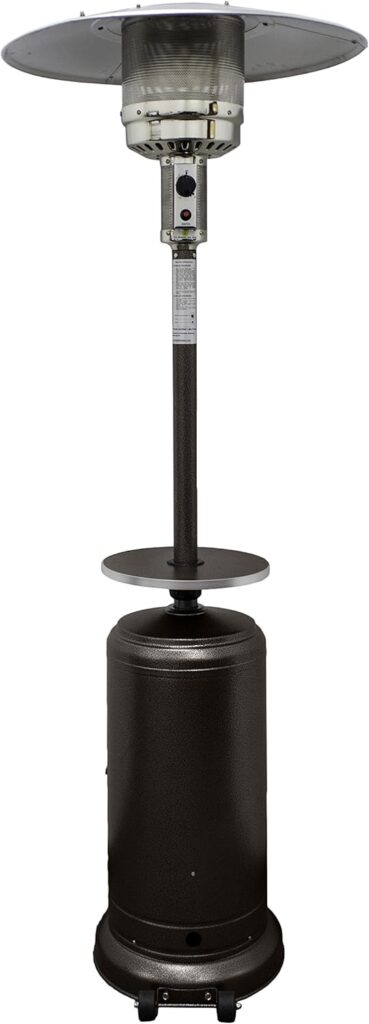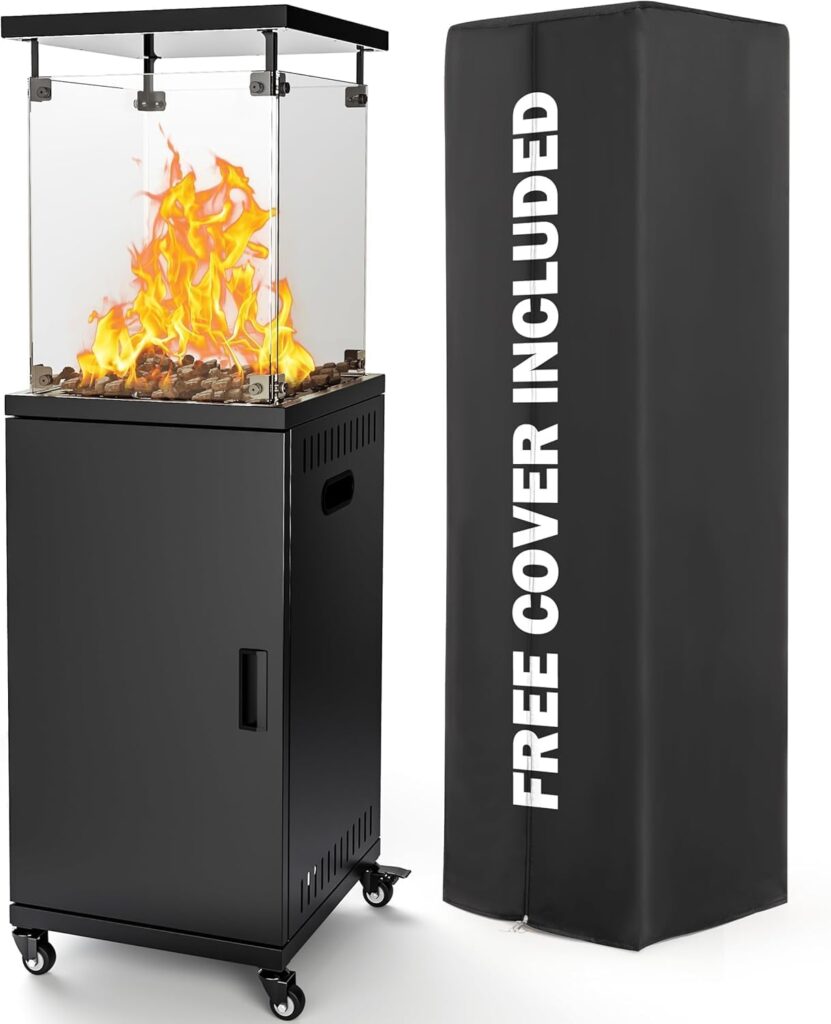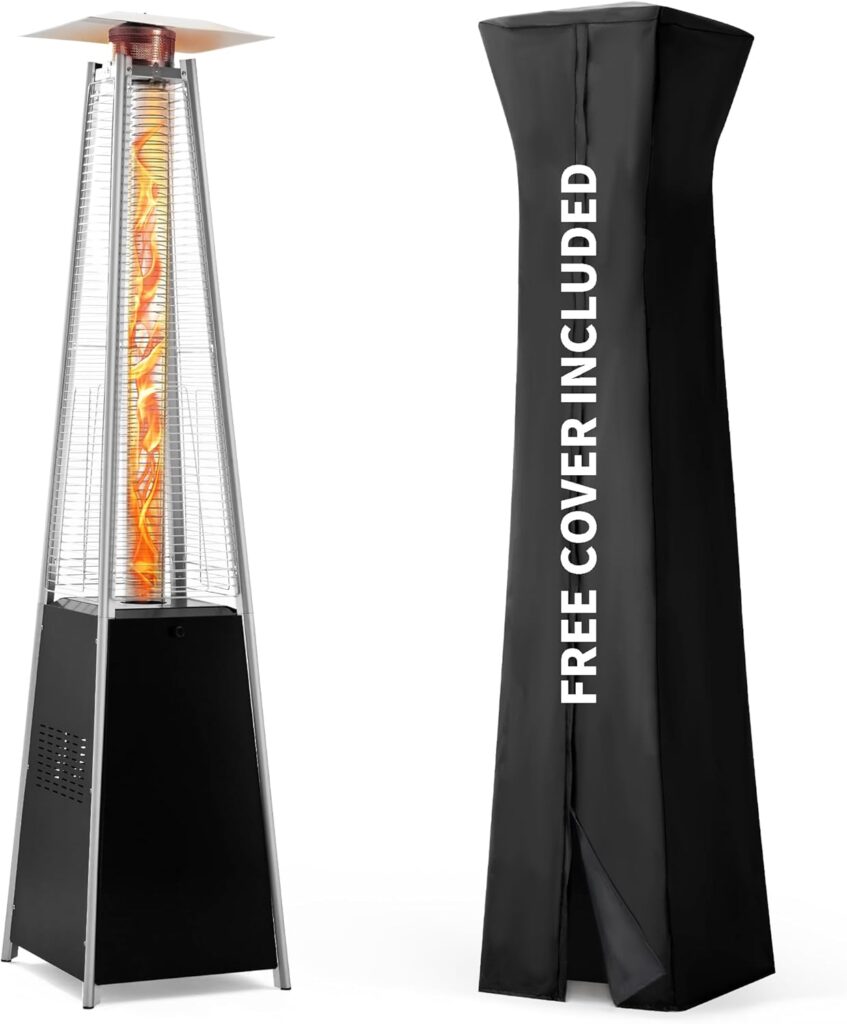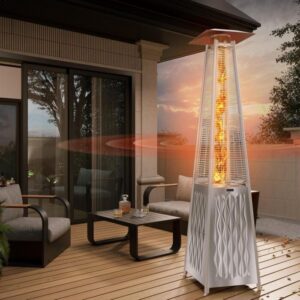
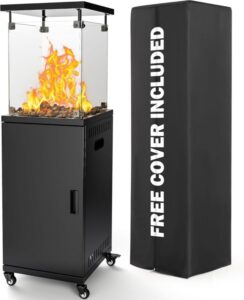
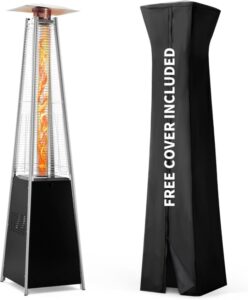
A pyramid patio heater is one of those purchases that sounds simple — until you use one on a real patio. Wind shows up. Seating shifts. Someone wants the “fire vibe,” someone else just wants warm hands, and suddenly you’re juggling looks, heat, stability, and how annoying propane tanks are to swap.
Pyramid heaters are especially tricky because they’re as much a visual feature as a heat source. The glass flame tube looks awesome, but most of these heaters work best as close-range “zone heat” — not a magic bubble that warms your whole yard.
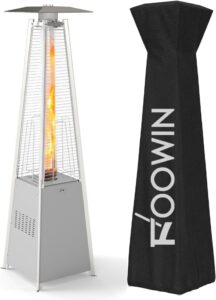
This guide narrows it down to five pyramid-style picks that cover the main needs: a strong all-around choice, a nicer stainless build, a value bundle, a proven long-running platform, and a compact flame option for tighter spaces.
How we chose these heaters
We focused on pyramid-style heaters that hit the sweet spot for real patios: the common 48,000 BTU class for strong output, designs people actually want to look at, and practical ownership stuff like wheels, access to the tank, and whether you can get parts later. We also tried to avoid five clones that do the exact same thing — the lineup covers “classic pyramid,” “nicer materials,” “best bundle,” “most established platform,” and “smaller footprint.” For context, major testers note that patio heaters are usually most useful within about 4 feet in real conditions, and that pyramids can be a bit more involved to assemble than traditional mushroom units.
What to consider when buying
Heat expectations — pyramids are “close-range” heaters
Most pyramid patio heaters feel best when you’re within a few feet. That’s not a flaw — it’s how outdoor heat works. Even major testers who measure temperature changes with instruments still land on the same practical takeaway: the “useful range” is often around 4 feet, and wind steals warmth fast.
If you host bigger groups, plan on either two heaters or arranging seating so people naturally stay in the warm zone.
BTU isn’t everything, but it does set your ceiling
A lot of pyramid heaters cluster around 48,000 BTU because it’s a strong output level for a standard 20 lb propane tank.
Higher BTU can help, but you’ll still feel shortchanged if your patio is wide open and windy. If your space is partly protected (fence, walls, pergola with good clearance), the same heater will feel dramatically better.
Wind and stability matter more than people think
Pyramids look stable because of the base shape, but they’re also tall. On breezy patios, look for:
- A base that can be weighted (and actually feels planted)
- Wheels that don’t feel sketchy over cracks
- A design that doesn’t wobble when you bump it lightly
If your patio is routinely gusty, you’ll often get more “usable warmth” by moving the heater closer to where you sit than by chasing a slightly different BTU number.
Usability stuff you’ll care about after week two
Little design details make or break day-to-day ownership:
- Tank access: doors vs lift-off panels (doors are usually less annoying)
- Ignition and controls: easy to reach, easy to understand
- Moving it around: wheels help, but weight and balance decide whether you’ll actually move it
Also, pyramid heaters can be more involved to assemble than simpler pole-style heaters — not the end of the world, just don’t plan on “5 minutes out of the box.”
Fuel costs and runtime — plan for reality
Most full-size propane patio heaters use a standard 20 lb tank. How long it lasts depends on your flame setting, weather, and the heater’s output — colder nights and higher settings burn fuel faster. The practical play is to treat it like “special occasion heat” or “weekend heat,” and use lower settings when you can.