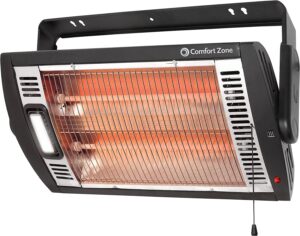
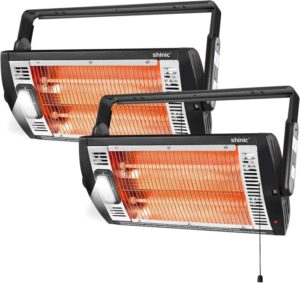
A covered patio sounds great — until the first cold night reminds you that “outside” loses heat fast. And if you’ve ever tried a freestanding heater on a tight deck, you already know the other problem: trip hazards, floor clutter, and heat that never quite hits where people sit.
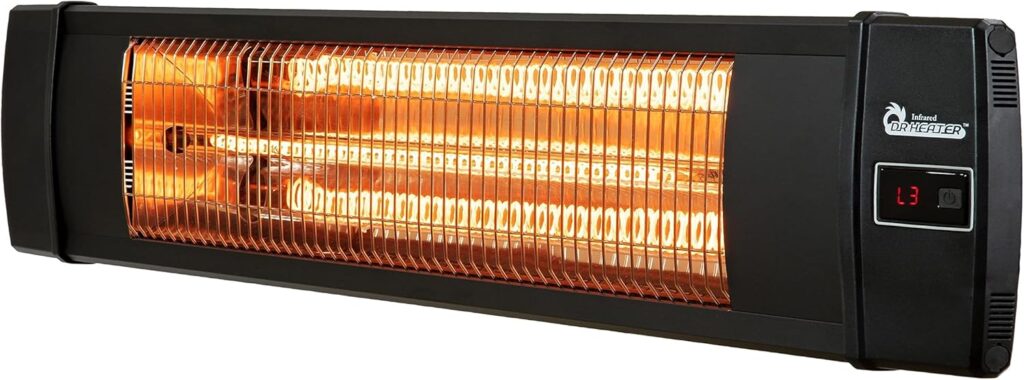
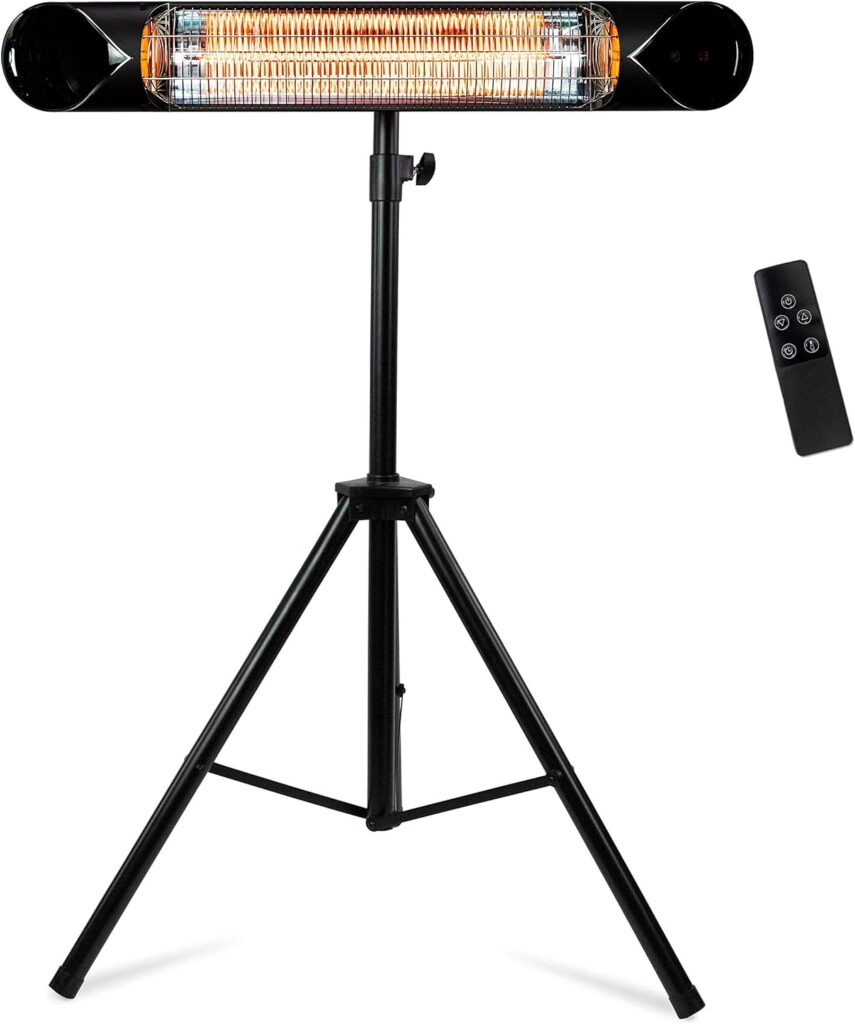
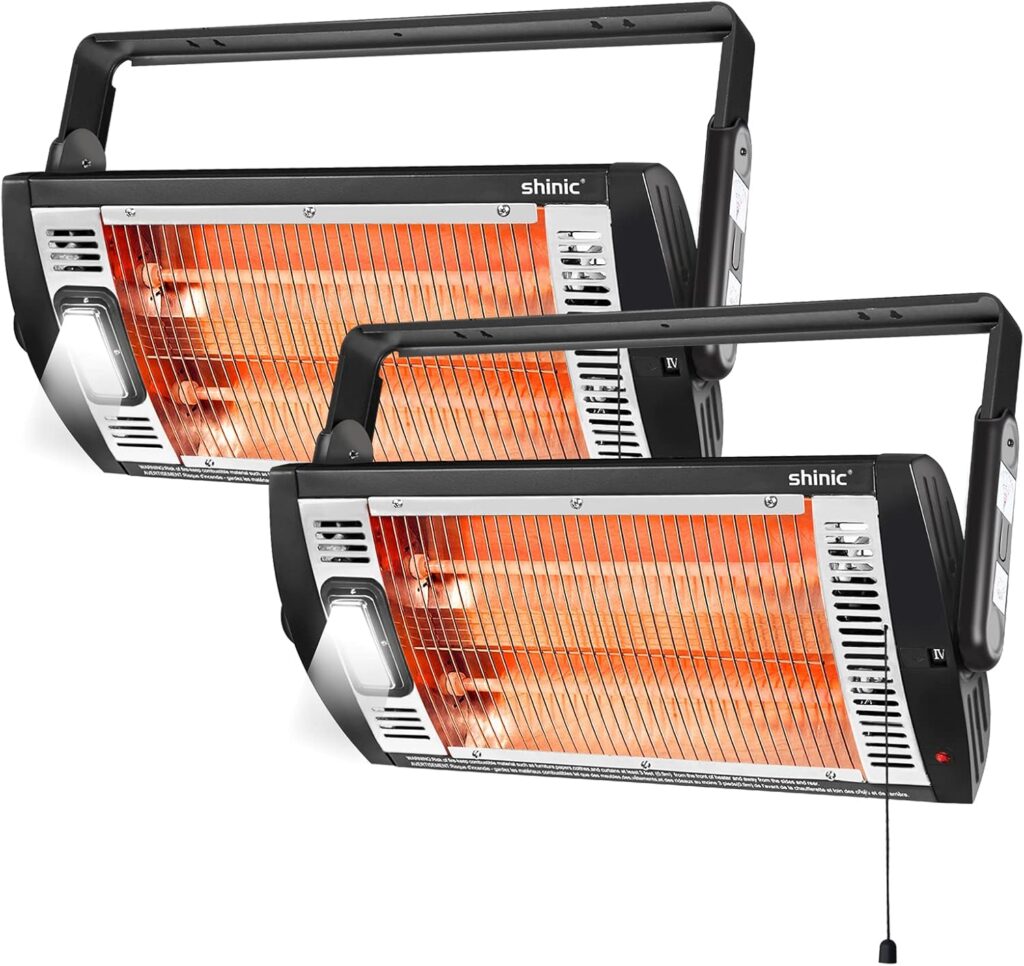
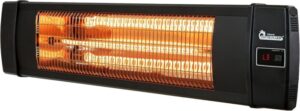
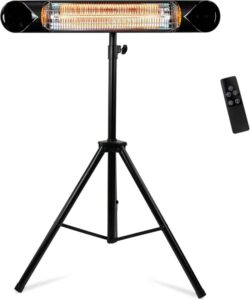
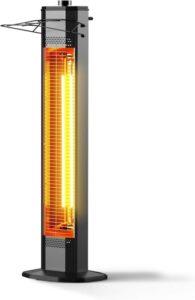
Wall-mounted electric infrared is the clean fix. You mount it once, aim it at the seating zone, and you get that “sun-on-your-skin” warmth without dragging propane tanks around or playing extension-cord dodgeball.
This guide keeps it practical. These picks are all about real patios and real garages — fast-feeling heat, simple controls, and safety features that matter when the heater is mounted over where people actually hang out.
How We Chose These Heaters
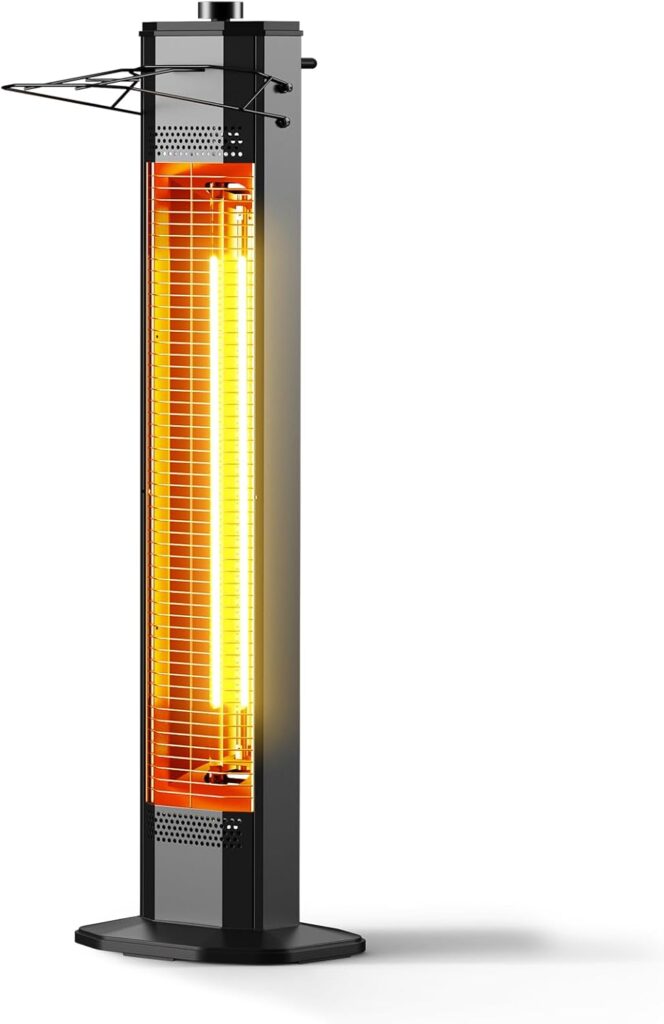
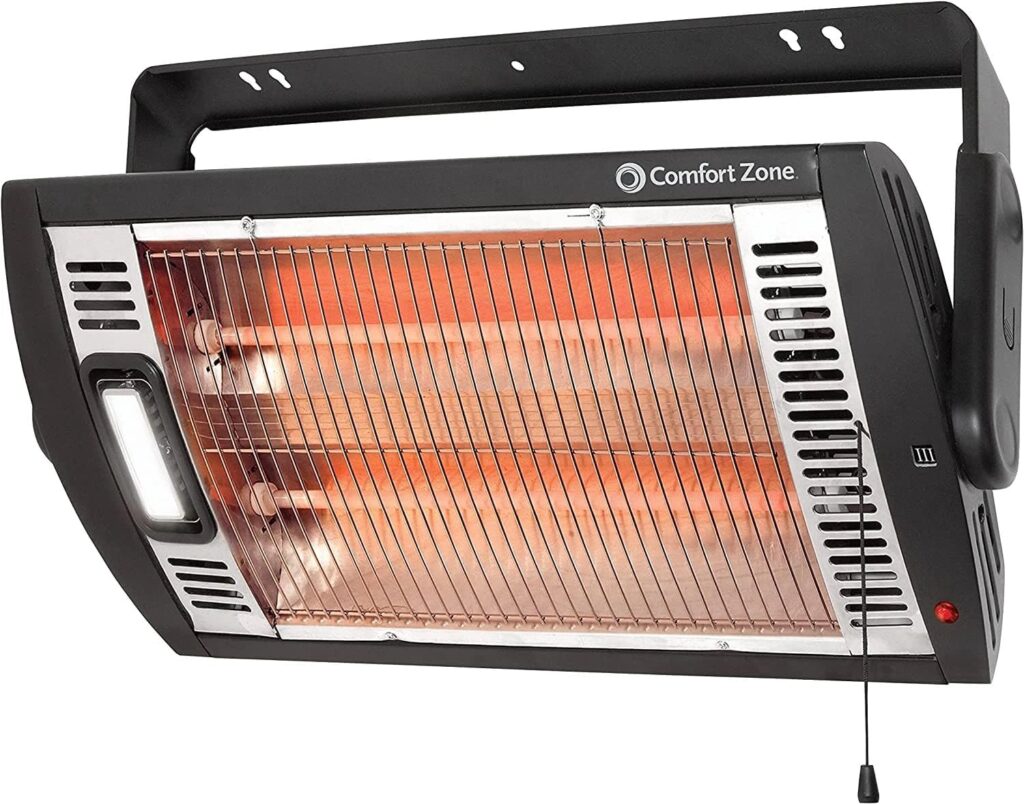
We focused on mounted electric infrared heaters that make sense for covered patios, pergolas, workshops, and garages — not “looks good on paper” products. The shortlist prioritized fast, noticeable warmth in a seated/standing zone, dependable controls (remote and/or multiple heat levels), and common safety protections like overheat shutoff and secure mounting hardware. We also aimed for real value across budgets, because paying more doesn’t always mean you feel warmer — it often just means nicer materials or extra control options.
What to Consider When Buying a Wall-Mounted Patio Heater
Coverage is a “zone,” not a room
Most 120V mounted heaters top out around 1500W. That’s enough to make a big comfort difference — but only in the area the heater is aimed at. Think “couch section,” “bistro table,” or “workbench,” not “heat the whole backyard.”
If your patio is wide, plan on two heaters (or one heater per main seating zone). It usually feels better than one bigger unit blasting a single hot spot.
120V vs 240V: what’s realistic
120V (standard outlet) is the easy, DIY-friendly lane. You get quick radiant heat with simpler installation, but you’re limited on wattage.
240V can push more power and can be a better match for large covered patios — but it often means dedicated wiring and, for many people, hiring an electrician.
For most homes, a well-aimed 120V unit over the seating area is the sweet spot. If you’re trying to heat a big covered patio like a restaurant, 240V starts making more sense.
Infrared style: carbon vs quartz
Both feel “instant” compared to convection heaters, but they behave a little differently:
- Carbon infrared tends to feel steady and comfortable for longer hangs.
- Quartz tube heaters often feel extra fast when you first switch them on — great when you’re popping into the garage for a short project.
Neither is “better” universally. It’s about your use pattern: long, relaxed evenings vs quick warmups.
Mounting and aiming matter more than specs
A mounted heater is only as good as its placement. You want it:
- High enough to be safely out of reach (especially with kids/pets)
- Angled toward people, not empty air
- Positioned so the cord and plug setup stays safe (avoid running cords through walkways)
If you can mount it to cover the main “people zone,” even a basic heater will feel surprisingly effective.
Safety features you shouldn’t skip
Mounted heaters remove tip-over risk, but safety still matters:
- Overheat shutoff is a must.
- Look for solid brackets and hardware that doesn’t feel flimsy.
- Outdoor use? Check weather resistance and keep it under cover unless the unit is clearly rated for exposure.
And one simple rule: don’t mount it where it’s blasting directly at faces from close range. Radiant heat is great — but too close can feel harsh.