The best infrared heaters for garages and workshops solve a very different problem than a normal indoor space heater. In a garage, doors open, cold air sneaks in, ceilings are often higher, and the spot that matters most is usually the one where you’re standing — at the bench, by the tool wall, or next to the car. That’s why a lot of standard heaters look fine on paper but feel disappointing once you actually start working.
Infrared heaters stand out because they warm people and surfaces directly instead of trying to heat all the air in a drafty space. In the right setup, that feels much more useful than a basic fan heater. In the wrong setup, though, the warmth can stay too narrow and leave the rest of the garage cold.
This guide focuses on the best infrared heaters for garages and workshops that make sense in real use. Some are better for fixed bench zones, some are better for flexible mounting, and some work best when you want targeted warmth without giving up floor space.
Best Infrared Heaters for Garages and Workshops — At a Glance
| Heater | Best For | Mounting Style | What It Does Well | Main Trade-Off |
|---|---|---|---|---|
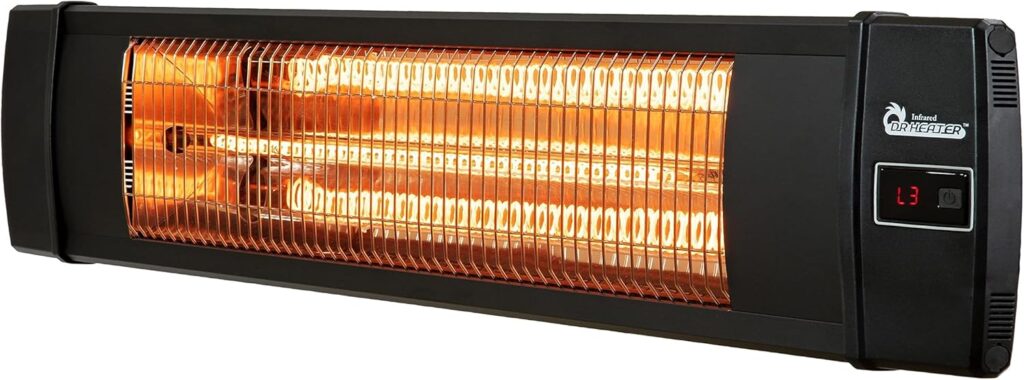
| DR. Infrared Heater DR-238 | Covered garage zones and patio-style warmth | Wall / ceiling | Quiet directional heat for a fixed area | Less useful if you want flexible placement |
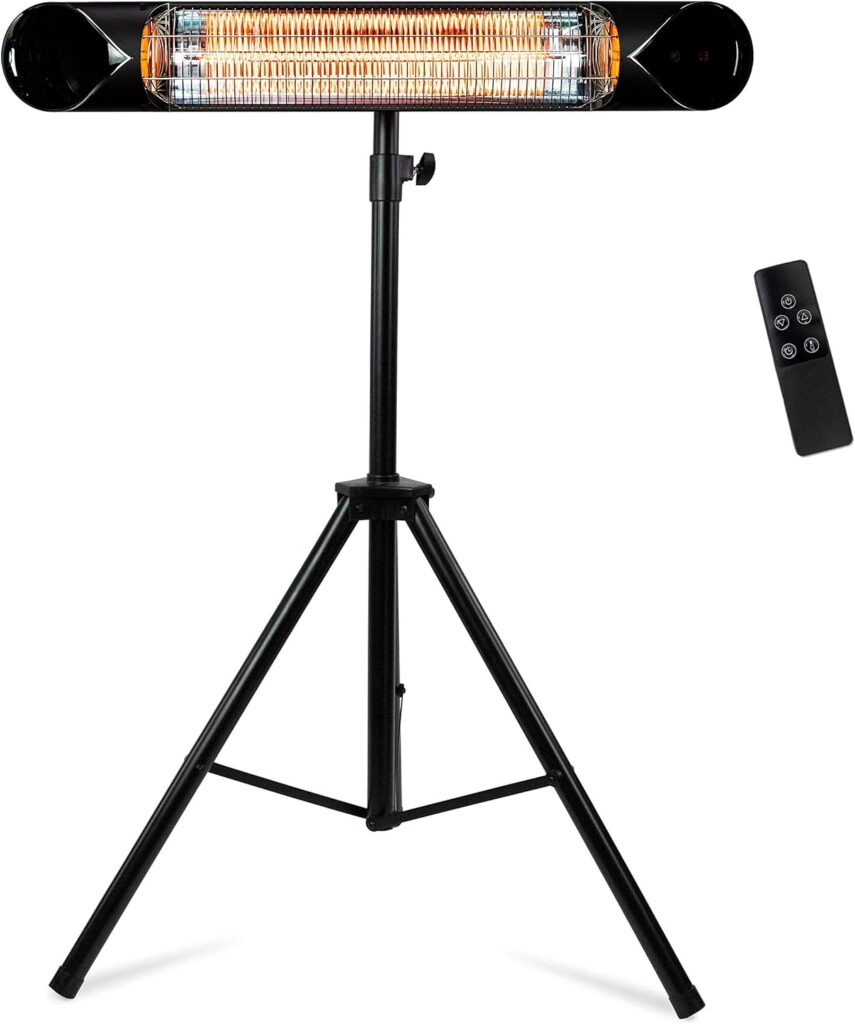
| Briza 1500W Infrared Patio Heater | People who want options | Wall, ceiling, tripod | Easy to move or remount for different layouts | Still a zone heater, not a whole-room fix |
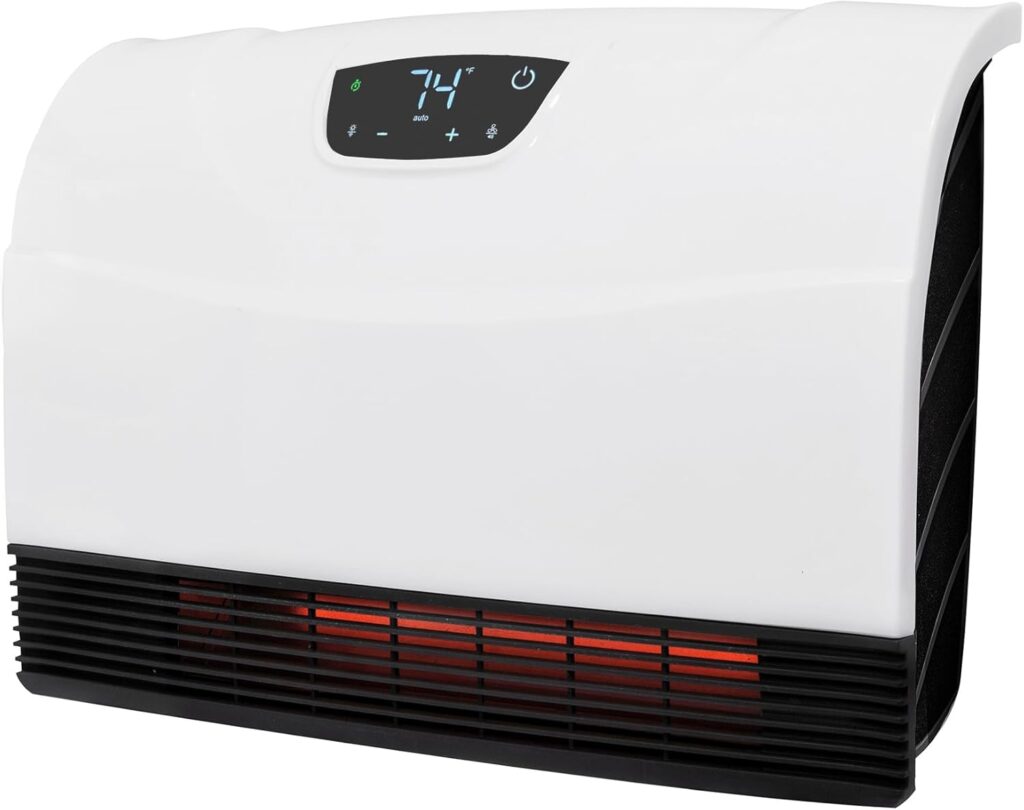
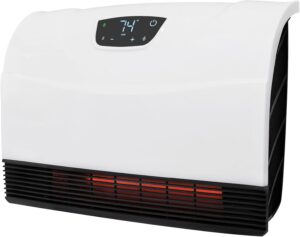
| Heat Storm HS-1500-PHX-WIFI | Small garages and hobby spaces | Wall-mounted | Smart control and easy everyday use | Better for compact areas than wide-open shops |
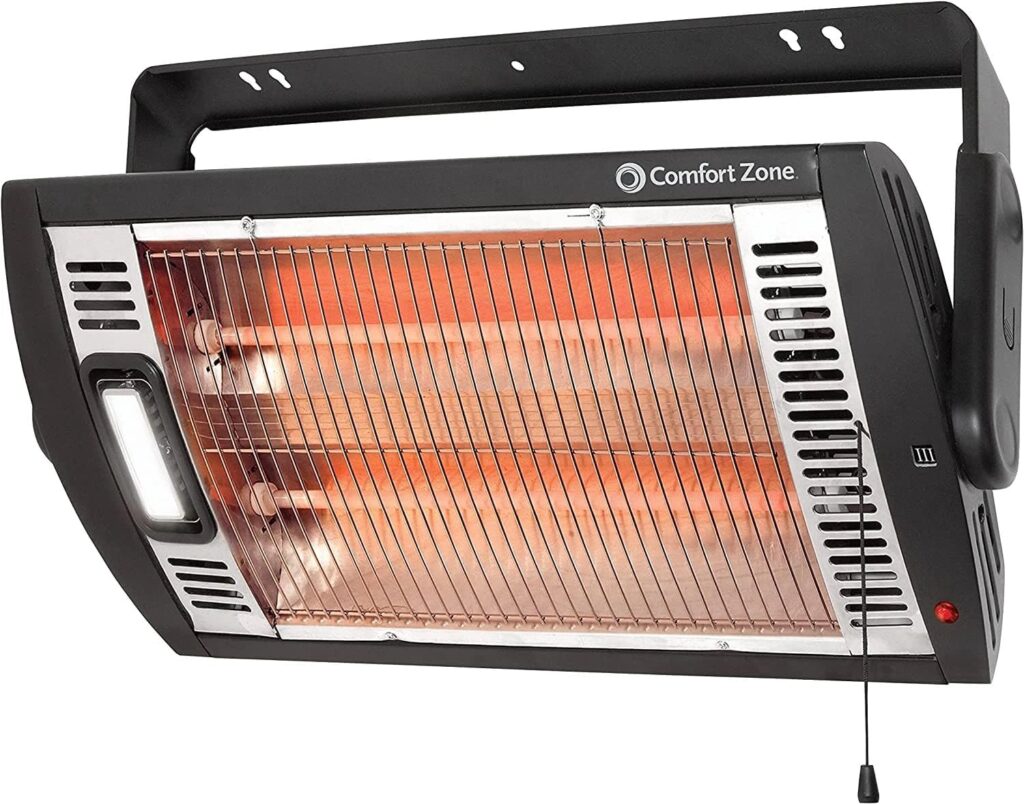
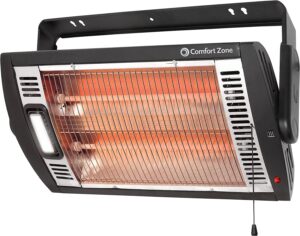
| Comfort Zone Ceiling-Mounted Dual Quartz Heater | Bench work and overhead task heat | Ceiling-mounted | Keeps floor space clear and aims heat down where you work | More fixed in use and less versatile once installed |
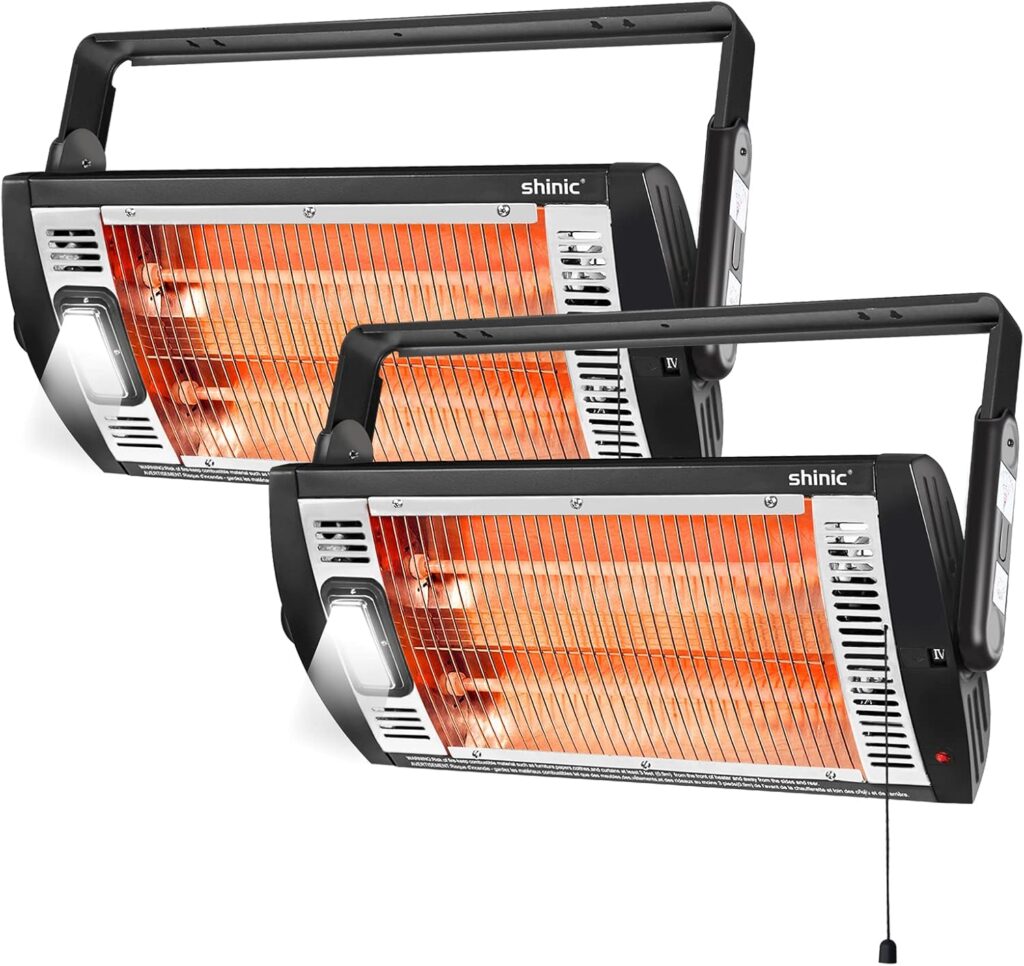
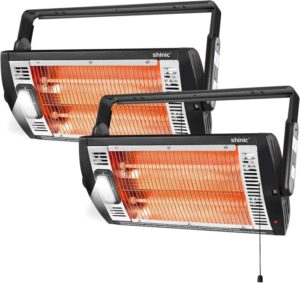
| Shinic QGW15-602 | Split coverage or wider overhead aiming | Ceiling-mounted | Two-bulb setup works well for targeted zones | Best when you know your layout in advance |
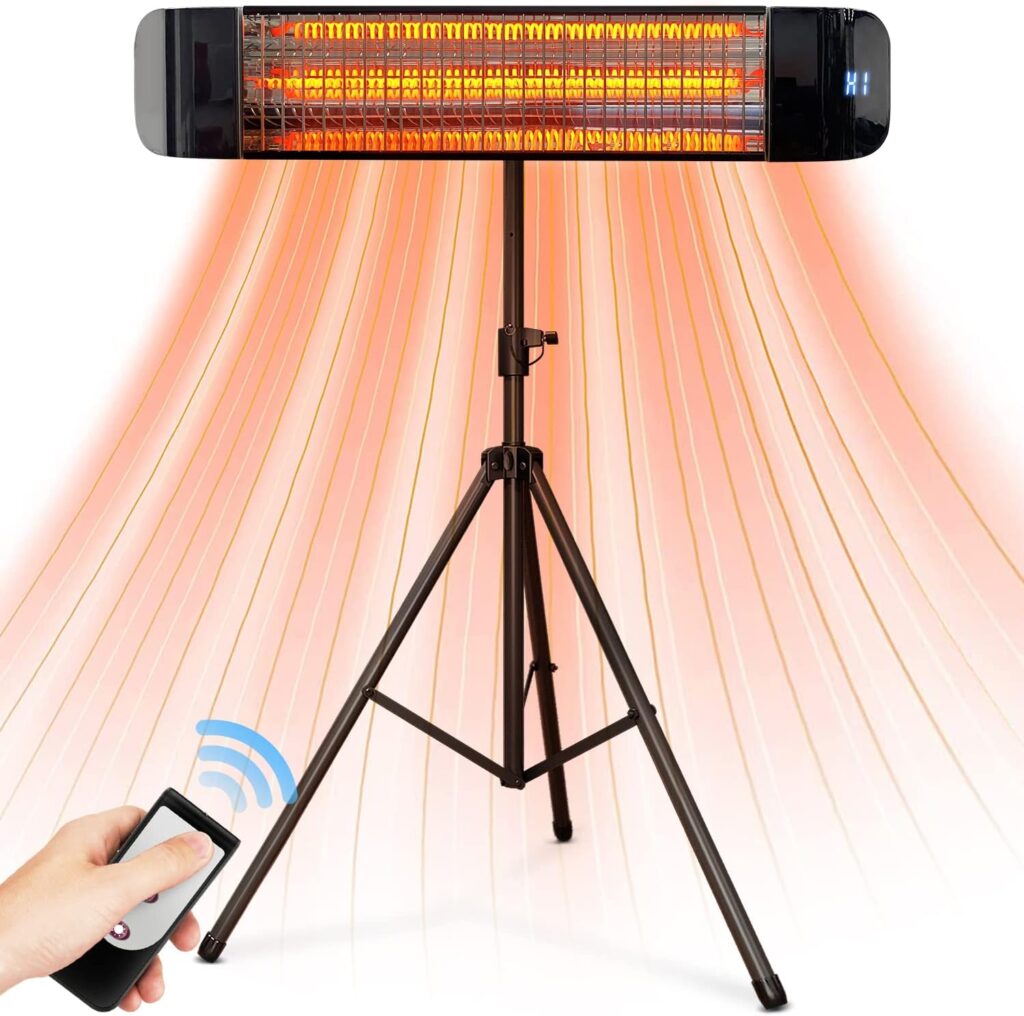
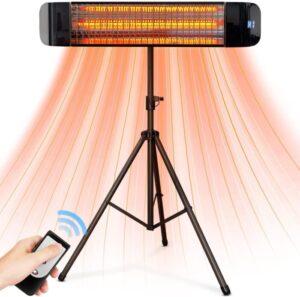
| Paraheeter QHA-15DB | Flexible temporary heat | Tripod / portable | Simple to reposition as your work moves around | Adds floor clutter and still won’t heat a full garage evenly |
What Infrared Garage Heaters Are Actually Good At
| Great For | Not Great For |
|---|---|
| Warming a bench area | Heating a big drafty two-car garage evenly |
| Keeping you comfortable while standing in one spot | Replacing a true whole-garage heating system |
| Quiet heat without a loud fan | Warming the far corners of the room |
| Spaces where doors open and close often | Expecting instant full-room heat from one 1500W unit |
| Supplemental heat in the zone you use most | Large open workshops with high ceilings and weak insulation |
How We Chose the Best Infrared Heaters for Garages and Workshops
We focused on electric infrared models that make sense in real garages and workshops, not just indoor product pages with vague “large room” claims. That meant looking at where the heat goes, how easy each heater is to place or mount, how quiet it stays during long projects, and whether the design suits bench work, hobby use, or everyday garage time. We also paid attention to the biggest real-world trade-off in this category — most 120V infrared heaters work best as targeted comfort tools, not full-space heating systems.
Comparison Table — Which Heater Fits Your Garage Style?
| Your Situation | Best Match | Why |
|---|---|---|
| You mainly work at one bench | Comfort Zone | Overhead heat aimed down where you stand |
| You want flexible placement before committing | Briza | Fits several mounting or use styles |
| You want app control in a smaller garage | Heat Storm | Easiest daily use and remote convenience |
| You want a fixed directional radiant setup | DR-238 | Clean, quiet zone heat for a regular work area |
| You move around from task to task | Paraheeter | Portable tripod setup is easier to reposition |
| You want broader overhead bench-area warmth | Shinic | Better fit for slightly wider top-down coverage |
What to Consider When Buying Infrared Heaters for Garages and Workshops
1) Zone heat vs whole-garage heat
This is the biggest buying mistake in the category. Most electric infrared heaters for garages are zone heaters, not true whole-room heaters. They work best when you want comfort where you are — not when you want every wall, corner, and shelf in the garage to feel warm.
That isn’t automatically a bad thing. In fact, it’s often the smarter way to heat a workshop. If you spend most of your time at one bench, there’s no reason to pay for heat in empty space. Still, if your goal is even warmth across a large two-car garage, one 1500W infrared heater probably won’t get you there.
2) Fixed mount or movable heater?
A fixed heater usually looks cleaner. Once you mount it, it stays out of the way, which matters in crowded garages. Ceiling-mounted and wall-mounted units also make the space feel more intentional, less like you’re dragging an appliance around.
Portable or tripod models are easier to live with when your work moves around. They aren’t as neat, but they’re more forgiving. If you detail one day, wrench the next, and build something at the bench after that, portability may matter more than appearance.
3) What 1500W really means
Most of these heaters sit around the same power ceiling because they’re built for standard household circuits. So you’re not really choosing between weak and super-powerful units. You’re choosing how the heat is delivered and where it lands.
Placement matters more than many buyers expect. A well-aimed 1500W infrared heater over a work zone can feel more useful than a poorly placed heater with similar output. The wattage limit is real, so it’s better to shop for fit and layout than to expect hidden extra power.
4) Running cost — a simple table
Here’s a rough idea of what a 1500W heater costs to run at full power:
| Electricity Rate | Cost Per Hour | Cost for 2 Hours/Day | Cost for 4 Hours/Day |
|---|---|---|---|
| $0.15 / kWh | $0.23 | $0.45 | $0.90 |
| $0.20 / kWh | $0.30 | $0.60 | $1.20 |
| $0.30 / kWh | $0.45 | $0.90 | $1.80 |
| $0.40 / kWh | $0.60 | $1.20 | $2.40 |
That’s why infrared usually works best as targeted heat. Used selectively, it can feel efficient. Used like a whole-building system, it gets expensive fast.
5) Safety and workshop layout
Garages are messier than bedrooms. You may have cardboard boxes, paint, rags, solvents, shelves, extension cords, and half-finished projects everywhere. Because of that, clearance rules matter a lot more here than they do in a typical room.
Choose a heater that fits the way your garage actually works. If the floor is crowded, overhead heat is often safer and easier. If you go portable, make sure the heater won’t end up in a traffic path where it gets bumped, snagged, or boxed in.