Choosing between ceiling-mounted vs tripod infrared heaters usually comes down to how fixed your garage routine is. If you work in the same spot every weekend, an overhead heater often makes more sense. If your projects move around — bench one day, car bay the next, garage gym after that — a tripod setup is usually easier to live with.
That’s what makes this comparison more interesting than it looks. Both styles use infrared heat, which warms people and surfaces more directly instead of relying only on heating the air. That’s a real advantage in garages, where drafts, concrete floors, and door openings can make ordinary air-heating feel wasteful or slow. Radiant heaters also tend to work well for task zones and don’t stir up dust the way fan-driven heat can.
Quick Verdict
| Feature | Ceiling-Mounted Infrared | Tripod Infrared |
|---|---|---|
| Best for | Fixed bench zones, cleaner layout | Changing work areas, aimed spot heat |
| Heat feel | Broader overhead coverage | More direct beam on your body |
| Floor space | Stays completely clear | Takes up some floor room |
| Setup | Install once, leave it | Plug in, move around as needed |
| Main strength | Tidy and out of the way | Flexible and easy to aim |
| Main drawback | Harder to reposition later | More clutter and placement fuss |
Visual Scorecard
My read for typical garage use — not lab testing, but practical buyer guidance.
| Category | Ceiling-Mounted | Tripod |
|---|---|---|
| Fixed workbench comfort | 9/10 | 7/10 |
| Aimed personal warmth | 7/10 | 9/10 |
| Layout cleanliness | 10/10 | 6/10 |
| Flexibility | 5/10 | 10/10 |
| Easy first setup | 6/10 | 9/10 |
| Best for shared/multi-use garage | 6/10 | 9/10 |
Heat Feel Snapshot
| What you care about | Better pick |
|---|---|
| “Keep the floor clear” | Ceiling-mounted |
| “Put heat exactly on me” | Tripod |
| “Same workspace every time” | Ceiling-mounted |
| “I move around a lot” | Tripod |
| “Least annoying in a cramped garage” | Ceiling-mounted |
| “Least commitment before I buy” | Tripod |
Shortlist at a Glance
| Type | Model | Best at | Why it stands out | Watch-out |
|---|---|---|---|---|
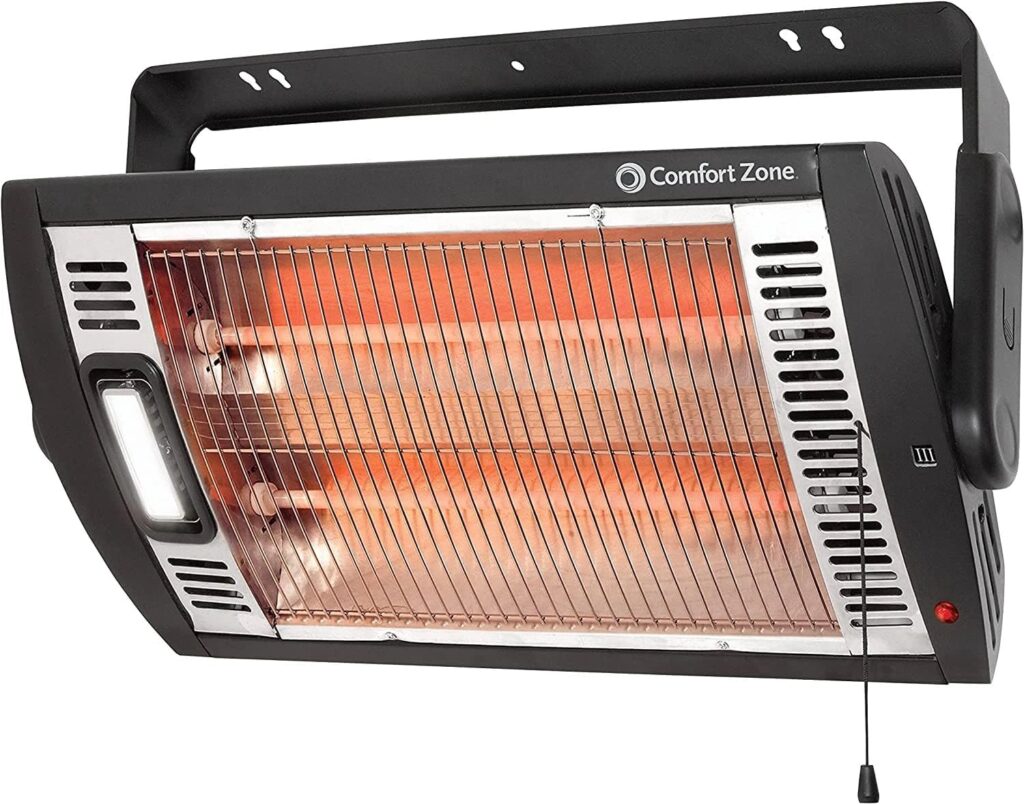
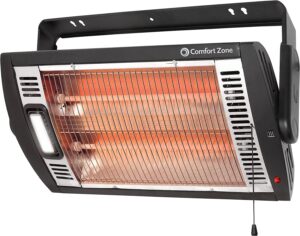
| Ceiling | Comfort Zone | Fixed bench zone | Ceiling-mounted quartz design keeps floor space free and throws heat forward into the work area | Short cord |
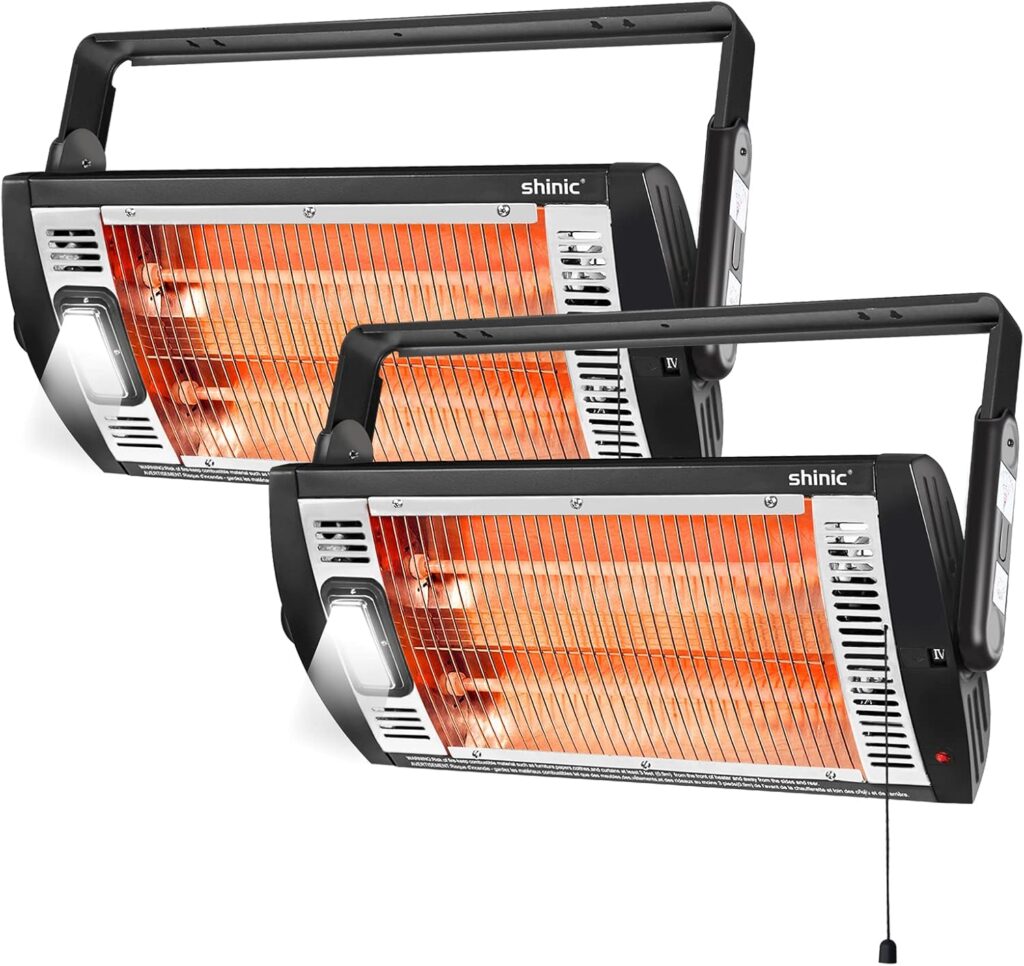
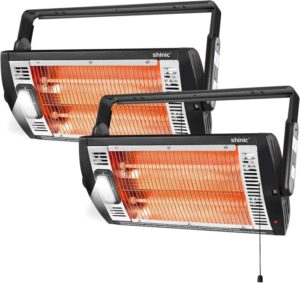
| Ceiling | Shinic | Two-zone style coverage | 750W/1500W settings, remote, 90° rotation, and multiple modes make it the more feature-heavy ceiling option | Bracket flex |
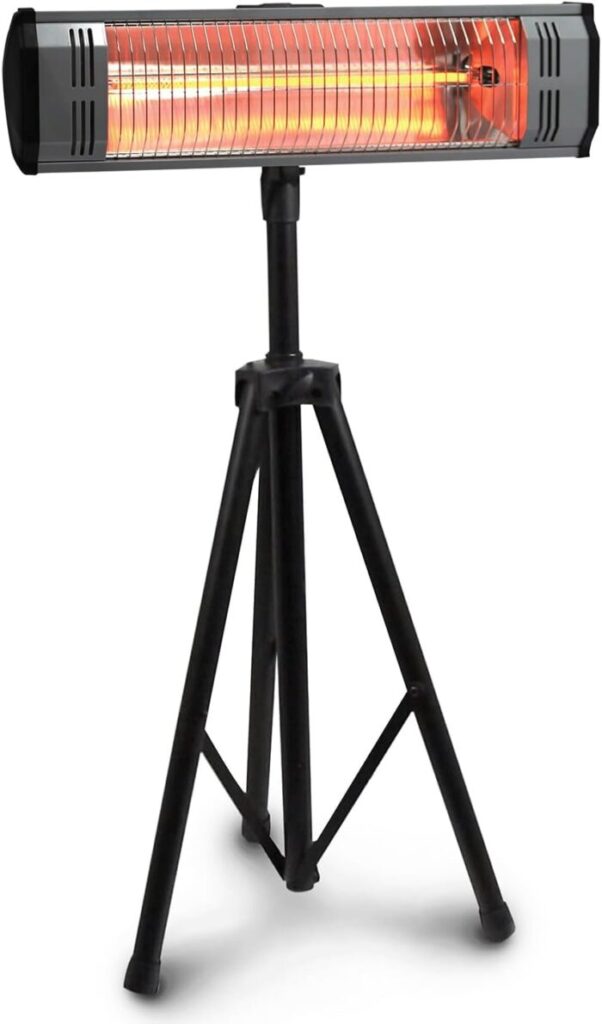
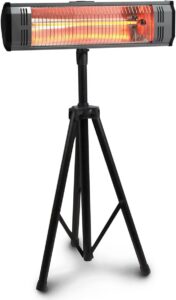
| Tripod | Heat Storm tripod | Aimed beam heat | 1500W weatherproof infrared heater with tripod, remote, silent carbon fiber bulb, and tip-over shutoff | Switch failures |
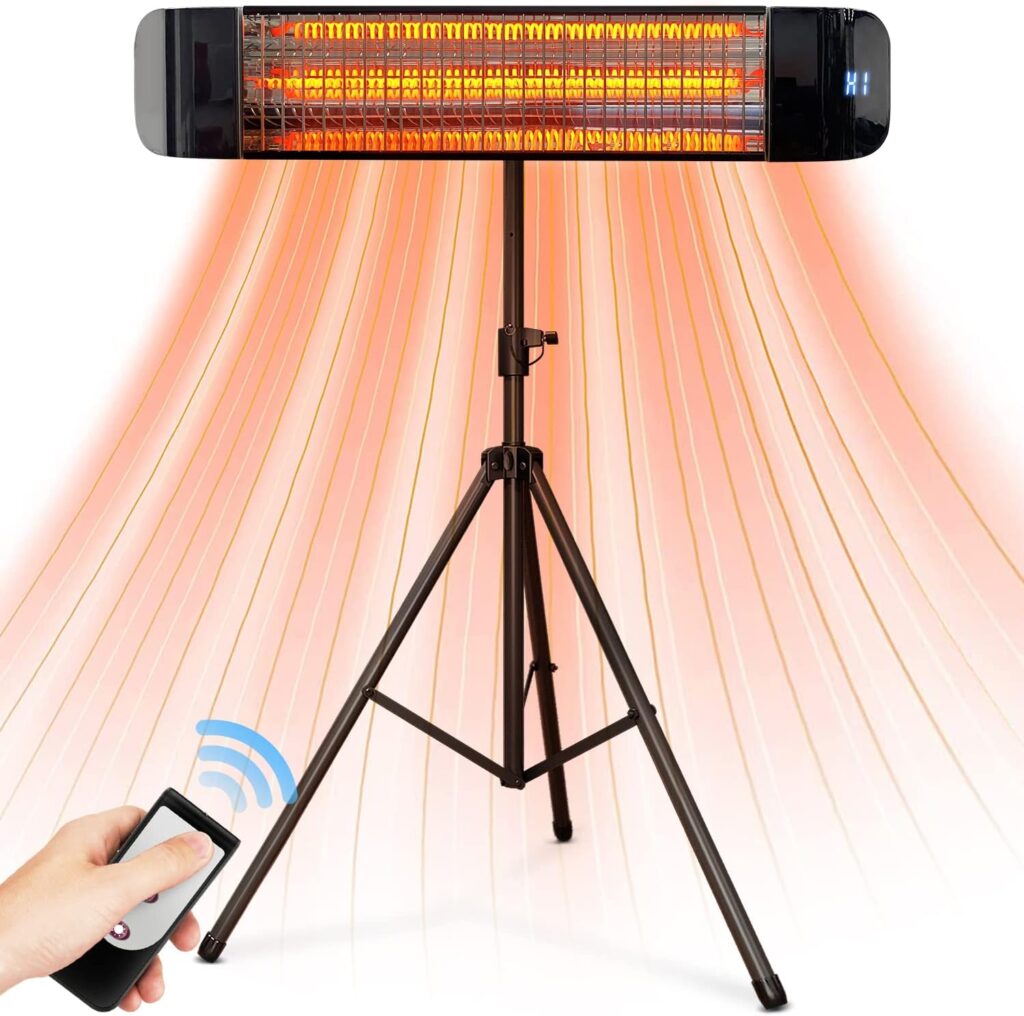
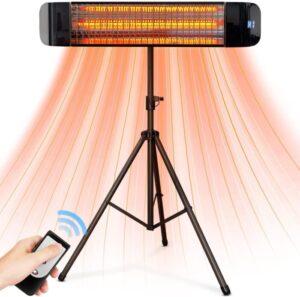
| Tripod | Paraheeter | Mixed-use flexibility | 1500W unit that can be used on tripod, wall, or ceiling, so it gives you more setup paths | QC varies |
Comfort Zone markets its ceiling-mounted quartz heater around warming the area in front of it while keeping valuable floor space open. Shinic’s current garage model adds remote control, 750W/1500W settings, 90° rotation, and multiple modes. Heat Storm’s Tradesman tripod combo is built around mobility and direct radiant warmth, with a tripod, remote, silent carbon-fiber infrared bulb, and IPX4 weather resistance. Paraheeter is positioned as a 1500W indoor/outdoor unit that can be used on a tripod or mounted to a wall or ceiling.
Key Differences
1) Coverage vs precision
Ceiling-mounted infrared heaters usually win when your garage routine is predictable. Mounted overhead, they can warm a bench area or one main work zone without adding another object to dodge on the floor. That lines up with how ceiling-mounted infrared heating is generally positioned: direct downward radiant heat, good use of space, and better performance when mounted at a sensible height.
Tripod heaters feel more personal. Instead of asking the heater to cover a zone from above, you can point the beam exactly where you’re standing or sitting. That tends to feel better when you’re doing one cold job right now — detailing a wheel, working at a side bench, or warming up a garage gym corner. Bob Vila’s garage-heater testing notes that radiant heaters warm objects directly in front of them and feel toasty fast when pointed your way.
2) Garage layout and clutter
This is where ceiling-mounted options earn their keep. In a crowded garage, not having a stand, legs, or cord path in the work zone is a real quality-of-life upgrade. If you already have stools, toolboxes, extension cords, or rolling carts around, keeping the heater overhead just makes the space easier to use.
Tripod heaters trade that cleanliness for flexibility. They’re more forgiving if your garage does double duty — workshop, car bay, storage, home gym — because you can move the heat to match the job. That’s the real appeal of models like the Heat Storm and Paraheeter: the heater follows your workflow instead of forcing your workflow to match the install.
3) Setup commitment
Tripod is the easier way to start. You assemble it, plug it in, test the angle, and you’re done. That makes it the lower-commitment choice if you’re still figuring out how you actually use the garage.
Ceiling-mounted is more of a “do it once” decision. Ceiling height matters, and placement matters. One buyer’s guide notes that many ceiling-mounted infrared heaters perform best at roughly 2.4 to 4 meters, and placement becomes more important as the room gets taller. In other words, overhead heat can work really well — but only if it’s installed in the right spot for the way you use the room.
4) How the warmth actually feels
If you like a broader “heated zone” feel over a bench or hobby area, ceiling-mounted usually feels more natural. It’s less about chasing your body with heat and more about making one part of the garage feel usable.
If you want that instant “I can feel it on my hands and jacket” effect, tripod usually wins. Heat Storm’s tripod model explicitly leans into that use case with instant infrared heat, silent operation, and portability for garages and workshops. That doesn’t make it objectively better — it just makes it better for targeted comfort.
Decision Table
| Your garage situation | Better choice | Why |
|---|---|---|
| One fixed workbench | Ceiling-mounted | Cleaner, more permanent comfort zone |
| Multi-use garage | Tripod | Easier to move with the task |
| Tight floor space | Ceiling-mounted | No stand in the way |
| Renters or low-commitment buyers | Tripod | Easier to try without installation |
| You want more control features overhead | Shinic ceiling | Rotation, remote, multiple modes |
| You want direct silent beam heat | Heat Storm tripod | Tripod + silent carbon-fiber infrared |
Which Should You Buy?
Choose ceiling-mounted infrared if your garage has one main “warm me here” zone and you want the cleanest setup possible. It’s the better fit for fixed workbenches, hobby corners, and tighter garages where floor space matters. From your shortlist, Comfort Zone is the simpler overhead choice, while Shinic is the more feature-rich one if you want remote control and more adjustability.
Choose tripod infrared if your projects move around or you care more about aiming heat at yourself than blanketing a fixed zone. That’s where Heat Storm tripod makes the most sense — silent, direct, portable warmth. Paraheeter is the more flexible “do a bit of everything” option because it can also be mounted later if your setup changes.
The tie-breaker is simple: ceiling-mounted for a stable routine, tripod for a moving target.