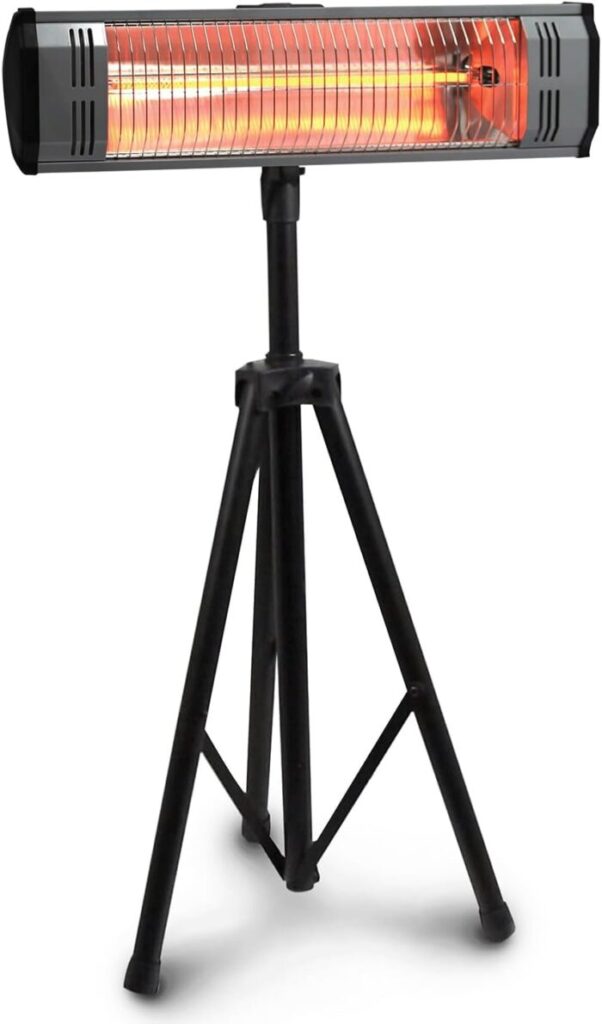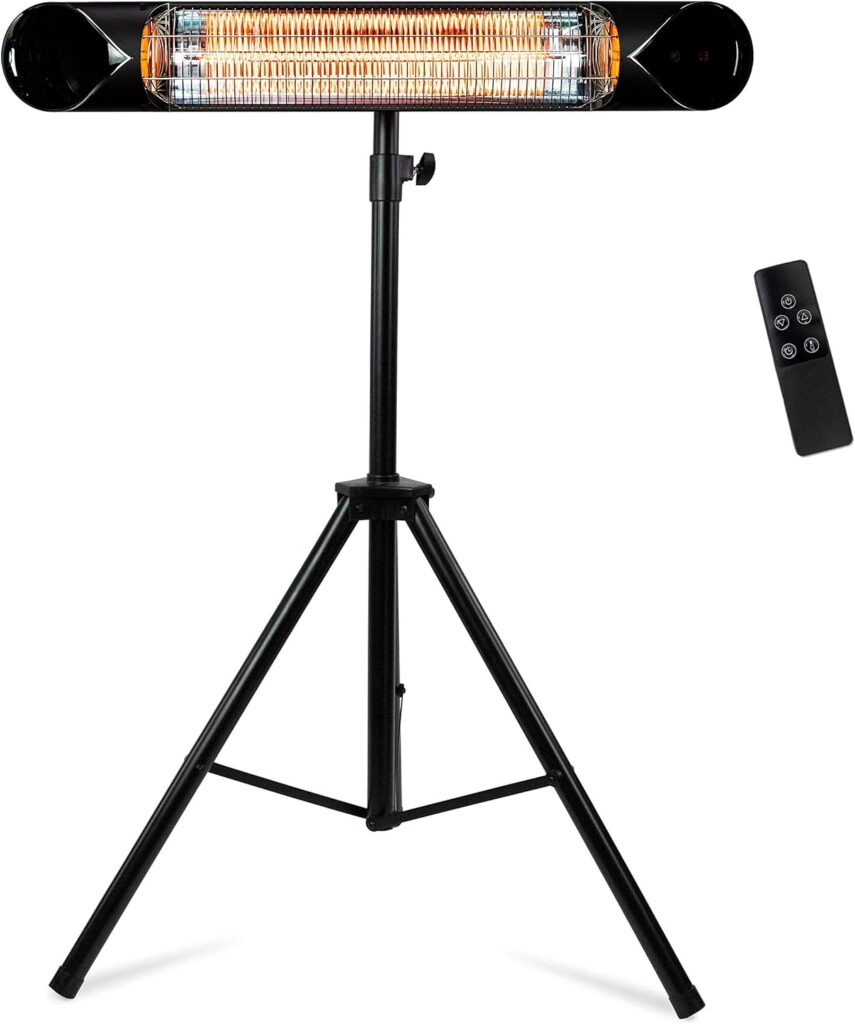
Choosing between the Heat Storm tripod heater and the Briza mounted infrared usually comes down to one basic question — do you want heat that’s easy to move, or heat that’s easier to place permanently and forget about?
That’s what makes this comparison interesting. Both are 1500W electric infrared heaters, both aim for quiet, focused warmth, and both make sense for patios, garages, and workshop-style spaces. But they solve the problem differently. The Heat Storm leans into portable outdoor-friendly use, while the Briza gives you more installation flexibility if you want something that can work mounted or freestanding. Here’s how they compare in real-world use.
Quick Verdict
| Feature | Heat Storm Tripod | Briza Mounted Infrared |
|---|---|---|
| Best for | Flexible portable use | Mixed mounted or fixed use |
| Price range | Around $100-$130 | Around $95-$150 |
| Heat output | 1500W | 900W / 1200W / 1500W |
| Key strength | Easy repositioning | More setup flexibility |
| Main drawback | Less “permanent” feel | Mounting advantages depend on how you install it |
| Ideal space | Patio corners, decks, temporary zones | Garages, covered patios, semi-permanent zones |
Key Differences
Setup and placement
This is the biggest difference, and honestly the reason most people will choose one over the other.
The Heat Storm tripod heater makes the strongest case if you want something you can place, angle, and move around without thinking too hard about installation. That’s useful for people who use heat in different spots — one night by a patio seating set, another day near a garage workbench.
The Briza makes more sense if you want options. It can be mounted, which immediately helps if you don’t want floor clutter, and that matters in a garage or covered patio where space gets tight fast. Even though Briza can also work with a stand, its real advantage is that it gives you a more flexible path from temporary setup to semi-permanent use.
Heat feel and coverage
On paper, these heaters live in the same class. In actual use, both are better at zone heat than true whole-room heat.
That means you’re not buying either one to make a drafty three-car garage feel centrally heated. You’re buying them to warm the area where people actually are. Heat Storm is a good fit when you want that warmth directed at a conversation set, work area, or seating zone. Briza works similarly, but it has a slight edge for buyers who want to position the heater in a way that stays consistent over time.
The practical takeaway is simple — both work best within a limited range, and both are strongest when you’re in front of them rather than expecting even warmth everywhere. If your goal is spot heat, both are on the right track. If your goal is full-space heating, neither is the ideal tool.
Noise and everyday comfort
This category is pretty close, and that’s a good thing.
A big reason people shop electric infrared heaters instead of propane patio heaters or forced-air garage heaters is noise. You don’t want a loud blast of fan noise when you’re trying to work, eat outside, or just take the chill off. Briza stands out here because it’s commonly described as virtually silent in use, which is a real advantage in garages and patios where background noise matters.
Heat Storm is also aimed at quiet comfort, but its bigger real-world selling point is less about total silence and more about convenient warmth without the bulk and mess of propane. So if you’re especially sensitive to noise, Briza has the cleaner pitch. If you just want a quieter alternative to gas heat, either one makes sense.
Features, controls, and weather readiness
Briza feels a little more feature-driven. Multiple heat levels, a remote, timer functions, and indoor/outdoor flexibility give it a broader appeal for buyers who want more control.
Heat Storm’s appeal is more straightforward. It focuses on portable infrared warmth with outdoor-friendly use in mind, and that simplicity will be a plus for some buyers. Not everyone wants extra settings — some people just want to plug it in, point it, and get warm.
Weather resistance also matters here. Both are built for covered outdoor use rather than full exposure. In real life, that means patios, balconies, garages, and under-cover setups are where they make the most sense. Neither should be treated like something you leave exposed to harsh weather all the time.
Value and who each heater is really for
Heat Storm is the easier pick for the buyer who wants straightforward portable heat and doesn’t want to overthink the decision. It fills the “move it where I need it” role well.
Briza is the better value if you know placement flexibility matters. Even if it costs a bit more depending on the bundle or retailer, the ability to use it mounted or in a freestanding setup makes it a better fit for buyers who want one heater to adapt with their space over time.
So this isn’t really a case of one heater crushing the other. It’s more about whether you want portability first or flexibility first.
Which Should You Buy?
Go with the Heat Storm if you want the simpler answer. It’s the better choice for people who care most about portability, easy repositioning, and direct warmth in changing spots around a patio or garage. If you don’t want to mount anything and you like the idea of a heater that follows you around your space, this is the more natural fit.
Choose the Briza if you want more ways to use the same heater. It’s the smarter pick for garages, covered patios, and work areas where you might start with a temporary setup but later want a mounted solution. The extra flexibility is the whole point.
If you’re stuck, use this tie-breaker — choose Heat Storm for movement, choose Briza for placement options.