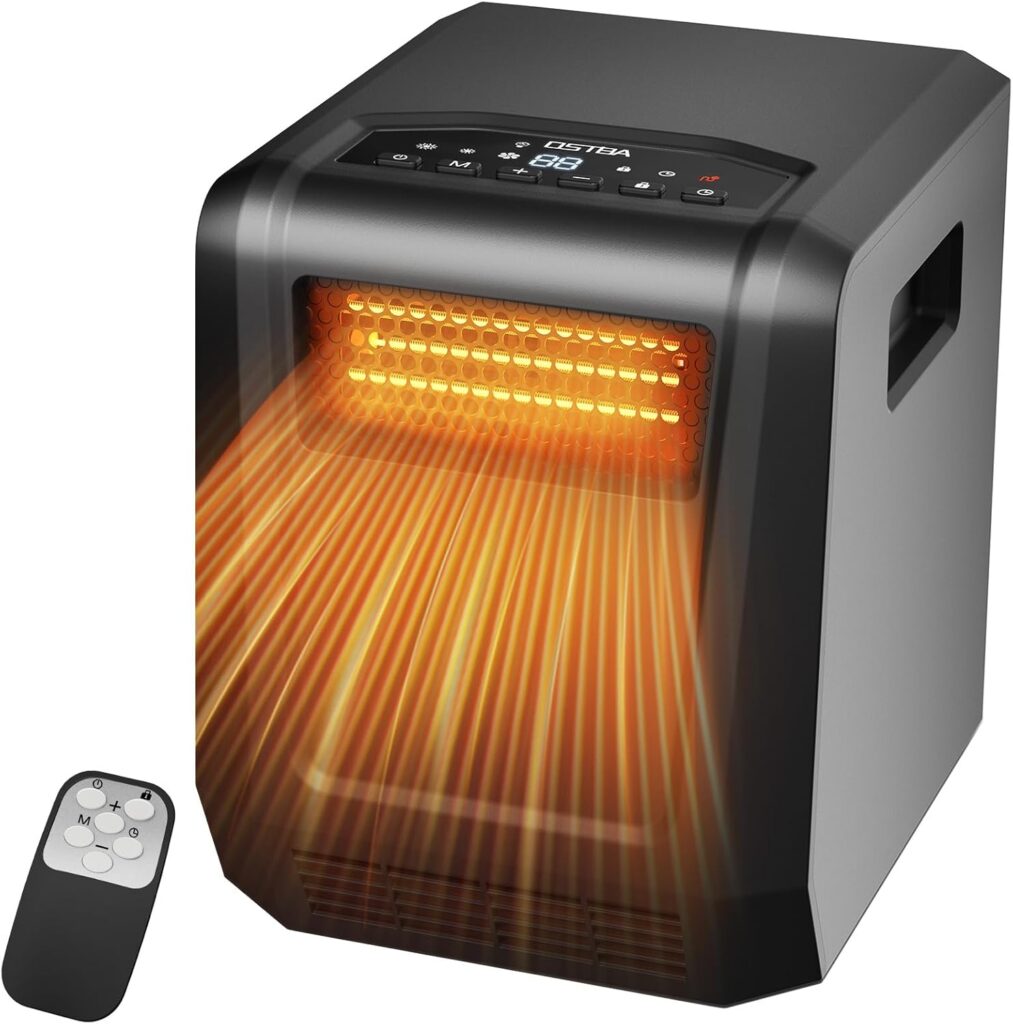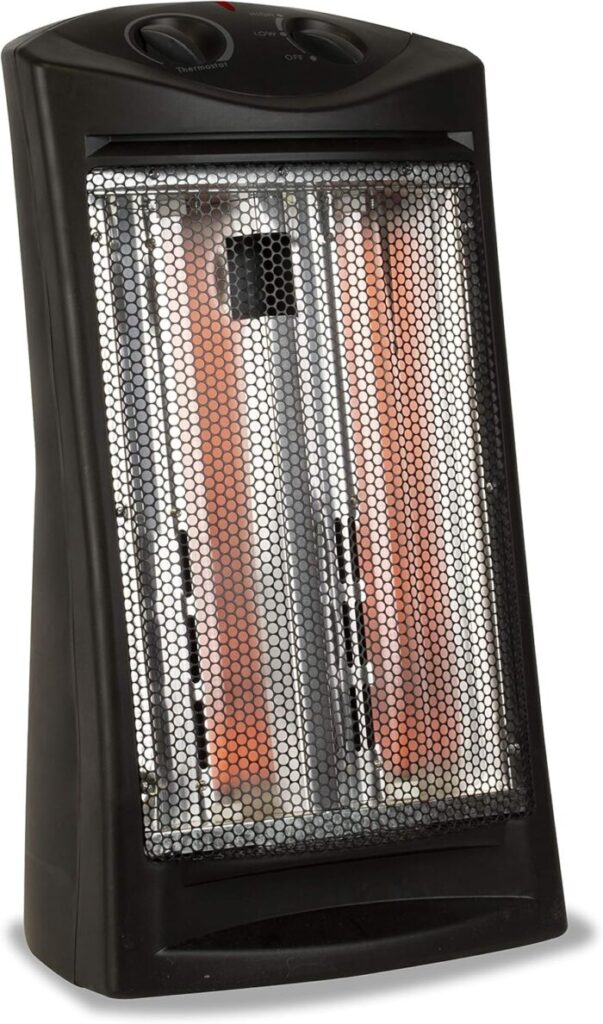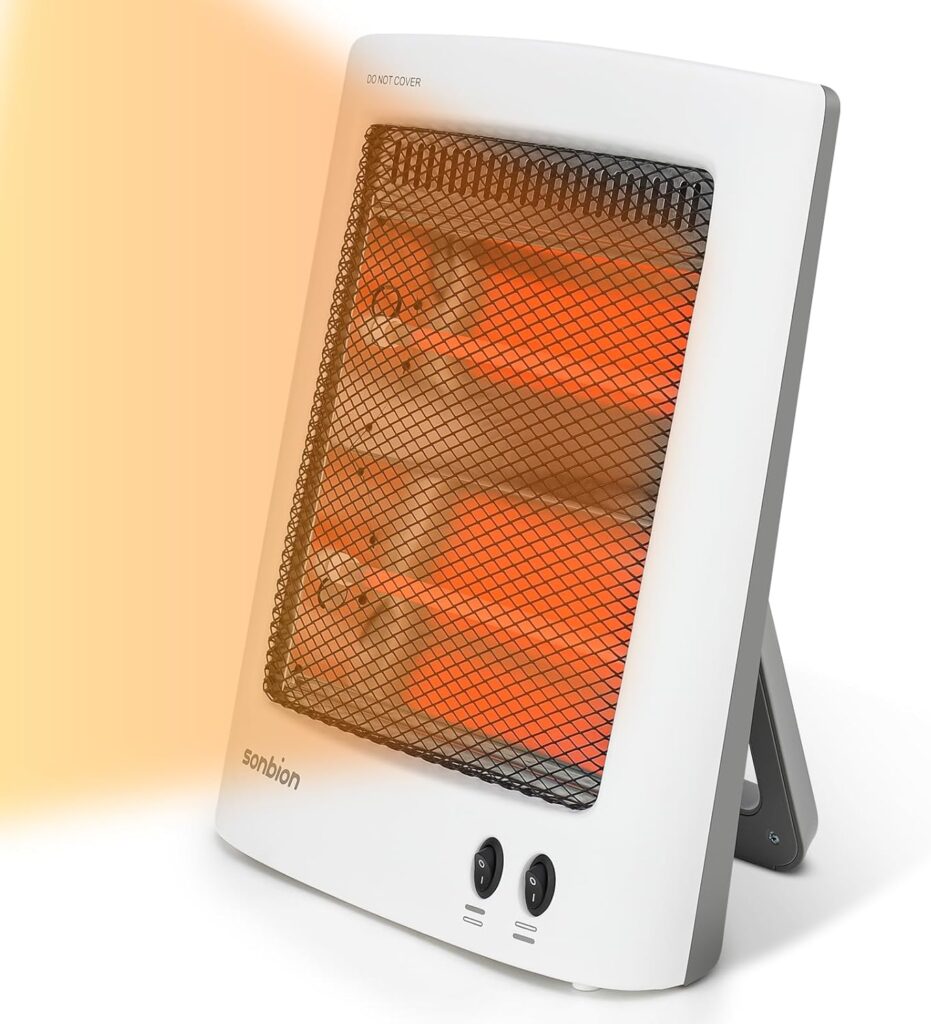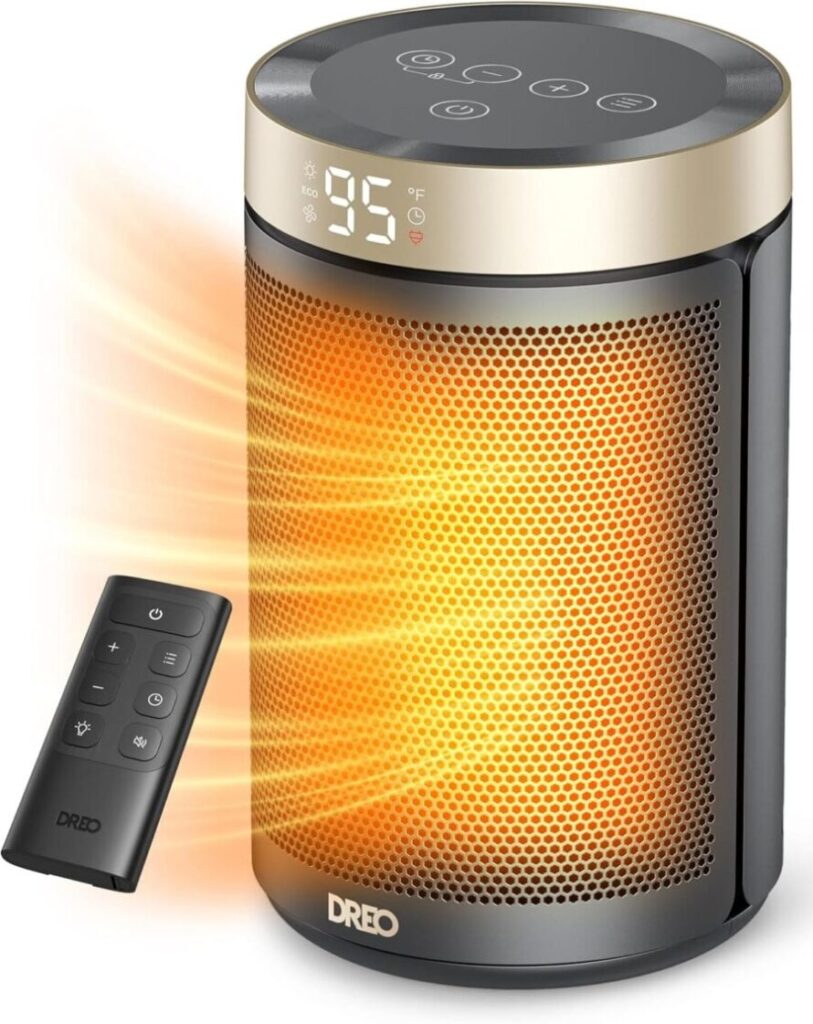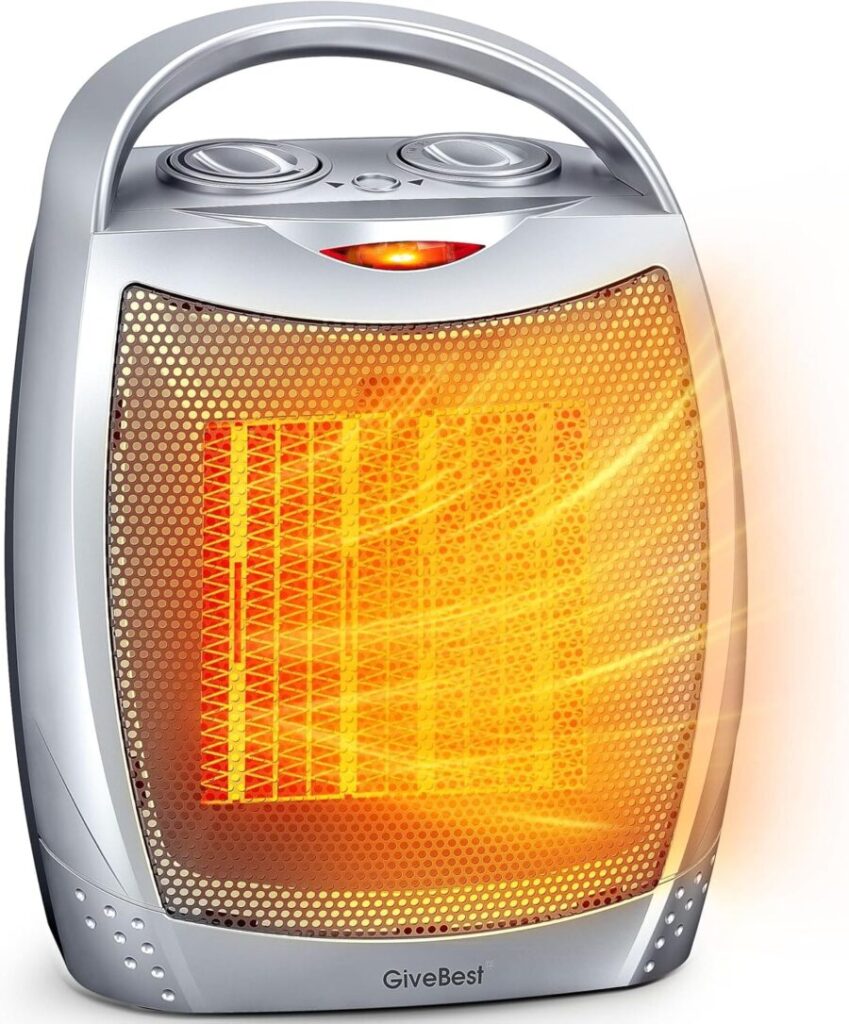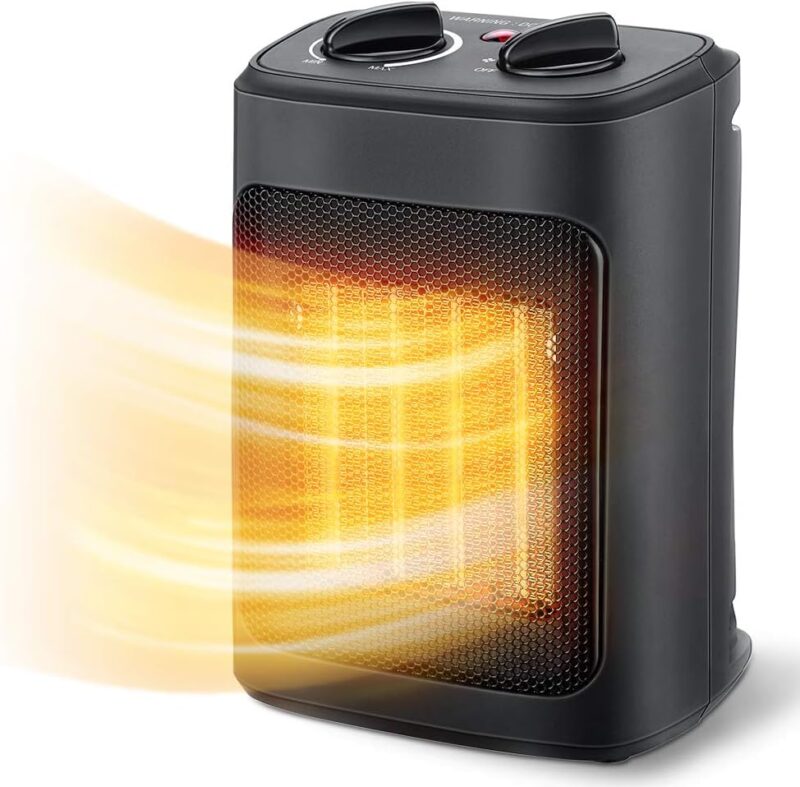
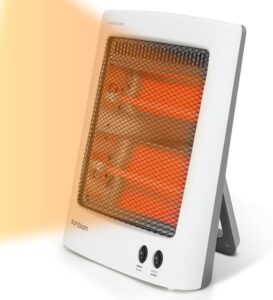
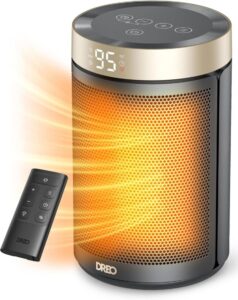
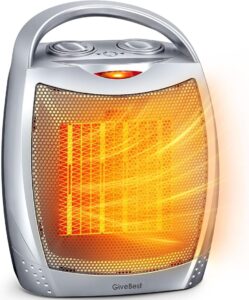
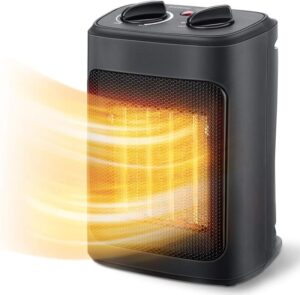
If you’re stuck choosing an infrared vs ceramic heater, the real difference is how the warmth reaches you: infrared warms you/objects directly, while ceramic warms the air with a fan. Here’s the quickest way to pick.
Choose infrared if…
- you want spot heat that feels good fast (couch, desk, workshop)
- your space is drafty and you’re tired of heating “all the air”
- you hate fan noise and want something that can be near-silent
Choose ceramic if…
- you want the room air to warm up more evenly
- you need quick heat + portability (bathroom, home office, bedroom)
- you like a “warm breeze” effect and don’t mind a gentle fan hum
Infrared vs ceramic heater comparison table
| Feature | Infrared heater | Ceramic heater |
|---|---|---|
| Warm-up speed | Fast for you (instant “sun on your skin” feel) | Fast for air (warm airflow in seconds) |
| Noise | Usually quiet (many are fanless) | Often a fan hum (varies by model) |
| Comfort | “Radiant” warmth, great for spot heating | “Warm breeze” comfort, more room-filling |
| Safety | Can get hot in front / on grille, needs clearance | Many have cooler-touch housings, still needs clearance |
| Cost to run | Similar at same watts, savings come from using it smarter | Similar at same watts, often used in bursts |
| Best rooms | Desk area, couch zone, garage, drafty spaces | Bedroom, bathroom, office, smaller enclosed rooms |
Heat feel: spot heat vs room heat
Infrared feels like standing in gentle sunlight. It sends radiant energy that warms people and objects in its path. That’s why it can feel amazing even when the room air is still chilly.
Ceramic heaters warm a ceramic element and use a fan to push heated air into the room. That’s why they’re so popular for bedrooms and bathrooms — you feel warm air quickly, and the room temperature can rise more evenly over time.
A simple way to think about it:
- Infrared = “warm me”
- Ceramic = “warm the air around me”
Noise: which is better for sleep?
Ceramic heaters usually have a fan. Even a “quiet” fan is still a fan — steady hum, sometimes a little rattle over time if dust builds up.
Infrared heaters are often quieter because many models don’t need a fan (though some cabinet-style infrared heaters do). If silence is the priority, many infrared models have the edge.
Running cost: same watts ≈ similar cost
If two electric heaters are both 1500W, and they run for the same amount of time, they cost about the same to operate. The savings usually come from how you use the heater.
- Infrared can make you feel warm while the room stays cooler, so you may run it for less time (desk/couch zones).
- Ceramic feels instant because of warm airflow, so people often use it in short bursts (bathrooms and quick chill moments).
Quick cost math:
1500W = 1.5 kW → cost per hour = 1.5 × your electricity rate
Safety checklist (works for both types)
Look for:
- tip-over shutoff
- overheat protection
- a stable base + reputable safety listing (UL / ETL)
Use them safely:
- plug directly into a wall outlet (skip power strips)
- keep clear space (especially curtains, blankets, pet beds)
- don’t trap/pinch the cord under furniture or desk legs