This guide breaks down propane vs electric patio heater choices the way real patios work: zones, wind, furniture layout, and your tolerance for cords, refills, and setup. By the end, you’ll know which heater type fits your space (and why), plus which style — standing, pyramid, wall mounted, ceiling mounted, tabletop, or tripod — makes the most sense.
Choose propane if…
- You have an open patio (no roof) and want a bigger “presence” heater for groups
- You don’t have a convenient outlet (or you don’t want cords crossing walkways)
- You want portable heat that can roll wherever people gather
- You like the visible flame vibe (especially pyramid styles)
Choose electric if…
- You have a covered patio heater situation (roof, pergola, awning, screened porch)
- You want instant, targeted warmth without fuel runs
- You care about quiet operation and low day-to-day fuss
- You prefer a wall mounted patio heater or ceiling unit that stays out of the way
How patio heaters feel in real life
Outdoors = zone heat (and that’s not a bad thing)
A common theme owners mention: patio heaters don’t turn your backyard into a living room. What they do well is create a comfort bubble — the spot where you’re sitting, eating, or hanging out. If you lean into that reality, you’ll be much happier with the results.
Wind is the real enemy
If you’re shopping for the best patio heater for windy patio setups, here’s the hard truth: wind steals comfort fast. It disrupts warmth, cools your body, and makes you “chase the heat” by standing closer than you planned.
Wind management matters as much as the heater:
- Put the heater near a wall, fence, or screen when possible
- Arrange seating so people aren’t facing into the breeze
- Consider overhead infrared (electric) in covered spaces to reduce wasted heat
Radiant vs convective feel
- Radiant heat warms you and nearby surfaces more directly — think “sun on your skin.” Many electric infrared patio heater models work like this, and so do some propane radiant styles.
- Convective heat warms the air more — nice in calm conditions, but the air gets swept away outdoors.
In practice: if you want that “I can feel it right away” sensation, you’re usually looking for radiant warmth and good placement.
Propane patio heaters
What they do well
Strong output and crowd-friendly warmth. Many freestanding propane models land in the ballpark of ~40,000–50,000 BTU (you’ll often see this listed as propane patio heater BTU). Customers report that when the flame kicks on, you feel the change quickly — especially if you’re within the heater’s comfort circle.
Portability is a real perk. Owners like that you can roll a propane unit to the dining table one night, then park it by the lounge chairs the next. No outlet planning required.
No cord = fewer trip hazards. For busy patios, rentals, or homes with pets/kids running around, not having a cord across traffic areas is a quiet win.
Common real-world drawbacks
Wind sensitivity. Many buyers mention that breezy nights reduce the “wraparound warmth” you expect. You can still use it, but you’ll notice people gravitate closer and shift seats.
Tank refills are the ongoing chore. Propane is convenient until it’s not — especially if you host often. A common theme is the “we ran out mid-evening” moment, which is why a spare tank becomes part of the routine.
Occasional smell/lighting quirks. Most units burn fairly clean outdoors, but owners sometimes mention:
- A brief odor at startup
- A finicky igniter that needs a second try
- Needing to protect the burner area from debris and spider webs between uses
Stability and footprint. Freestanding propane heaters take up floor space and can feel top-heavy. Many are designed with weighted bases and tip-over shutoffs, but placement still matters — especially on uneven pavers or windy corners.
More maintenance than electric. Think seasonal wipe-downs, checking hardware, keeping the burner area clear, and storing/covering the heater so finishes don’t degrade.
Best use cases for propane
- Larger open patios where you want one heater to serve a group
- Entertaining where the heater moves with the party
- Homes without a convenient outdoor outlet
- People who enjoy a visible flame as part of the patio “scene”
Types of propane patio heaters
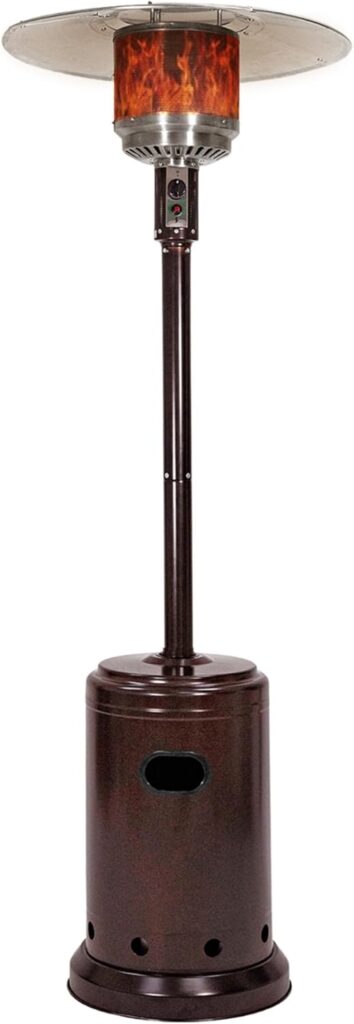
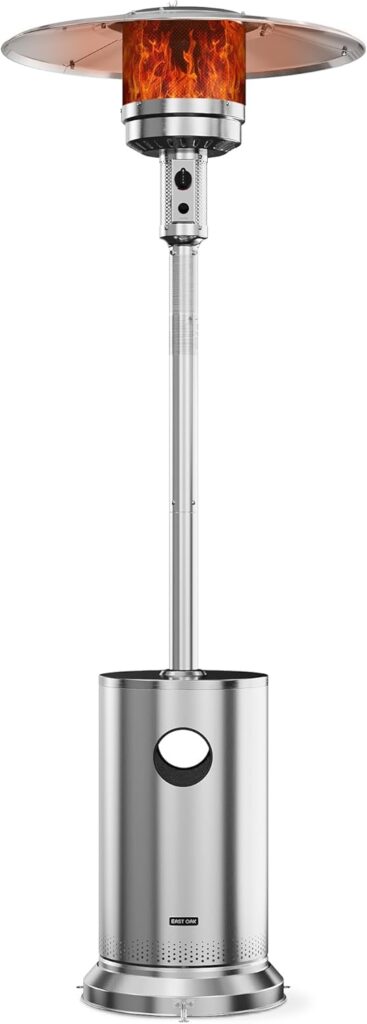
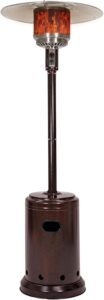
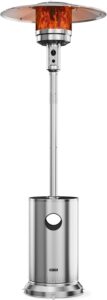
a) Standing “mushroom” patio heaters
This is the classic tall, freestanding style with a reflector top. Owners say it’s the most “general-purpose” propane option — easy to understand, easy to reposition, and familiar.
Best for: open patios, bigger seating areas, casual entertaining.
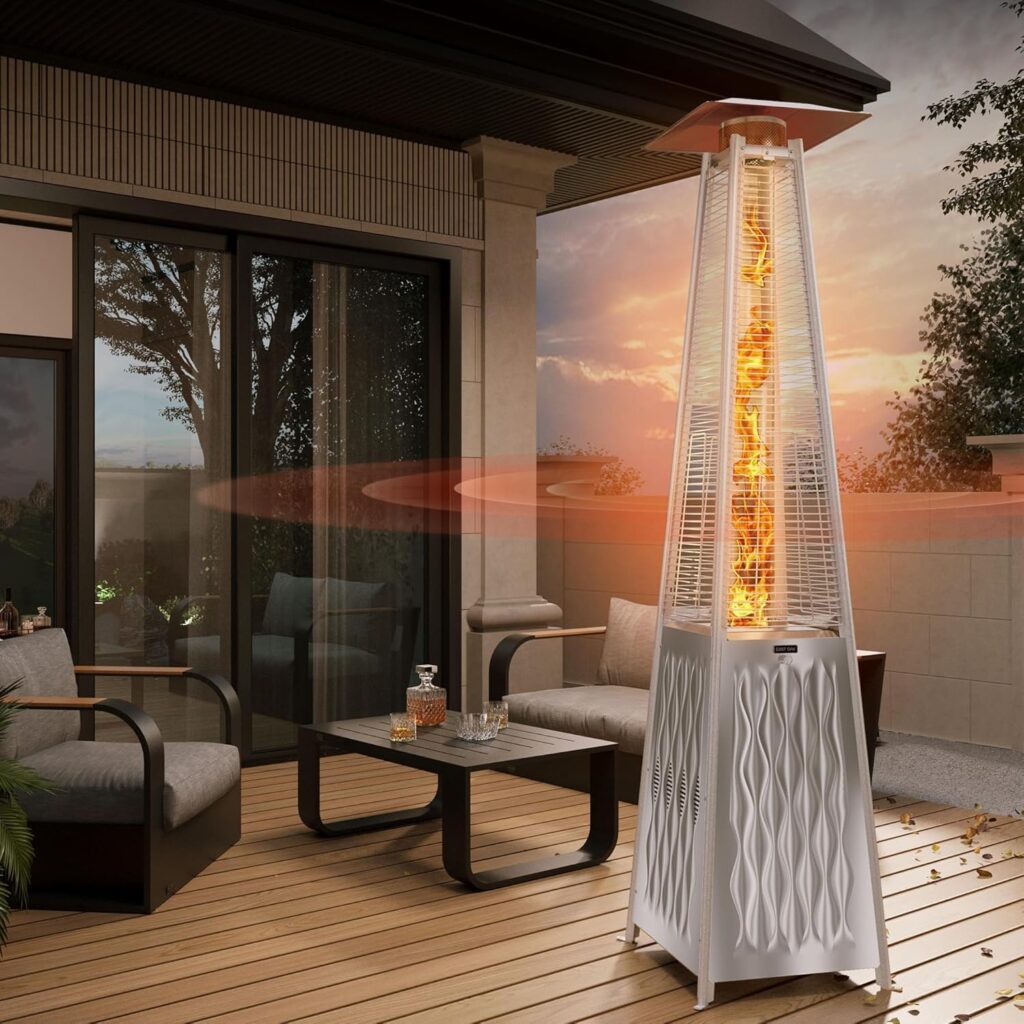
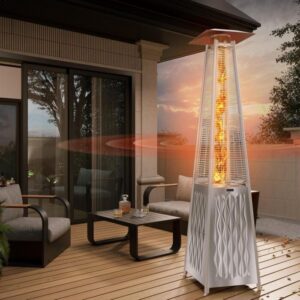
b) Pyramid “glass tube flame” heaters
Pyramid heaters are the “vibe” pick. Many buyers love the vertical flame look and the way it doubles as ambiance lighting. The tradeoff: owners often describe them as more about close-range comfort than wide-area heating.
Best for: a stylish corner, a lounge set, “warmth + atmosphere.”
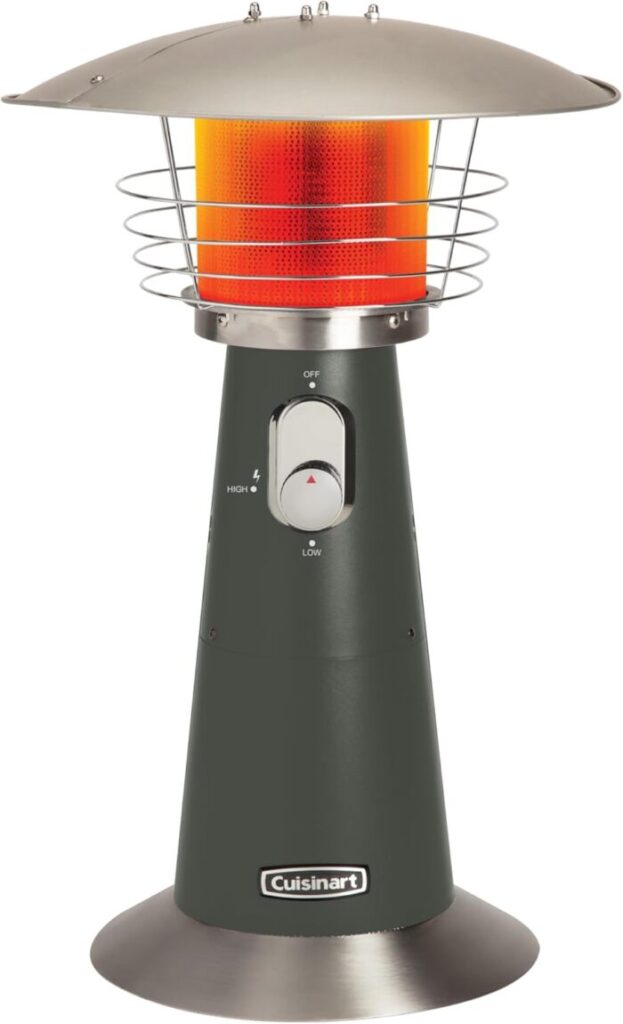
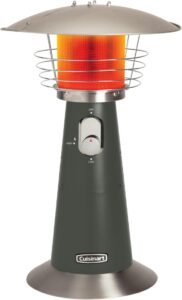
c) Tabletop propane heaters
A tabletop patio heater is usually a small, portable unit that adds warmth where hands and upper body are close. Customers report these feel surprisingly nice for intimate seating, but they’re not designed to warm a whole patio.
Best for: bistro sets, apartment patios, small gatherings.
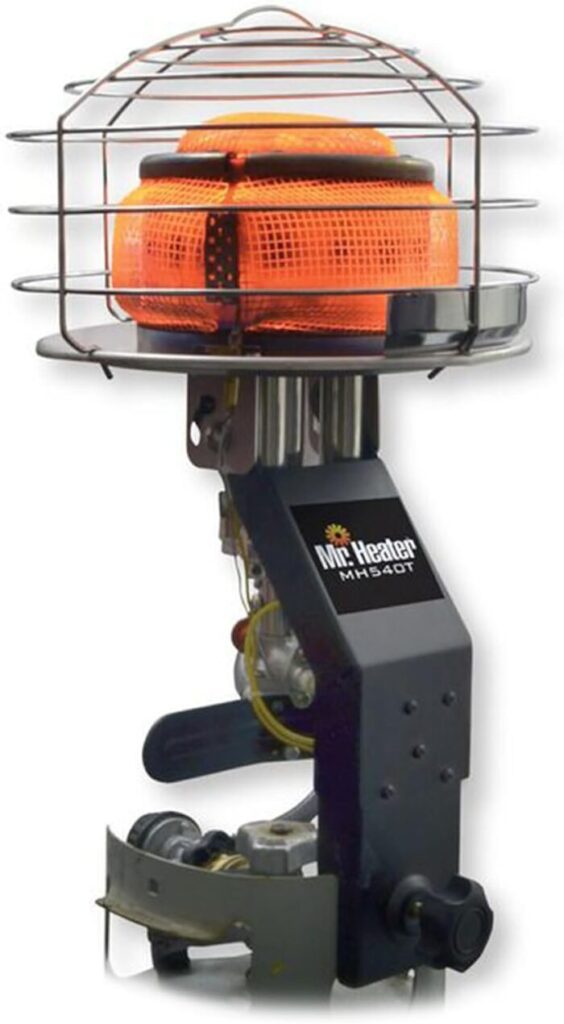
d) Tank-top radiant propane (garage/camping style) — brief mention + safety note
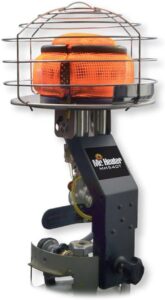
These are the clamp-on radiant heads you might see for workshops or camping. They can produce intense directional heat, but they’re not a casual patio centerpiece and require extra caution. Follow manufacturer guidance carefully and treat them as specialty tools — not a “set it by the sofa” solution.
Safety note: these are outdoor-only and need strict clearance and stable positioning.
Electric patio heaters (infrared/plug-in)
What they do well
Instant, targeted warmth. A common theme with electric infrared is how quickly you feel it when you’re in the beam — especially in a covered seating zone. Owners describe it as “warmth where it counts,” not heat disappearing into the night air.
Low fuss. No tanks, no refills, no ignition quirks. Many buyers mention the convenience of walking outside and turning it on like a light.
Great for covered patios. Electric heaters are often the go-to for a covered patio heater setup because you can mount them overhead or on a wall and aim them at seating. They also keep floor space clear.
Quiet heat. No flame, no “whoosh,” no fan noise on most infrared styles. If you like peaceful evenings — or you’re trying to hear conversation — electric wins on vibe.
Real-world drawbacks
You need power access. For plug-in models, you’re limited by outlet location. And if the cord crosses a walkway, you’ll spend your whole evening thinking about it.
Cord management and mounting decisions matter. People are happiest when they treat electric heaters as “aimed fixtures,” not random stand-ins. Placement is everything: too high, too far, or pointed the wrong way and it feels underwhelming.
Less “whole-area” warmth. Electric infrared is typically about warming people and surfaces in a zone, not heating the air across a wide open patio. If you want the feeling of one big heater “serving the whole party,” propane often feels more satisfying outdoors.
Mounting considerations. A wall mounted patio heater or ceiling unit needs correct height, angle, and clearance — plus a plan for weather exposure and wiring.
Best use cases for electric
- Covered patios, pergolas, awnings, screened porches
- Seating zones where people stay put (dining table, sofa set, bar counter)
- Smaller spaces where floor area matters
- Quiet, “turn it on and forget it” comfort
Types of electric patio heaters
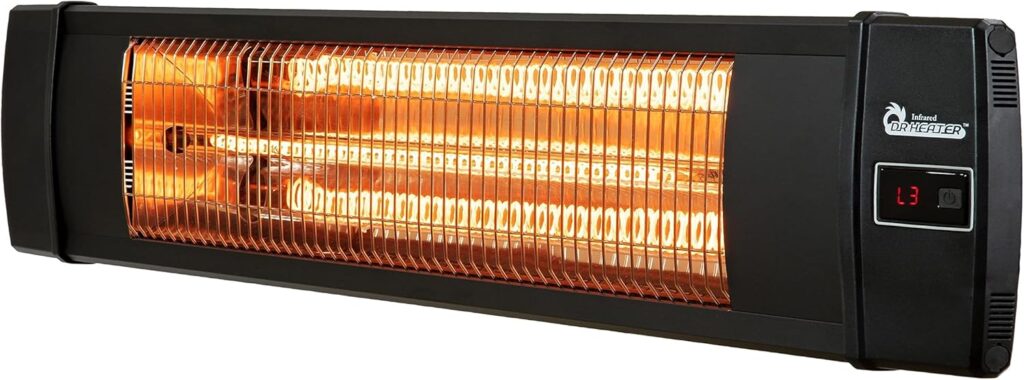
a) Wall-mounted infrared bars
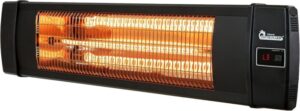
These are slim infrared units that mount high on a wall and aim down toward seating. Owners love them when they’re installed like a spotlight: aimed at people, not open air.
Best for: covered seating areas, patios with a solid wall behind the furniture.
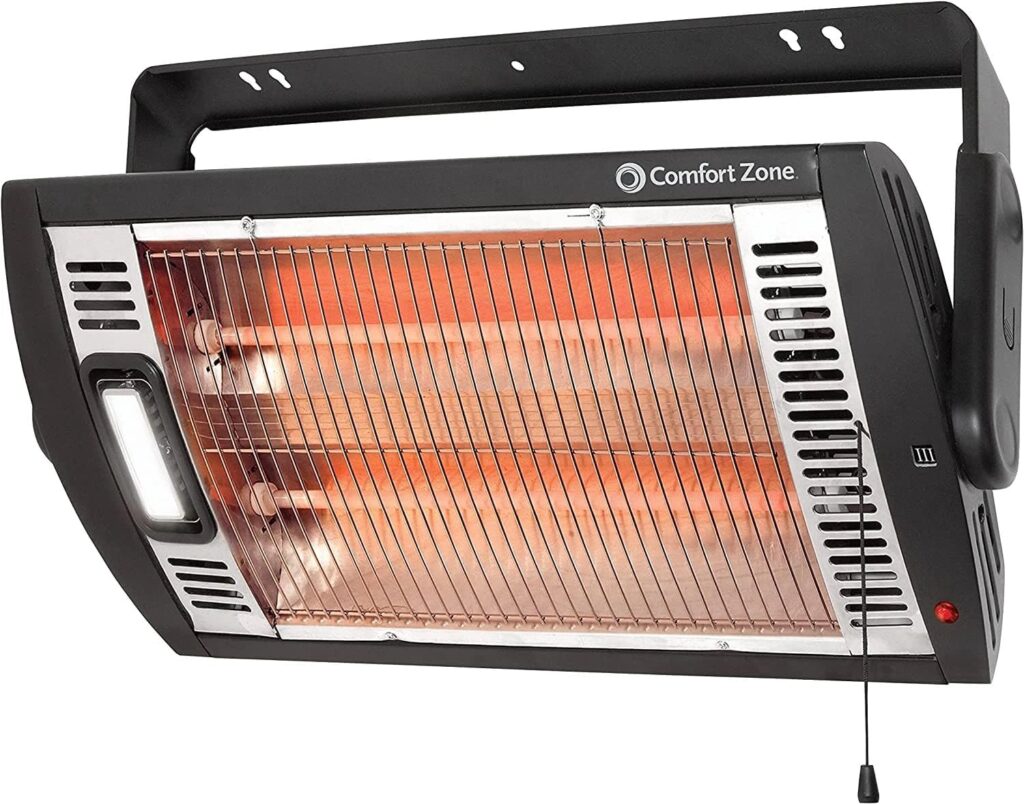
b) Ceiling-mounted quartz/infrared
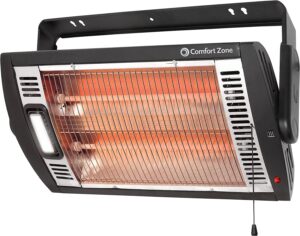
A ceiling unit keeps everything tidy and out of foot traffic. It’s a strong match for covered patios where you want the heater “disappearing” into the background.
Best for: dining tables under a roof, outdoor kitchens, covered lounge zones.
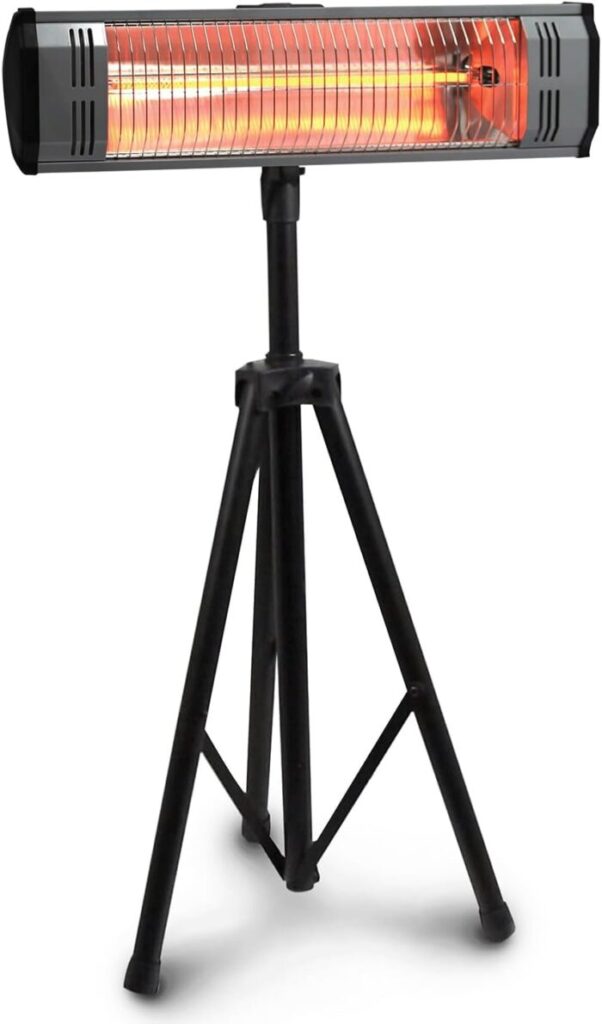
c) Tripod/portable infrared
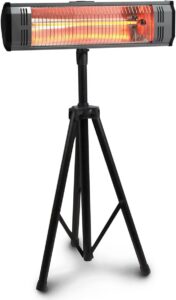
A tripod unit is the “electric answer” to propane portability. Many buyers like being able to aim it at the couch one night and the workbench the next — just remember it still needs an outlet.
Best for: flexible zones, renters, multipurpose spaces.
d) Tower-style electric patio heaters (narrow heat)
Tower units can be handy for tight layouts, but the warmth is often more narrow and directional. Owners tend to like them best as close-range personal heat, not “warm the whole set.”
Best for: narrow patios, a single chair, balcony corners.
Decision guide
Think of this like a flowchart — answer fast and you’ll land on the right category.
- Covered or open sky?
- Covered → electric infrared usually shines
- Open sky → propane often feels stronger for groups
- Windy or sheltered?
- Windy → prioritize windbreaks and consider overhead electric (if covered)
- Sheltered → both can work well; choose based on convenience and layout
- Outlet nearby?
- Yes → electric becomes easy
- No → propane avoids cords and power planning
- Want portable or fixed install?
- Portable → propane freestanding or electric tripod
- Fixed + clean look → wall/ceiling electric infrared
- Main goal: ambiance vs warmth vs convenience?
- Ambiance → pyramid propane (flame “centerpiece”)
- Warmth for a group → standing propane
- Convenience/quiet → electric infrared (mounted if possible)
Patio heater safety (practical, not alarmist)
Clearance basics
Whatever you choose, give it room to breathe. Owners say most “scary moments” come from squeezing a heater too close to furniture, umbrellas, cushions, or low ceilings. Follow the manufacturer’s clearance guidance every time — especially overhead installations.
Ventilation / never use certain heaters indoors
Propane patio heaters are for outdoor use in well-ventilated spaces. Never bring them into a garage “just for a minute” or use them inside enclosed areas. (If you’re warming a garage hangout, choose an option specifically rated for that environment and follow the safety rules.)
Tip-over prevention
- Place freestanding heaters on stable, level ground
- Lock wheels if your unit has them
- Avoid high-traffic pinch points where someone brushes past the base
- In windy spots, position near a windbreak or choose a more stable location
Extension cord caution for 1500W units
Many electric patio heaters are around ~1500W on high. That’s a lot of draw for a cheap cord. If you must use an extension cord:
- Use a heavy-duty cord rated for the load and outdoor use
- Keep it as short as practical
- Don’t coil it tightly while in use
- Avoid routing it where people trip or where doors pinch it
Cost & convenience
What drives propane costs
Propane costs come from fuel refills and how often you run the heater. If you host regularly, you’ll feel the ongoing rhythm: keeping a spare tank, refilling, storing, and occasionally troubleshooting ignition or flame behavior. Many owners say propane is worth it for the portability and “big heater” feel — just be honest about the refill habit.
What drives electric costs
Electric costs depend on your local electric rate and how long you run the heater. The convenience trade is real: electric doesn’t “run out,” and there’s no tank logistics. The main “cost” many buyers mention isn’t dollars — it’s placement. Electric feels amazing when aimed correctly, and underwhelming when it’s too far away or fighting open-air wind.
Bottom line: propane tends to cost you more in ongoing hassle, while electric tends to cost you more in planning and placement.
Real-world scenarios
Small apartment balcony
You likely want low fuss and minimal footprint. Many renters do best with an electric infrared option — either a compact freestanding/tower unit or a small wall-mounted model (if allowed). Propane can feel bulky here, and tank storage can be a pain.
Covered pergola with a dining set
This is electric territory. A ceiling-mounted or wall-mounted infrared heater aimed at the table often feels like the cleanest solution — warmth where people sit, no floor clutter, no tank refills. Owners love being able to switch it on mid-meal without rearranging anything.
Open windy patio
This is where expectations matter. A standing propane heater can provide that “event heater” feel, but wind will still steal comfort. The best results usually come from combining heater choice with layout tweaks: add windbreaks, move seating closer together, and place the heater where it’s partially protected.
Garage hangout / workshop
If you’re doing projects or hosting a game-night setup with the door partially open, electric infrared can feel great because it targets where you stand or sit. If you’re considering propane here, be extra careful about ventilation and use only equipment that’s specifically rated for the environment you’re using it in.