Briza 1500W Infrared Patio Heater Review — Quiet Spot Heat for Patios and Garages
At a Glance
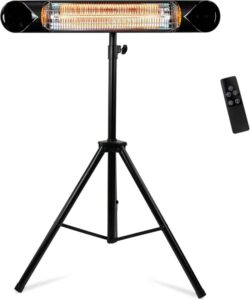
KEY FEATURES
- Power / levels: 3 heat levels — 900W / 1200W / 1500W
- Heat style: carbon infrared radiant warmth (warms people + surfaces in its line of sight)
- Controls: remote control (power, timer, heat level) + on-unit control button
- Timer: 1 – 9 hour auto shut-off (via remote)
- Placement: tripod stand included + wall/ceiling mounting hardware included
- Outdoor rating: IP55 weather resistance
- Safety: tip-over sensor auto shutoff
- Claimed coverage: 800 – 1000 sq ft (indoor), ~100 sq ft (outdoor) *varies heavily by drafts and layout
PROS
- Fireplace-like radiant warmth up close (no fan blast)
- Very quiet operation compared to blower heaters
- Great for spot heating at a workbench, chair, or table
- Tripod is usually described as sturdy and adjustable
- Remote makes everyday use easier
- Works best in covered patios, porches, gazebos, garages
CONS
- Limited range outdoors (often ~3 – 6 ft comfort zone)
- Won't realistically "heat the air" in a full garage or open patio
- Remote complaints (fragile, short range, intermittent, failures)
- Mounting angle restrictions can trigger safety shutoff / errors
- Some durability issues (tube cracks, dead units, error "23")
- Can trip breakers on shared circuits; needs proper power setup
Editor's Choice
Based on rigorous testing & Amazon customer feedback
🔥 Will This Heater Work For Your Room?
Answer a few quick questions about your space to see if this heater is a good match.
If you’ve ever tried warming an outdoor space with a basic electric heater, you already know the disappointment: lots of watts on paper, not much comfort in real life.
This heater gets better results than most — but only when you use it the way infrared is meant to be used. Think direct warmth and line-of-sight comfort, not “make the whole patio feel like the living room.”
The Briza Infrared Electric Patio Heater – Indoor/Outdoor Heater – Portable Wall/Garage Heater – 1500W – use with Stand – Mount to Ceiling/Wall) is at its best when it’s aimed at people (or at a nearby surface that can hold warmth), in a space that isn’t fighting you with wind and wide-open air.
Verdict in plain English
Buy it if you want quiet, instant-feeling spot heat for a chair, a table, or a workbench — especially in a covered patio, screened porch, gazebo, or garage workspace.
Skip it if your goal is raising the air temperature of a whole two-car garage or an open patio. Customers who expected that usually ended up frustrated.
What the warmth feels like (and why people call it “fireplace heat”)
The most consistent praise is the type of warmth. Owners keep comparing it to sitting near a fireplace or stepping into sunlight. That tracks, because it isn’t pushing hot air around — it’s radiating heat that your body (and nearby objects) absorb.
That’s also why several experienced users recommend aiming it at something solid — a concrete floor, a wall, a metal rack, a workbench. Those surfaces can soak up the infrared energy and then “give it back” slowly, which makes a garage corner or workout area feel noticeably more livable.
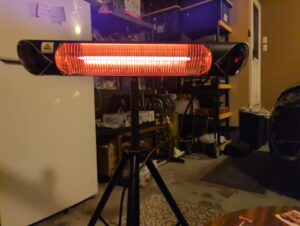
Where it shines: benches, chairs, and “one zone at a time”
A lot of the happiest buyers use it for exactly the same scenario:
- one workbench
- one weight rack
- one outdoor table
- one corner of a garage where they actually stand still
In those setups, people say it feels dramatically better than a ceramic blower heater because you don’t get that annoying hot-air-on-your-face effect. You just feel warmer where you are.
It’s also why it shows up in some very specific use cases: early-morning garage workouts, keeping hands warm at a bench, making a screened porch readable at night, even creating a warm spot that pets gravitate toward.
Range and reality: the “3 to 6 feet” truth
The tradeoff is range. Customer comments cluster around a pretty consistent comfort zone — roughly 3 to 6 feet, depending on wind and how protected the space is.
Up close, people rave. Step farther away, and a lot of owners describe the warmth dropping off fast — sometimes comically fast. That’s not the heater being “bad.” That’s just infrared physics.
So the right mental model is: one heater = one warm zone. If you’re trying to cover a wider seating area, many customers suggest adding a second unit or treating it as a helper alongside a fire pit or propane tower.
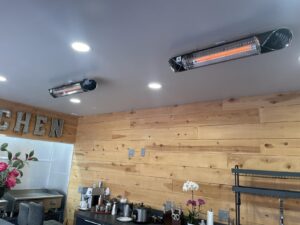
Quiet is a genuine strength
Noise can ruin a patio night or a focused work session. Here, the tone of the reviews is refreshing: people repeatedly mention how nice it is to get warmth without fan sound. If you’re used to blower heaters whining in the background, this feels like an upgrade immediately.
Remote, timer, and everyday convenience (with a big caveat)
When the remote behaves, people love it — turning the heater on from the couch, bumping heat up a level, setting a shutoff timer so you’re not second-guessing yourself later.
But the remote is also the most common headache in customer feedback. Complaints range from weak range and finicky buttons to battery-contact issues and remotes that stop working after a year or two. A few owners were especially annoyed because certain features (like the timer) are much harder to use without a reliable remote.
If you’re the type who loses remotes or hates remote-dependent products, that’s worth taking seriously.
Stand vs mount: flexible, but pay attention to angles
People genuinely like having options — tripod for portability, mounting for a permanent setup.
Still, there’s a theme that catches new owners off guard: mounting orientation matters. Multiple reviewers mention angle restrictions and safety behavior that can shut the heater down if it’s not positioned the way the unit expects. A couple of buyers specifically wanted a straight-down ceiling mount and found it wouldn’t cooperate.
Practical takeaway: plan the mount location before you drill, and don’t assume “any angle works.”
Power and safety notes customers bring up a lot
Two real-world points come up repeatedly:
Electrical load
At full power, it’s a serious draw. Some owners tripped breakers when sharing a circuit with lights or tools. If you’re using it in a garage workshop, a dedicated circuit (or at least a lightly loaded one) makes life easier.
Stability and bumping
On the tripod, it can be top-heavy in busy areas. The tip-over shutoff is appreciated, but most people still recommend placing it where kids, pets, and party traffic aren’t constantly brushing past it.
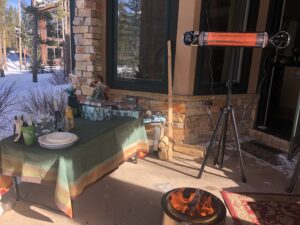
Reliability and support: mixed bag
A lot of owners report years of happy use — but there are also sharp one-star stories: units dying after limited runtime, error-code behavior, cracked elements, shipping damage, and frustration trying to find support or parts.
That doesn’t mean it’s doomed. It does mean this is the kind of product where a protection plan can feel less like paranoia and more like practicality.
Who this heater is for
You’ll probably love it if you want:
- quiet, fan-free warmth for a chair, bench, or small seating zone
- a covered patio or semi-enclosed outdoor setup
- garage comfort while you work in one spot
- something easier than propane (no tanks, no fumes, no refills)
You should skip it if you need:
- whole-space heating for a large open garage
- “everyone feels it” warmth across a windy patio
- a product where support and replacement parts are guaranteed easy
Pros & Cons Analysis
Based on extensive testing and Amazon customer feedback
Pros
- "Real" radiant warmth up close — many describe it as fireplace-like heat that warms your body (and nearby surfaces) without blasting hot air.
- Quiet (no fan noise) — lots of owners love that it makes essentially no noise compared to blower / ceramic heaters.
- Great for garages and workshops… as targeted heat — frequently used while lifting, wrenching, woodworking, or working at a bench where you stay in one area.
- Easy setup for most — lots of "assembled in minutes" feedback, especially using the tripod stand.
- Tripod stand is often praised — many call it sturdy, stable, and easy to adjust height/angle to aim heat where you need it.
- Remote convenience is a big win — owners like turning it on from the couch/bench and changing levels without walking over to a hot unit.
- Versatile placement — people like having both a portable stand option and the ability to mount it for a dedicated spot (bench, patio seating area, gazebo).
- Works especially well in sheltered spaces — strong feedback for covered patios, screened porches, gazebos, and patios with shades/walls that reduce drafts.
- Comfort for aches and "chilly person" households — a handful mention it feels good on old injuries, arthritis, and even pets gravitating toward it.
- Good "supplemental heat" strategy — several owners use another heater to warm the space, then use this to maintain comfort on a work area for hours.
- Fast "instant-on" feeling — many say it starts delivering noticeable warmth quickly, making last-minute outdoor setups doable.
- When it's working, people often love it — plenty of "exceeded expectations" and "I'd buy a second one" comments, especially for bench/seat heating.
Cons
- Not a "heat the whole space" heater — repeated disappointment from garage / patio buyers expecting ambient temperature to rise; most say it's spot heat, not room heat.
- Short effective range outdoors — common "3 – 6 feet" comfort zone; in open air, people farther away often feel almost nothing.
- Directional line-of-sight heat — if you step out of the beam, many say it feels cold fast; it's best pointed at you or at a surface that can "store" heat.
- Instructions / mounting guidance can be lacking — multiple complaints about missing wall/ceiling instructions or tiny print, leading to trial-and-error installs.
- Top-heavy / tip risk on the stand — several warn it can jostle or tip if placed where people/pets bump it (tip-over safety helps, but it's still a hassle).
- Remote problems are a recurring theme — reports of weak range, finicky buttons, battery-contact issues, remotes dying early, or intermittent operation.
- Mounting angle limitations surprise buyers — multiple mentions that it can error out / trip safety if mounted "wrong," and some say it can't be aimed straight down from a high ceiling.
- Wind and wide-open patios overwhelm it — people in exposed setups often say it barely dents the chill unless you're very close.
- Durability is inconsistent — scattered but serious reports of units dying suddenly, error code "23," cracked / broken heating elements, and glass tube failures.
- Power draw / electrical limits — mentions of tripped breakers on shared circuits, needing a dedicated 15/20A circuit, and warnings to use heavy-duty extension cords only if necessary.
- Overheat shutoff for some — a subset report it shutting down on higher levels and needing a cool-down period before it will run again.
- Support / parts concerns show up — multiple reviewers say brand links in manuals didn't work, replacement parts (like tripod pieces) were hard to get, and service felt nonexistent.
Our Verdict
This heater wins when you treat it like what it is — a targeted infrared comfort tool. Used in the right setting, customers describe it as cozy, quiet, and genuinely satisfying.
Used as a replacement for central heat or a propane tower? That's when the reviews turn sour.
If your goal is simple — make your seat, your workbench, or your patio table feel warm again — it can be a really nice piece of kit.
Frequently Asked Questions
Does it heat the air like a fan heater?
No — customers repeatedly explain it's radiant heat. It warms you and nearby surfaces in its line of sight (floor, wall, workbench, metal rack), and those surfaces can then help the space feel less cold.
What's the most realistic way to use it in a garage?
Most happy garage owners use it as spot heat for a work area — pointed at a bench, weight rack, or the person working — rather than expecting the entire garage temperature to jump quickly.
Will it warm a whole 2-car garage to 55–60°F?
Many reviews say no. Several tried running it for hours and saw little ambient temperature change. People recommend treating it as targeted comfort, or pairing it with another heat source to pre-warm the space.
How well does it work on an outdoor patio?
Customers commonly say it works best outdoors in sheltered setups (covered patios, screened porches, gazebos, patios with shades). In open wind, the effective comfort zone is often only a few feet.
How far away can you feel heat?
A frequent real-world range is about 3 – 6 feet depending on conditions. Up close it can feel fantastic; farther away many people say the warmth drops off quickly.
Is it loud?
Most owners describe it as very quiet because there's no fan noise — one of the biggest reasons people prefer it to ceramic blower heaters.
Is the tripod stable?
Many call the tripod sturdy and easy to adjust, but a few warn the setup can feel top-heavy in busy areas. The safety shutoff helps if it's bumped, but placement still matters.
Any common remote control issues?
Yes. Multiple reviewers mention weak range, fragile feel, battery-contact problems, or remotes failing over time. A few also note key features like the timer are easiest (or only) via remote.
Can it be ceiling mounted straight down?
Some customers say mounting is picky about angles and orientation, and that incorrect positioning can trigger safety shutoff or error behavior. Plan your mount location carefully and follow the allowed tilt angles.
Why do some people aim it at the floor or a wall?
Several owners say aiming at a solid surface (concrete floor, wall, metal rack) helps because the surface absorbs infrared energy and then radiates warmth back — especially useful in garages.
Does it trip breakers?
It can. Customers report tripping a 15A circuit when other devices share the same line. Many recommend a dedicated 15/20A circuit and using a heavy-duty extension cord only if truly needed.
What are the reliability concerns to know?
Is it worth it for a few people at a table?
If you treat it as targeted warmth for 1–2 (sometimes 3) nearby seats, customers are often happy — especially as a supplement to a fire pit or propane heater. Expectations are the deciding factor.
Technical Specifications
| Brand | Briza |
|---|---|
| Model / SKU | IT-HEQQ-1831 (ASIN: B07WCQZG5T) |
| Heater type | Indoor/outdoor electric infrared patio & garage heater |
| Form factor | Bar / wall-garage style (with tripod stand option) |
| Heating method | Radiant infrared heating |
| Heating element | Carbon infrared radiant element |
| Max heat output | 1500 W |
| Voltage | 120 V |
| Amperage | 12.5 A |
| Coverage (manufacturer claim) | 800 – 1000 ft² (indoor), ~100 ft² (outdoor) |
| Temperature range | Not specified (3 power levels only; not a thermostat setpoint control) |
| Speeds / levels | 3 heat levels: 900W / 1200W / 1500W |
| Noise level | Not specified (fanless radiant design; customers often describe it as very quiet) |
| Oscillation | No (fixed direction; aim by positioning/tilt) |
| Controls | Remote control + on-unit button |
| Timer | 1 – 9 hour auto shut-off (remote) |
| Power source | Corded electric |
| Mounting / placement | Tripod stand (included) or wall/ceiling mount (hardware included) |
| Dimensions (D × W × H) | 35.5" × 4" × 4" |
| Weight | 3 kg (≈ 6.6 lb) |
| Color | Black |
| Special features | Portable, remote control, 3 heat levels, 1–9h timer, tip-over shutoff, indoor/outdoor use, IP55 weather resistance |
| Safety certification | Not specified |
| Included in the box | Infrared heater, remote control, tripod stand, wall/ceiling mounting hardware, user manual |
| Warranty | Not specified (see seller/manufacturer warranty link) |
| Recommended room types / uses | Patio, covered porch, gazebo, garage/workshop, home office, study room |
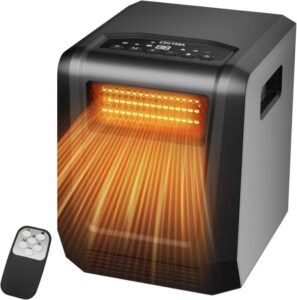
BLACK+DECKER Infrared Radiant Quartz Tower Heater – 1500W with Adjustable Thermostat
Product Overview The BLACK+DECKER infrared radiant quartz tower heater delivers focused, fast-feeling warmth through dual quartz tubes and an integrated…
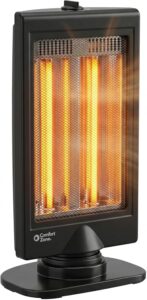
Comfort Zone CZHTV9 Review: quiet radiant warmth for the spots you actually use
There’s cold, and then there’s indoor cold that makes one corner of the room feel miserable. Your house heat is…
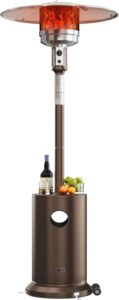
EAST OAK UR48BN1 Patio Heater Review — Big Warmth, Handy Table Top, Real-World Quirks
Some patio heaters are basically outdoor decor that happen to glow. Others become the spot everyone drifts toward with a…
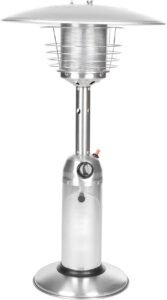
Fire Sense 60262 Tabletop Patio Heater Review — Cozy Up Close, Best Out of the Wind
A small patio heater that works best when you use it the “right” way There’s a specific kind of outdoor…


