Hiland HLDS01-WCGT Patio Heater Review — Big Heat, Handy Table, Some Real-World Quirks
At a Glance
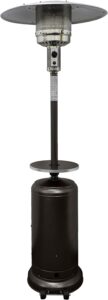
KEY FEATURES
- Type: tall outdoor propane patio heater (single-pole design)
- Heat output: 48,000 BTU (variable control)
- Fuel: liquid propane (standard 20 lb cylinder)
- Standout design: open-door cylinder access (tank changes without lifting the housing)
- Table: adjustable-height table, ~15.7" diameter (customer-loved, but clamp strength varies)
- Mobility: built-in wheels for moving around the patio
- Safety: tip-over shutoff + thermocouple flame-out protection (CSA approved)
- Finish: hammered bronze (praised for hiding fingerprints and matching patio furniture)
PROS
- Strong 48K BTU warmth up close (great for patio “zones”)
- Hammered bronze finish looks upscale and hides fingerprints
- Table / tray is genuinely useful for drinks and small plates
- Wheels make it easier to reposition around the deck or patio
- Quiet enough for conversation according to many owners
- Dependable once you learn the lighting steps (for many users)
CONS
- Shipping dents and bent reflector pieces are fairly common
- Assembly experience varies (misalignment or missing parts happen)
- Pilot / ignition can be finicky and the instructions confuse some buyers
- Table clamp can slip or wobble for some people over time
- Wind tipping risk if it isn’t weighted and placed carefully
- Durability and warranty support feel inconsistent (great for some, frustrating for others)
Editor's Choice
Based on rigorous testing & Amazon customer feedback
🔥 Will This Heater Work For Your Room?
Answer a few quick questions about your space to see if this heater is a good match.
If you’ve ever tried to host an “outdoor dinner” and watched everyone migrate indoors the moment the temperature drops, you already get the appeal of a tall propane patio heater. The promise is simple: keep the patio usable longer, without turning the whole evening into a cold-weather endurance test.
This review is built from real customer experiences — the good, the annoying, and the “why is this dented” moments that show up a little too often with large patio gear.
TL;DR — the quick verdict
Owners buy this heater for one reason: it makes a patio hangout feel warmer fast, especially when everyone’s sitting or standing within a few feet of the heat. The hammered bronze look gets a lot of love, and the table tray ends up being more useful than most people expect.
The tradeoff is that the overall experience can swing wildly depending on what shows up at your door. Some customers unbox a clean, solid unit that fires right up. Others deal with dents, bent parts, missing hardware, or a pilot-light learning curve that turns “quick setup” into a small project.
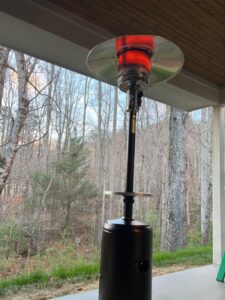
The heat you actually feel (and where it works best)
Most happy owners describe the heat as the kind you notice — the “ahh, that’s better” warmth that makes deck dinners, cigar nights, and small gatherings feel comfortable again. A common theme is that it performs best as a targeted comfort zone. Pull chairs in a bit, angle it where people actually sit, and it does its job.
A few reviewers mention it won’t perform miracles in deep cold unless you’re close — which lines up with how most tall patio heaters behave. It’s less “heat the whole backyard” and more “make this part of the patio nice to live in.”
The table tray: gimmick or genuinely useful?
This is one of the surprise wins. Plenty of buyers admit they didn’t care about the table at checkout, then ended up using it constantly once the heater became the center of the patio. Drinks, small plates, snack bowls — it’s the little convenience that makes the setup feel more “hangout-ready.”
That said, the table is also one of the most complained-about parts. Some owners say the clamp can wobble or gradually slide down over time, and a few point to plastic components that don’t feel like they’ll stay perfect forever. If you’re the type who leans on the tray or loads it up, you’ll probably want to test it and keep expectations realistic.
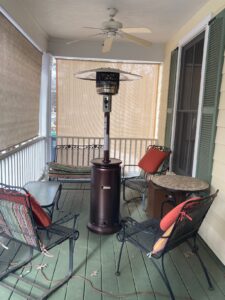
Lighting and ignition: easy… after you learn the trick
This is where a lot of the reviews get very honest.
Many owners say it lights reliably once you follow the purge steps (especially after swapping propane tanks). Others say the pilot process is finicky, the instructions are confusing, or it takes multiple tries the first time you use it. A handful of people end up using a long-stem lighter through the viewing hole because it’s faster for them than fighting the igniter.
The most common takeaway: there’s a learning curve, but once you’ve done it a few times, it becomes routine.
Build quality: solid where it counts, flimsy where it’s annoying
When customers praise the build, they’re usually talking about the heater’s core function — it gets hot, stays running, and feels stable enough when it’s set in place.
When customers complain, it’s often about the “big metal shell” stuff: cylinder housing panels that feel a bit thin, parts that don’t line up perfectly, a pole that leans unless you shim it, or fasteners that feel like they were designed by someone who never had to assemble one.
Basically: the heater can work great, but the fit-and-finish experience isn’t consistently “restaurant-grade.”

Wind and stability: plan for real life, not perfect conditions
Tall patio heaters can act like a sail. Multiple owners report tipping in gusts, bent reflector pieces, and damage after storms — sometimes even in winds that didn’t seem extreme at the time. The consistent advice is to add ballast (many people use sand), keep it on a level surface, and move it into shelter when weather gets ugly.
This lines up with common patio-heater safety guidance: don’t use it in high winds, and expect reduced efficiency in colder weather.
Shipping and missing parts: the most frustrating theme
The biggest pattern that has nothing to do with heat is packaging. Dents in the base, bent domes, scratched finishes, and loose hardware show up again and again. Some owners fix it with pliers and a mallet and move on. Others are understandably irritated — because returning a fully assembled patio heater is nobody’s idea of fun.
If you buy this model, the best move is simple: inventory parts and inspect panels before you build.
Propane usage: mixed reports, but do the leak test
Some owners feel the heater is reasonably efficient, especially if they aren’t running it on max all night. Others are shocked at how fast tanks empty. A few suspect leaks, which is why it’s smart to do a proper soap-bubble leak test at the connections before first use and anytime you reconnect the gas.
Customer service: surprisingly great… or a dead end
This one is split right down the middle.
There are reviews praising support reps who stayed on the phone and helped troubleshoot until everything worked. And then there are reviews that claim the opposite — no replies, wrong replacement parts, or long delays. In other words: you might get excellent help, but you shouldn’t assume you will.
Who this heater is for
You’ll like this heater if you want:
- A strong, warm “patio zone” heater for dinners and hangouts
- A finish that looks good outdoors and blends into most patios
- A table tray you’ll actually use for drinks and snacks
- Wheels for repositioning it around the deck
You should skip it (or buy with extra patience) if:
- You hate assembling things — especially when holes don’t align perfectly
- You live in a windy area and can’t easily move/secure the heater
- You want flawless packaging and premium fit-and-finish every time
- You don’t want any learning curve with ignition
Pros & Cons Analysis
Based on extensive testing and Amazon customer feedback
Pros
- Real heat output – many say it "puts out a lot of heat," keeps patios usable longer, and feels legitimately toasty when you're within a few feet
- Great for "hangout zones" – common use cases are deck dinners, cigar nights, garage "warm corner," and outdoor get-togethers that would otherwise get cut short
- Looks good on the patio – the hammered bronze finish gets consistent compliments for blending into outdoor furniture and not showing fingerprints like shinier metal
- Handy table / tray in real life – many initially thought it was a gimmick, then ended up using it constantly for drinks and small plates
- Once you learn the lighting "knack," it's easy – plenty of users say it starts reliably after you follow the purge + pilot steps (and especially after a tank swap)
- Open-door tank access (when you actually get it) – people like not having to lift the whole housing to change the cylinder
- Quiet for a patio heater – many describe it as basically unobtrusive, with the gas sound mostly noticeable only on the highest setting
- Assembly is doable for a lot of buyers – many finish in ~30–60 minutes (especially if they've built one before), and like that most parts are straightforward
- Customer support can be excellent – several stories of helpful tech support walking them through first light / troubleshooting until it worked
- Good value when priced right – many call it a "great heater for the price," especially compared with big-box-store options
- Can be fuel-efficient for some setups – a few users were impressed by runtime on a tank, especially when not running on max constantly
Cons
- Wind is a big enemy – multiple reports of tipping in gusts (sometimes even moderate wind), bent reflectors, and damage; several recommend sand/weighting and careful placement
- Stability while moving can be sketchy – some mention flexing in the base/cylinder housing when tilting onto wheels, small wheels, or feeling a bit tippy in motion
- Shipping damage is common – dents, bent domes/reflectors, smashed tubes, scratched paint, and boxes arriving "beat up" show up a lot
- Table mechanism frustrations – repeated complaints about wobble, sliding down over time, or the clamp/ring feeling too plastic-y / not gripping well
- Ignition / pilot can be a pain – long first-light learning curve, unclear instructions, "won't light on the first try," and some people defaulting to a long lighter
- Feature mismatch complaints – some say the unit they received didn't match the listing (door style, missing "weight bladder," cover not included, etc.)
- Burner noise / quirks at startup – a few mention odd noises early in a burn or needing to dial back to reduce noise (more "annoying" than dangerous, but worth noting)
- Assembly can be brutal if parts don't line up – warped cylinder housing, holes not aligning, needing a second person, missing washers/nuts, and "IKEA-level" patience required
- Customer service can also be awful – other buyers report no responses for warranty issues, wrong parts sent, or being pushed toward returns/disassembly
- Long-term durability is mixed – reports of rust at the base, finish flaking, igniter/regulator issues, pilot not staying lit after a season, or "stopped working" early
- Propane consumption (or leaks) for others – some were shocked at how fast tanks emptied; a few suspect leaks and recommend doing a proper leak test before use
Our Verdict
At its best, this heater does exactly what people want: it makes outdoor time feel comfortable again, and the little table tray makes it feel more "social" than most plain pole heaters.
Just go in with eyes open. The real-world quirks — shipping dents, occasional missing hardware, a pilot-light learning curve, and mixed customer service — are part of the story. If you're okay inspecting it carefully at delivery and treating it like "good heat with some DIY tolerance," it can be a genuinely satisfying patio upgrade.
Frequently Asked Questions
How much heat does this 48,000 BTU patio heater feel like in real use?
Most owners describe it as legitimately warm when you're sitting or standing within a few feet. It's often used to make a 'hangout zone' comfortable (deck dinners, cigar nights, small gatherings) rather than heating an entire open yard.
Does the open-door tank design actually make propane changes easier?
When the unit arrives with the proper door setup, people love not having to lift the whole cylinder housing. That said, a few buyers complained their unit didn't match the listing and still required lifting the housing, so it's worth checking as soon as you unbox it.
Is it difficult to assemble?
Assembly is all over the map. Many finish in 30–60 minutes, but others report misaligned holes, warped panels, or needing a second person to hold parts in place. Shipping dents can also turn assembly into a 'fix it while you build it' situation.
Why do people say the pilot light is tricky?
A common theme is that the first-light process has a learning curve — especially purging air from the gas line and knowing exactly where the pilot flame is visible. Once owners learn the steps (or get a tip from support), many say it becomes routine.
Do owners actually use the table?
Yes. A lot of buyers thought it was extra, then ended up using it constantly for drinks and small plates. The main complaint is the clamp system — some say it can wobble or slowly slide down over time.
How quiet is it during normal use?
Many reviewers call it quiet enough for conversation, with gas sound more noticeable on the highest setting. A few mention startup noises or minor burner sounds, but noise is not a dominant complaint overall.
Is it safe to use on a covered patio?
Owners do use patio heaters under covers, but safety guidance generally emphasizes outdoor-only use, plenty of ventilation, and keeping clearances from combustibles. Typical manuals also recommend not using it when winds are high and keeping it on a level surface.
How do I check for a propane leak?
Do a soap-bubble leak test at the hose-to-regulator and regulator-to-cylinder connections before first use and anytime you reconnect the gas. If bubbles form, turn gas off and fix the connection before using it.
Why does it tip over in wind for some people?
Tall 'mushroom top' heaters can act like a sail in gusts. Reviewers recommend adding weight (sand/ballast), placing it on a level surface, and moving it to shelter or laying it down when storms are coming. Manuals commonly warn against using it in higher winds.
Does it rust or hold up outdoors?
Some owners report rust developing around the base edges after a season, especially if it sits where moisture collects. Others have good results using a cover and storing it in a protected spot. Expect better longevity if it stays dry between uses.
Is propane consumption high?
Mixed feedback. Some owners feel it sips fuel reasonably, while others say it burns through tanks fast — especially on high. A few suspect leaks, which is why doing the leak test before use is important.
What should I check immediately after unboxing?
Inspect for dents and bent reflector pieces, verify the door hardware/latch is intact, and confirm all parts are present before you assemble. Several buyers only noticed damage or missing pieces after everything was built.
Any lighting tips that help most people?
Users recommend purging the line patiently after tank changes, turning the tank on slowly, and testing first light at dusk so you can actually see the pilot flame. If it still won't light, some owners use a long-stem lighter through the viewing hole.
Technical Specifications
| Brand | Hiland |
|---|---|
| Model / SKU | HLDS01-WCGT (ASIN: B0024M8WEI) |
| Heater type | Outdoor propane patio heater |
| Form factor | Freestanding tower (single-pole) |
| Heating method | Radiant (propane flame) |
| Heating element | Open flame burner with stainless steel emitter screen |
| Max heat output | 48,000 BTU |
| Fuel type | Liquid propane (LP) |
| Power source | Propane (battery-powered igniter) (battery type not specified in details provided) |
| Voltage | Not applicable (not an electric heater; igniter may use a small battery) |
| Amperage | Not applicable |
| Coverage (manufacturer claim) | 706.86 sq ft |
| Heat settings / control | Variable heat control knob (1 level with adjustable output) |
| Ignition | Push-button ignition + pilot system (customer feedback mentions a learning curve) |
| Table | Adjustable-height table, 15.7" diameter |
| Mobility | Built-in wheels |
| Safety features | Tilt (tip-over) shutoff + thermocouple (flame-out protection) |
| Safety certification | CSA approved |
| Mounting / placement | Floor mount / freestanding |
| Indoor / outdoor use | Outdoor |
| Dimensions (D × W × H) | 32" × 32" × 87" (listing shows 32"D × 87"W × 32"H; reordered to typical format) |
| Weight | 42 lb |
| Color / finish | Hammered bronze finish |
| Special features | Open-door tank access, adjustable table height, wheels, fast heating, adjustable temperature |
| Included in the box | Patio heater, regulator and hose, assembly hardware |
| Warranty | 1-year limited warranty |
| Recommended uses | Patio, deck, outdoor seating areas, backyard gatherings |
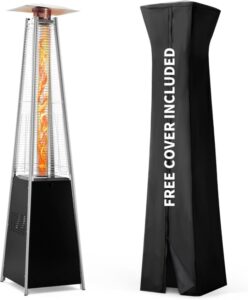
Pamapic Pyramid Patio Heater Review — Gorgeous Flame, Close-Range Comfort (Plan for Wind)
Outdoor hangouts always sound perfect… until the temperature drops and people start drifting inside. A patio heater fixes that problem…
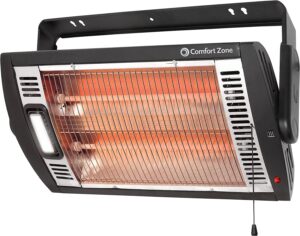
Comfort Zone Ceiling-Mounted Dual Quartz Heater Review — Quick Warmth for Workbench Zones
There are two kinds of cold. The “put on a hoodie” kind, and the “my fingers won’t work” kind —…
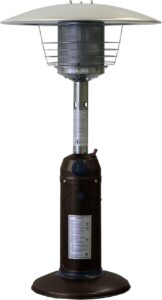
Hiland HLD032-CG Table Top Patio Heater Review — Cozy Up Close, Picky About Wind
Outdoor hangouts have a predictable ending once the temperature drops: everyone starts doing the subtle shoulder-hunch, then the group slowly…
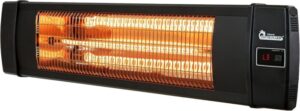
DR. Infrared Heater DR-238 Review — Quiet, Instant Warmth for Garages and Covered Patios
Some heaters try to warm the whole room. This one is more like a comfort spotlight. Owners keep describing the…


