Mr. Heater F299731 Review: big, steady heat for cold garages and older homes
At a Glance
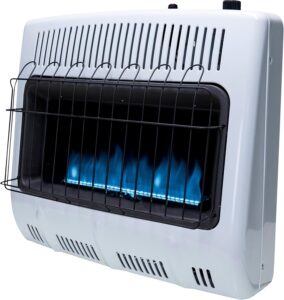
KEY FEATURES
- Mr. Heater F299731: vent-free blue flame natural gas heater for indoor supplemental or primary heat in enclosed spaces
- Power / Coverage: 30,000 BTU/hr (about 8,790W equivalent), rated up to ~1,000 sq ft*
- Heat levels: 5 thermostat settings with automatic cycling
- Aim/Mounting: wall-mount design with included hardware; floor feet are not included
- Controls: top-mounted gas control knob + battery-operated electronic ignition
- Work light: N/A
- Safety: oxygen depletion sensor, built-in thermostat, no household electricity required
- Size / Weight: 30" × 13" × 28", 24.48 lb, white
PROS
- Puts out enough heat to warm garages, basements, and small homes fast.
- Built-in thermostat helps it cycle automatically instead of blasting nonstop.
- No household electricity needed, so it still works during outages.
- Wall-mount setup is straightforward for experienced DIY users or replacements.
- Heater itself is usually described as quiet and comfortable to live with.
- Great value for people replacing pricey electric heat with natural gas warmth.
CONS
- Can feel oversized for tighter rooms where 30,000 BTU is simply too much.
- Some owners wish the burner stayed on longer or had a manual always-on setting.
- The optional blower needs power, so circulation drops off in a blackout.
- Gas hookup, fittings, and code compliance often make professional install the smart move.
- The accessory blower gets called weak and noisier than many buyers expected.
- Large white cabinet, top controls, and occasional gas odor won't suit every room or buyer.
Editor's Choice
Based on rigorous testing & Amazon customer feedback
🔥 Will This Heater Work For Your Room?
Answer a few quick questions about your space to see if this heater is a good match.
There’s cold, and then there’s garage cold — the kind where your hands stop working, the concrete floor feels like ice, and even quick jobs turn into a miserable chore. Older homes can feel the same way. One room stays chilly, the central heat keeps running, and you still end up wearing a hoodie indoors.
That’s where the Mr. Heater F299731 30,000 BTU Vent-Free Blue Flame Natural Gas Heater starts to make sense. It shows up again and again in garages, basements, sunrooms, workshops, and older houses because it promises a lot in plain language: strong natural gas heat, no household electricity required, and a built-in thermostat that cycles the burner for you.
From what owners say, this heater is less about gentle background warmth and more about real cold-weather relief. In the right space, it punches hard. The catch is that it’s also a serious gas appliance with real setup, ventilation, and room-size considerations. Treat it like a casual plug-in heater and you’ll probably be disappointed. Size it right and install it correctly, and it can feel like a huge upgrade.
Quick verdict
If you want strong, affordable natural gas heat for a garage, basement, sunroom, or older home, this heater does what people hope it will do. It heats quickly, the built-in thermostat is actually useful, and the fact that it works without household electricity is a big plus for backup heat.
What you need to know up front is simple: 30,000 BTU is a lot of heater. That’s great in larger enclosed spaces. It’s not always great in tight or undersized rooms. And while the heater itself gets plenty of praise, buyers are much more mixed on the optional blower and on the odor quirks that sometimes come with vent-free units.
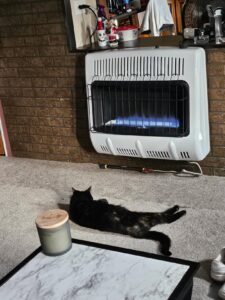
At-a-glance scorecard
| Category | Verdict | What that means in real life |
|---|---|---|
| Heat output | 4.8 / 5 | This thing throws serious warmth and can heat spaces that portable electric units struggle with |
| Thermostat behavior | 4.3 / 5 | Owners generally like the automatic cycling and set-it-and-forget-it feel |
| Ease of daily use | 4.2 / 5 | Once installed, operation is simple and straightforward |
| Quietness | 4.2 / 5 | The heater itself is usually quiet; noise complaints mostly point to the add-on blower |
| Whole-room circulation | 3.9 / 5 | Good in enclosed spaces, even better with a separate fan to move warm air |
| Small-room suitability | 2.9 / 5 | This is not the right fit for every smaller room, even if the room gets cold |
| Value for money | 4.6 / 5 | Strong value if natural gas is already available and you need serious heat |
What the heat feels like in real life
This is a blue flame convection heater, so the warmth feels different from a quartz infrared heater or a fan-forced electric model. You’re not getting that “heat lamp” sensation aimed right at your knees. You’re getting room air heated steadily, then circulated through the space.
That sounds less dramatic on paper than it feels in use. Plenty of owners describe it as the kind of heater that takes a cold room and makes it genuinely comfortable fast. Garages in the 30s, rooms in older homes, and chilly basements all come up over and over. Several buyers say they rarely need to run it above setting 2 or 3 because anything higher starts feeling excessive.
That’s one of the big takeaways with this unit: it has more muscle than many people expected. A bunch of owners bought it thinking they’d still need another heat source, then realized one unit was already enough for their setup. Some even describe it as the heater that finally made a long-cold room usable in winter.
The flip side is obvious. Too much heater in too little room can create its own problems. More on that in a minute.
Coverage — the realistic story
The manufacturer says up to 1,000 square feet. That number isn’t fantasy, but it does need context.
Owners get the best results when the space is:
- reasonably enclosed
- at least somewhat insulated
- not constantly losing heat through open doors or big drafts
- helped by some air movement if the room is large
In a 2-car or 3-car garage, this heater often sounds like a small-room hero’s bigger, tougher cousin. In a 900 to 1,000 square foot house or trailer, some buyers say it carries more of the heating load than they expected. In a basement or sunroom, it seems especially effective because those spaces often need steady warmth more than fancy controls.
Here’s a more grounded way to think about it:
| Space type | What owners tend to report |
|---|---|
| 450 sq ft small room | Often too much heater; better to size down |
| 500–700 sq ft insulated garage or basement | Usually plenty of heat, often on low or medium settings |
| 800–1,000 sq ft enclosed home area | Often workable, especially with airflow help |
| 1,000+ sq ft open or drafty layout | Possible, but results depend heavily on insulation and room flow |
Coverage depends a lot on your setup. That’s not a dodge — it’s the truth with any large gas heater. A sealed, insulated garage behaves nothing like an older room with leaky windows. A tall ceiling changes the feel. A hallway placement with a fan can spread heat farther than a tucked-away wall location.
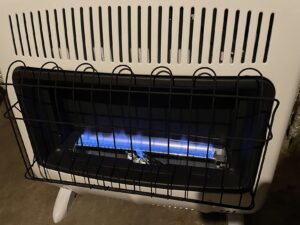
Where this heater really shines
The most convincing feedback comes from buyers using it in spaces where electric heat either costs too much or just can’t keep up.
Best real-world uses
| Use case | Why it works well |
|---|---|
| Garage or workshop | Strong heat output, wall-mount design, no floor clutter |
| Basement rec room | Quiet operation and enough warmth to make lower levels usable |
| Sunroom or enclosed patio room | Fast warm-up for spaces that central heat usually neglects |
| Older house supplemental heat | Helps take pressure off expensive baseboards or undersized HVAC |
| Emergency heat during outages | No household electricity needed for the heater itself |
A lot of buyers talk about this heater less like a gadget and more like a winter problem-solver. That’s the right frame for it. It’s not a lifestyle product. It’s the kind of thing people buy because one part of the house is always cold and they’re tired of fighting it.
Setup matters more than people expect
The heater may be simple once it’s running, but installation is not the same as setting a tower heater in the corner and plugging it in.
The wall mounting itself gets described as fairly straightforward. The gas hookup is where people start waving the caution flag. Plenty of owners with DIY confidence handled it themselves, especially when replacing an older unit. Plenty of others say flat-out that hiring a gas pro was the smart move.
That’s honestly where I land too. If you already work comfortably with gas lines, shutoff valves, and code-compliant fittings, fine. If not, this is not the place to freestyle.
Real-world setup tips
| Tip | Why it matters |
|---|---|
| Hire a licensed installer if you’re unsure | Owners repeatedly say the gas line is the serious part |
| Don’t mount it too high | Some wall-mounted users say the top controls get awkward to read |
| Plan airflow from the start | Warm air gathers high; a separate fan often helps more than the add-on blower |
| Size the heater to the room honestly | Oversizing can lead to odor issues and nuisance shutdowns |
| Add detectors | Buyers often mention CO and gas detectors for peace of mind |
Thermostat and controls — better than expected
One thing people seem genuinely happy with is the built-in thermostat. On a lot of heaters, “thermostat” really means “sort of warm, sort of not.” Here, owners often say it cycles on and off in a way that feels pretty practical and comfortable.
That matters because this heater can put out enough warmth to overdo it. The thermostat helps avoid the blast-freeze-blast loop that makes some budget heaters annoying to live with.
The controls themselves are basic. You’ve got a top-mounted control knob and battery-operated electronic ignition. Nothing fancy. No app. No remote. No digital screen. Frankly, that simplicity works in its favor. It’s the kind of setup you figure out fast.
There are a few complaints, though. Some owners wish it would stay on longer before cycling off. Others say the top knob is a little annoying to see clearly if the unit is mounted high on the wall. Those aren’t dealbreakers, but they are worth knowing.
The blower question — should you buy it?
This is probably the most mixed part of the whole ownership experience.
A few owners like the optional blower and say it helps with circulation. A lot of others describe it as weak, noisy, or just not worth the money. Some buyers say a regular wall-mounted fan, pedestal fan, or upside-down shop fan did a better job moving warmth across the room.
That matches how this heater seems to perform in real spaces. The heater has the power. The air movement is what often needs help.

Airflow reality check
| Option | Owner feedback |
|---|---|
| Heater alone | Often enough in smaller enclosed spaces |
| Heater + optional blower | Mixed results; some like it, many say it’s underwhelming |
| Heater + separate wall or pedestal fan | Often described as the better solution for bigger rooms |
If your room is compact and enclosed, you may not need any extra airflow at all. If the room is larger, taller, or laid out awkwardly, I’d lean toward a separate fan rather than assuming the accessory blower will solve everything.
Odor, ventilation, and the stuff you shouldn’t ignore
Here’s the part that makes this heater different from a simple electric model.
A bunch of owners say there’s little to no odor after the initial break-in. Others mention a brief gas smell at startup or shutdown, especially on low settings. That kind of comment shows up enough that it clearly belongs in the story.
Then there are the more serious cases. A few buyers describe stronger odor issues, nuisance shutdowns from the oxygen depletion sensor, or realizing the unit was simply too large for the room. One especially cautionary review involved improper ignition behavior and a carbon monoxide alarm, followed by a replacement and a move to a smaller BTU model.
That doesn’t mean the heater is automatically unsafe. It means this is a vent-free gas heater, and vent-free heat demands respect. You want proper sizing, proper install, proper fresh air, and detectors in place. Persistent odor is not something to shrug off.
Safety checklist worth following
| Do this | Why |
|---|---|
| Size the heater honestly | Oversized units can be a bad fit in small rooms |
| Follow clearance and install instructions | Wall heat and gas appliances need proper spacing |
| Use CO and gas detectors | Many owners say this gives them real peace of mind |
| Watch for persistent odor or odd ignition | That’s a signal to troubleshoot, not “just live with it” |
| Follow the manual and local code | Especially important with vent-free natural gas appliances |
Build quality and reliability — mostly solid, but not spotless
The general tone around build quality is pretty good. Owners often describe the unit as solid, simple, and well built enough for the job. Buyers replacing older gas heaters tend to like the straightforward design and the easy access inside compared with older models.
That said, it’s not a flawless product. Some boxes arrive looking rough. A few reviews mention shipping damage to packaging, though the heater inside often survived fine. There are also scattered reports of ignition oddities, stronger-than-expected odor, or units that needed replacement.
So the honest version is this: most owners sound very happy, but this still feels like a product you should inspect carefully when it arrives. Don’t install it blindly. Check the body, check the fittings, and pay attention during the first runs.
Cost to run and value
This is where the heater gets a lot of goodwill.
People switching from electric space heaters or baseboard heat often say this unit saves them real money while making the room feel warmer at the same time. That’s a strong combo. A bunch of owners describe it as the cheaper route to comfort, especially in older homes or side spaces where whole-house systems aren’t doing the job well.
Of course, the math depends on your gas rates, your electric rates, and whether you already have natural gas available nearby. Installation can add real up-front cost. Still, once it’s in, the value story sounds pretty strong for buyers who use it regularly.
Value snapshot
| What helps value | What can hurt value |
|---|---|
| Strong output for the price | Professional install can add cost |
| Can reduce reliance on expensive electric heat | Optional blower may not feel worth buying |
| Works during outages | Too much heater for a small room is wasted money |
| Wall-mount design frees floor space | Vent-free trade-offs won’t suit every buyer |
Who should buy it
You’ll probably be happy with this heater if you want:
- strong natural gas heat for a garage, workshop, basement, or sunroom
- a backup heat source that still works when the power goes out
- a heater that can carry real weight instead of just warming your ankles
- a wall-mounted unit that keeps the floor clear
- a practical way to reduce dependence on electric baseboards or portable electric heaters
- simple controls and a thermostat that help it feel more set-it-and-forget-it
You might want to skip it if you need:
- a heater for a small, tight room
- something plug-and-play with no gas install work
- a unit with built-in strong air circulation
- totally carefree operation without ventilation or detector planning
- a compact heater that visually disappears into the room
Pros & Cons Analysis
Based on extensive testing and Amazon customer feedback
Pros
- Serious heat output — Customers consistently say this heater puts out a lot of warmth. Owners in insulated garages, basements, sunrooms, and older homes describe it as hot enough to "run you out of the room" on mid settings.
- Works well as backup heat — Buyers love that it keeps working during power outages because the heater itself doesn't need household electricity. That makes it especially appealing for winter emergencies.
- Built-in thermostat is genuinely useful — Many buyers report the thermostat cycles the burner on and off better than expected, helping the room stay comfortable without constant knob-twisting.
- Fast whole-room warmth in enclosed spaces — In garages, small homes, and back rooms, feedback suggests it takes the edge off quickly and can raise room temperature fast when doors and windows are closed.
- Easy wall mounting for the right buyer — People with basic gas and DIY experience often describe the mounting bracket and wall install as straightforward, especially when replacing an older heater.
- Battery ignition is a nice upgrade — Owners switching from older models often prefer the battery spark ignition because it feels easier and more reliable than older click-start systems.
- Low day-to-day noise — Without the optional blower, customers generally describe the heater itself as quiet. That makes it workable for living rooms, basements, and workshops where a loud fan would get old fast.
- Strong value against electric heat — Buyers using it instead of baseboards or portable electric heaters often say it cuts the pain of winter heating bills and gives more comfortable warmth.
- Looks sturdy and generally well built — Many owners say the cabinet feels solid and dependable, especially those replacing old vent-free heaters and looking for a no-fuss natural gas unit.
- Good safety feature set for the category — Buyers appreciate the oxygen depletion sensor and thermostat shutoff behavior, especially when using it as supplemental or emergency heat in lived-in spaces.
Cons
- Can be too much heater for small rooms — A recurring observation is that 30,000 BTU is a lot for tighter spaces. One owner ended up downsizing after finding it oversized for a small room, with oxygen-sensor shutdowns and stronger odor issues.
- Optional blower loses that outage advantage — Owners point out that once you add the electric blower, you no longer have full heat circulation during a blackout. The heater still runs, but the fan won't.
- Cycling style won't please everyone — Some owners wish it would stay on longer or offer a manual always-on heat mode. A few mention that lower settings can cycle off sooner than they'd like.
- Air movement still matters — Across customer feedback, a pattern emerges: heat gathers high on the wall and near the ceiling. Plenty of owners add a regular wall or pedestal fan to push warmth farther into the room.
- Gas hookup is not beginner-friendly — Our only real gripe here is that "easy install" depends heavily on your skill level. Lots of buyers recommend hiring a pro for the gas line, fittings, shutoff valve, and code-compliant setup.
- Start-up quirks can happen — Some buyers mention needing patience when first purging air from a new gas line. A few also describe a noticeable burst of gas smell right before ignition.
- The accessory blower gets mixed reviews — Quite a few owners call the blower weak, noisy, or not worth the money. Many say a separate wall fan or pedestal fan moves warm air better.
- Install cost can change the value story — You may save money over time, but professional gas installation, pipe runs, shutoff valves, and fittings can add a chunk of up-front cost.
- Shipping and quality hiccups do pop up — A few reviews mention battered boxes, damaged packaging, or units with ignition and odor issues. Most arrive fine, but it's smart to inspect everything before installation.
- Vent-free reality still needs respect — Some owners report brief gas odor, condensation, or ODS shutdowns, and one serious review mentioned a carbon monoxide alarm after improper operation. Fresh air, proper sizing, and detectors matter here.
Our Verdict
The Mr. Heater F299731 makes sense if you treat it like what it is: a serious natural gas heater for spaces that stay stubbornly cold. In garages, basements, sunrooms, workshops, and older homes, it sounds like the kind of heater that genuinely improves winter life instead of just taking the edge off.
The big strengths are easy to understand. It throws a lot of heat. It works without household electricity. The thermostat helps it behave like more than a bare-bones burner. And for buyers tired of expensive electric heat, it can feel like a very smart switch.
The trade-offs are just as real. It’s not ideal for every room size. The optional blower isn’t a slam dunk. Vent-free gas heat can bring odor quirks, condensation, and sizing sensitivity if the setup isn’t right.
Still, for the right buyer, this is a solid pick. If your space is big enough, your install is done properly, and you go in with realistic expectations, it looks like the kind of heater that can turn a cold, frustrating room into a place you actually want to spend time in.
Frequently Asked Questions
How much space can the Mr. Heater F299731 really heat?
In real homes and garages, buyers say it can handle a lot of space when the area is enclosed and reasonably insulated. Plenty of owners use it in 600 to 1,000 sq ft garages, basements, and older homes, but drafty spaces or small tight rooms can change the story fast.
Does it heat up quickly?
Yes. Customers regularly describe fast warm-up, especially in garages, sunrooms, and back rooms. You usually feel the room getting more comfortable pretty quickly, and some owners say it raises temperature within minutes rather than hours.
Does this heater need electricity to run?
No household power is needed for the heater itself. It uses a battery-operated ignition, which is one of the big reasons buyers like it for emergency heat during outages.
Is the optional blower worth buying?
Feedback is mixed. Some owners like having a little extra circulation, but a bunch of buyers say the add-on blower is weak or noisy and that a regular wall fan or pedestal fan works better.
Does it smell like gas?
Some owners say there is little to no odor after break-in, while others notice a brief gas smell at startup, shutoff, or on very low settings. Strong or persistent odor is not something to ignore, and buyers often recommend checking setup, room size, ventilation, and detector placement.
Is installation easy?
Mounting the heater itself is usually described as simple. The gas hookup is where things get serious, so many buyers say the smart move is hiring a licensed gas professional unless you already know exactly what you are doing.
Does the thermostat work well?
Most owners are happy with the built-in thermostat. It cycles the burner on and off to hold a comfortable temperature, though some people wish it would stay on longer or offer a manual constant-burn setting.
Is it quiet enough for living spaces?
Usually yes. The heater itself is often described as quiet, especially compared with forced-air systems. Noise complaints tend to focus more on the optional blower than on the heater body.
Can it work in a garage?
Yes, that is one of the most common real-world uses mentioned by owners. It performs best in enclosed garages with decent insulation, and many buyers add a separate fan to push warm air away from the wall and ceiling.
Does it work well at high altitude?
A few owners at elevation say the oxygen depletion sensor can shut the heater down more often. That means high-altitude users need to be realistic about ventilation and may run into more nuisance shutoffs.
What safety steps do owners recommend?
Buyers often mention cracking a window when needed, sizing the heater correctly for the room, and using carbon monoxide or gas detectors for peace of mind. Proper installation and fresh-air awareness come up again and again with this model.
Technical Specifications
| Brand | Mr. Heater |
|---|---|
| Model / SKU | F299731 (ASIN: B01DPZ56OG) |
| Heater type | Vent-free indoor natural gas space heater |
| Form factor | Wall Mount |
| Heating method | Convection |
| Heating element | Blue flame natural gas burner |
| Max heat output | 30,000 BTU/hr |
| Voltage | N/A (no household electricity required for heat) |
| Amperage | N/A |
| Coverage (manufacturer claim) | Up to 1,000 sq ft |
| Temperature range | Not specified |
| Speeds / levels | 5 thermostat settings |
| Noise level | Not specified (heater itself is generally described as quiet) |
| Oscillation | No |
| Controls | Top-mounted control knob + battery-operated electronic ignition |
| Timer | No timer |
| Power source | Natural gas (AA battery included for ignition) |
| Mounting / placement | Wall mount (wall mounting hardware included; floor feet not included) |
| Dimensions (D × W × H) | 30" × 13" × 28" |
| Weight | 24.48 lb |
| Color | White |
| Special features | Adjustable thermostat, Battery-operated electronic ignition, Oxygen depletion sensor, No electricity required, Vent-free operation |
| Safety certification | Not specified |
| Included in the box | Heater, Wall mounting hardware, AA battery |
| Warranty | 1-year limited warranty |
| Recommended room types / uses | Garage, basement, sunroom, back room, workshop, older home, supplemental home heat, emergency heat |
Comfort Zone Ceiling-Mounted Dual Quartz Heater Review — Quick Warmth for Workbench Zones
There are two kinds of cold. The “put on a hoodie” kind, and the “my fingers won’t work” kind —…
Homeleader ETL Portable Radiant Heater Review: quick warmth for the rooms you actually use
There’s cold, and then there’s small-room winter cold — the kind that hits when your bedroom still feels chilly after the furnace…
Comfort Zone CZHTV9 Review: quiet radiant warmth for the spots you actually use
There’s cold, and then there’s indoor cold that makes one corner of the room feel miserable. Your house heat is…
DR. INFRARED HEATER DR-968 Review: quiet warmth that feels stronger than its size
Cold rooms are annoying for a very specific reason — they usually aren’t the whole house. It’s the upstairs bedroom…


