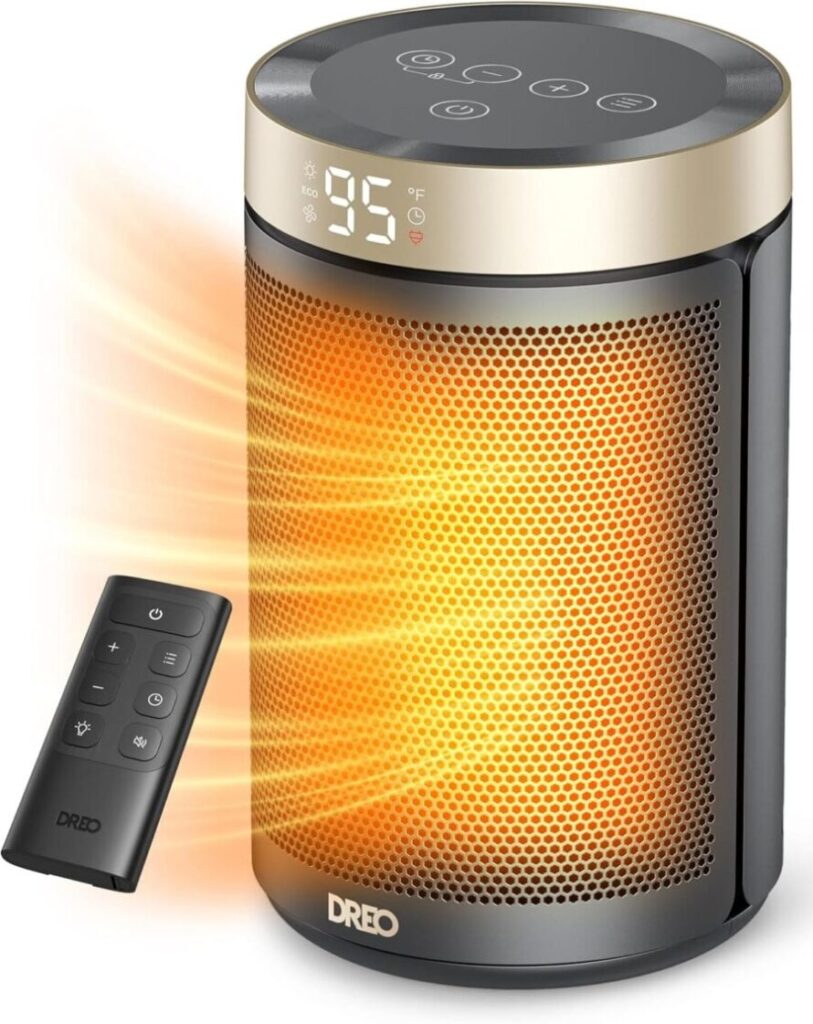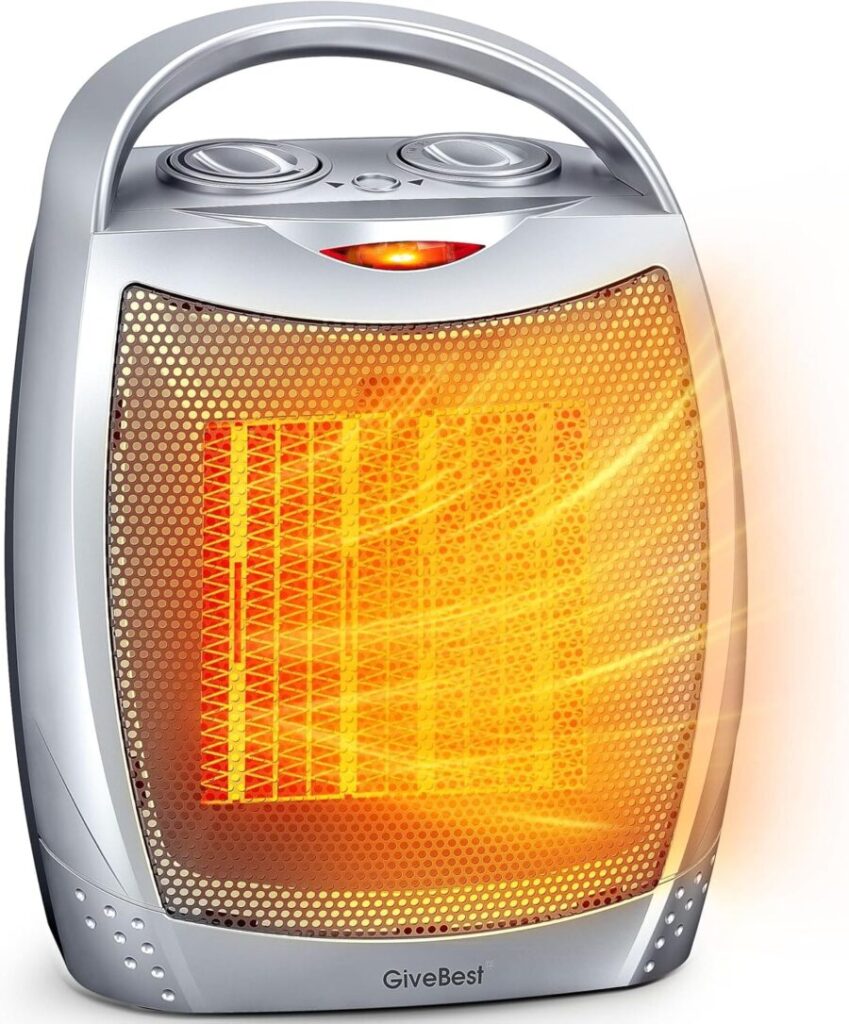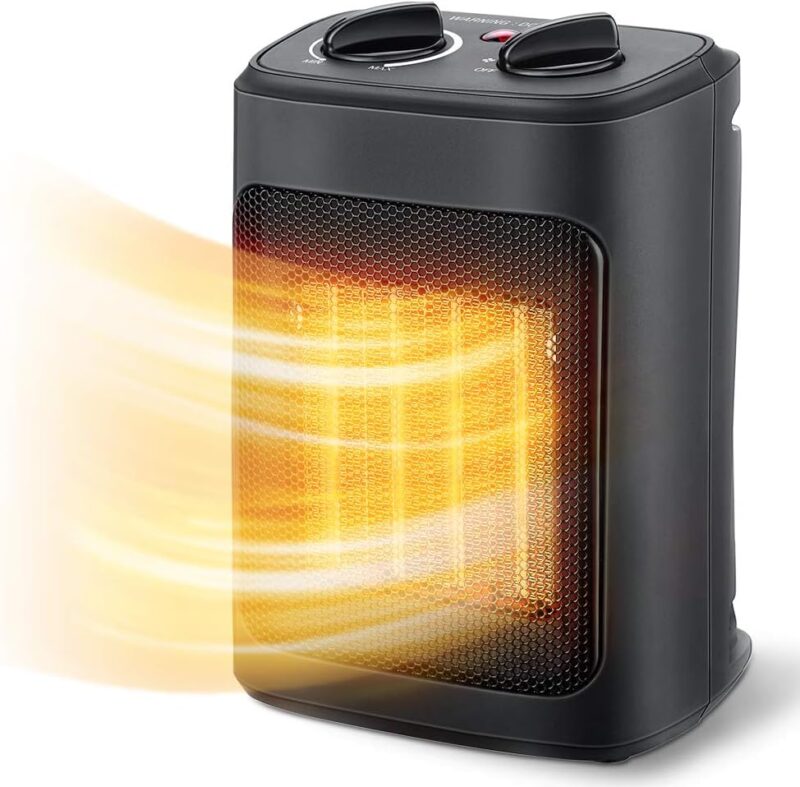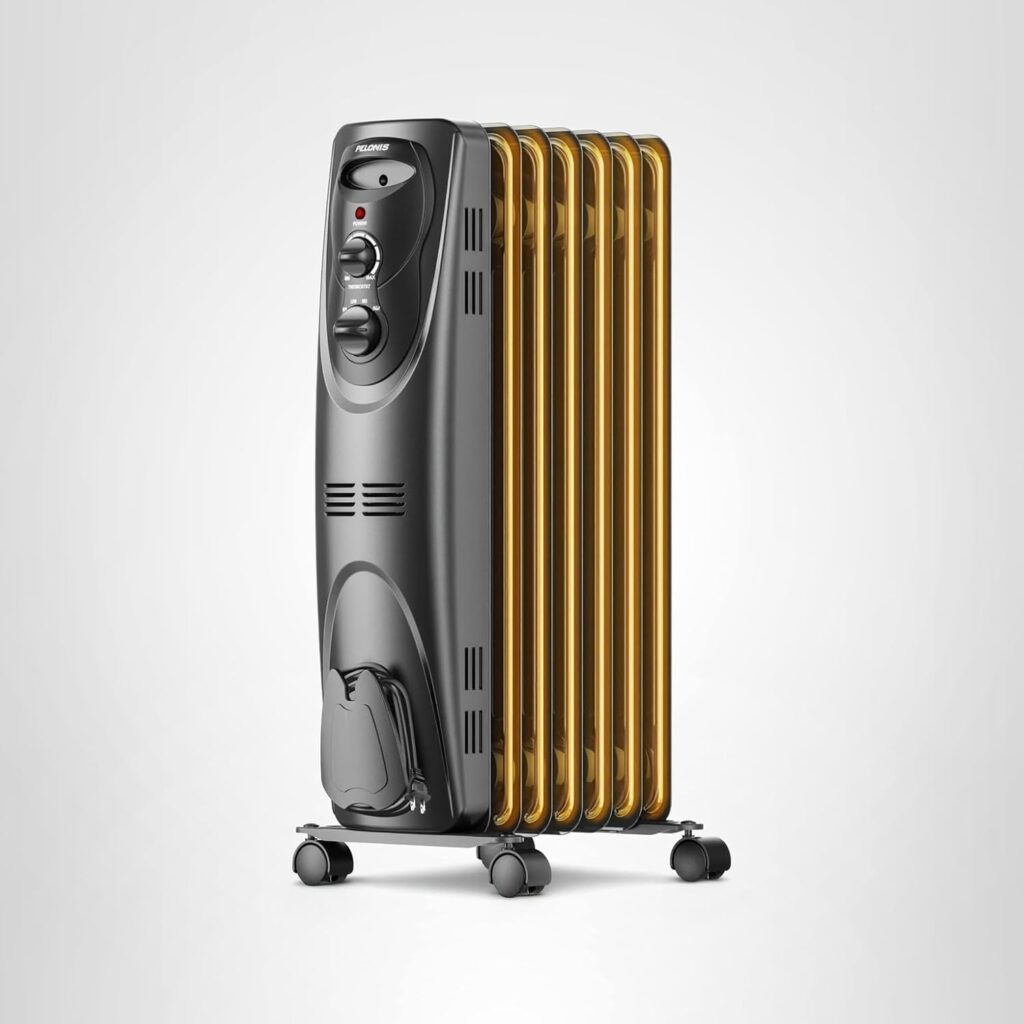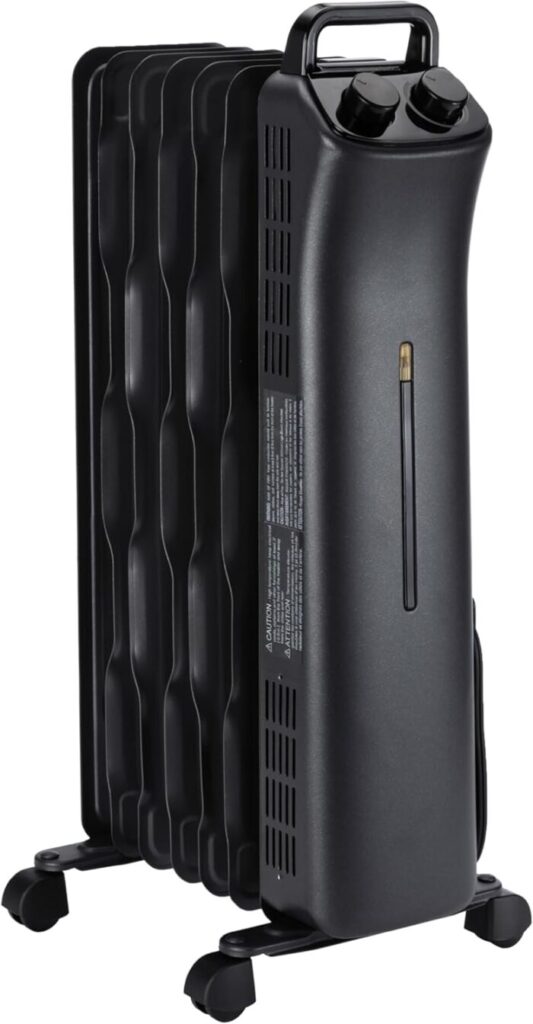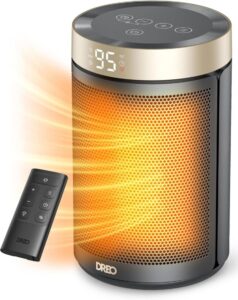
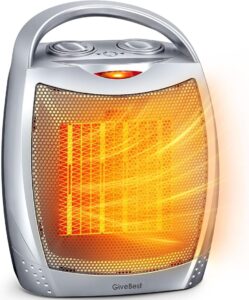
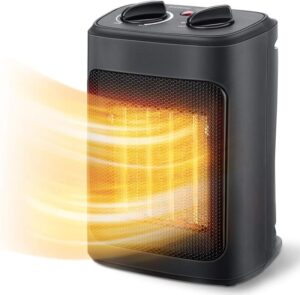
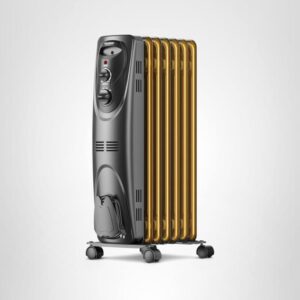
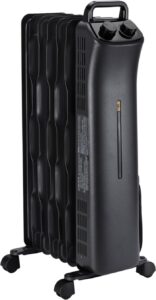
Choosing a ceramic vs oil-filled heater is less about “which is better” and more about how you live — fast spot heat now, or calm, steady warmth for hours.
Choose a ceramic space heater if…
- you want heat right now (bathroom, desk, quick chill)
- you move the heater room to room
- you’re heating a small area and want “spot warmth”
- a little fan noise won’t bother you
Choose an oil-filled heater if…
- you’re heating a bedroom or office and noise matters
- you want quiet, steady warmth for hours (sleeping, working)
- you hate the “fan blowing at me” feeling
- you want a heater that keeps radiating heat as it cycles
For a deeper look at available models and how they compare, see our oil-filled radiator heaters overview.
| Feature | Ceramic heater | Oil-filled heater |
|---|---|---|
| Warm-up speed | Fast — usually seconds to ~1 minute | Slow — often 10–20 minutes to feel “fully on” |
| Noise | Often some fan noise | Silent (no fan) |
| Heat feel | “Spot heat” — warm air you feel quickly | “Steady radiant” — gentle, even warmth |
| Best for sleep | Sometimes (depends on fan noise) | Excellent (quiet, steady) |
| Dust / allergies | Fan can move dust around | Minimal air movement |
| Safety basics | Often cool-touch + tip-over shutoff | Surface can get hot — needs more clearance |
| Cost to run | Similar at same watts, depends on runtime | Similar at same watts, may feel cheaper for long sessions |
| Best rooms | Bathroom, small office, workshop corner | Bedroom, office, living room sessions |
Heat feel — spot heat vs steady radiant
Ceramic heaters are the “instant comfort” option. You turn it on, you feel warm air fast, and it’s great when you are cold — not the whole house.
Oil-filled heaters are more like a quiet radiator. They take longer to ramp up, but once they’re warm, the heat feels more even and less “blowy.” It’s the kind of warmth you forget about — in a good way.
Noise + sleep use
If you’re a light sleeper (or you’re on calls all day), fan noise matters more than you think. Many ceramic heaters sound like a small desk fan — not loud, but always there.
Oil-filled heaters are basically silent, which is why they’re popular for bedrooms and offices where you want warmth without any background sound.
Energy use myths (same watts ≈ similar cost, but comfort differs)
Here’s the part people argue about online: a 1500W heater is a 1500W heater. If you’re comparing operating costs more closely, see whether infrared heaters are cheaper to run — the same wattage rule applies across heater types. At the point of use, electric resistance heat turns incoming electricity into heat very efficiently.
So why do some people swear one “costs less” than the other?
Because comfort changes behavior. Ceramic heat feels instant, so you might run it for shorter bursts. Oil-filled heat feels steady, so you might set it and forget it for longer — and the room stays comfortable even as the heater cycles.
Safety notes (tip-over, surface temp, ventilation)
No matter which type you buy, prioritize:
- Tip-over shutoff
- Overheat protection
- UL or ETL listing
And follow the boring rules that prevent scary problems:
- Keep a 3-foot clearance from curtains, bedding, laundry, furniture
- Plug directly into a wall outlet — avoid extension cords when possible
Ceramic safety: Many models are designed to stay cooler on the outside, but don’t assume — check “cool-touch” claims and keep clearance anyway.
Oil-filled safety: The exterior can get hot. Great for quiet comfort, not great for curious kids and pets unless you can place it safely. (A simple barrier can help.)
Ventilation note: For standard electric ceramic and oil-filled heaters, you’re not dealing with combustion — but you still want normal airflow and you should never block exits or heat near flammables.