Paraheeter QHA-15DB Review — Quiet, Fast Zone Heat Anywhere
At a Glance
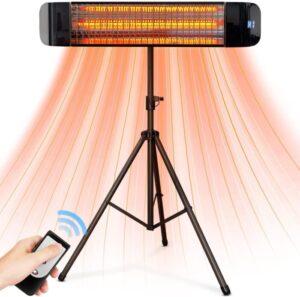
KEY FEATURES
- Power / Coverage: 1500W max (two levels), rated 10–15 ft radius (manufacturer claim)
- Heat levels: 2 settings (Low / High) (owners commonly describe Low ~900W and High 1500W)
- Aim/Mounting: wall or ceiling mount + adjustable aiming, or adjustable tripod stand for portability
- Controls: remote control + on-unit touch controls
- Work light: Not specified
- Safety: tip-over shutoff, metal grille, grounded plug; foam shipping pad must be removed before use; CSA certified; IP65 weatherproof rating
- Size / Weight: dimensions not specified; 18.75 lb; color listed as "NEW"
PROS
- Fast radiant warmth that you feel within seconds.
- Very quiet operation with no fan noise.
- Tripod stand is often described as sturdy and stable.
- Wall, ceiling, or tripod mounting gives real flexibility.
- Remote control is handy, especially for high mounting.
- Support replacements can be surprisingly responsive.
CONS
- It's directional heat, so it won't warm a whole open patio.
- No blower means less "room heating" and more "warm spot."
- The tilt/wing-nut pivot can slip unless tightened firmly.
- Some orientations (like vertical) may require wall mounting.
- Remote range/angle and out-of-box failures are common complaints.
- Packaging issues and missing parts show up for some buyers.
Editor's Choice
Based on rigorous testing & Amazon customer feedback
🔥 Will This Heater Work For Your Room?
Answer a few quick questions about your space to see if this heater is a good match.
There’s cold, and then there’s garage cold — the kind where your hands stop cooperating and suddenly even a simple project feels miserable. Same deal on a patio after sunset. You want to be outside, but you don’t want to drag out a loud blower heater or fire up a whole-house system just to feel comfortable for an hour.
The Paraheeter QHA-15DB shows up a lot in these situations because it’s built for a very specific job: creating a warm zone right where you’re sitting or standing. It’s infrared radiant heat, so the vibe is closer to a campfire than a fan heater.
Here’s what matters up front: this isn’t “heat the entire yard” equipment. Customers who treat it like a heat spotlight tend to be happy. People expecting it to turn an open patio into a heated room… not so much.
Quick verdict
If you want quiet, fast warmth for a work zone or a seating zone, this does what you’d expect. It heats up quickly, the tripod option adds real flexibility, and the no-fan design makes it easy to live with. The catch is coverage: you need to be in front of it to feel the best results, and the remote + hardware quality can be a bit of a lottery. Inspect it when it arrives, and don’t ignore weird behavior like sparking or heavy smoke.
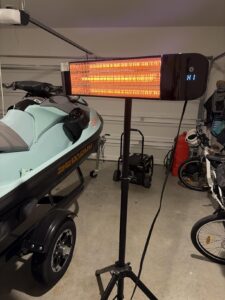
What the heat feels like in real life
The warmth hits you fast — owners describe feeling it within seconds, and that’s the main reason people buy infrared in the first place. Instead of warming the air first, it warms you and whatever it’s aimed at. That’s why several buyers compare it to sunshine or a campfire. You don’t wait for the room to “come up to temp.” You step into the beam and feel better.
That direct-heat style is also why it feels so good in garages. A bunch of customers use it while working out, doing projects, or just trying to survive a cold space without turning the whole place into a furnace project. Aim it at your body and it takes the edge off quickly.
The catch is the same thing that makes it great: it’s directional. Stand off to the side and the warmth fades. Move farther away and the heat spreads wider, but it also feels less intense. One owner put it in simple terms: think flashlight beam — bigger area at distance, less “punch” on you.
Coverage — the realistic story
The product listing talks about a 10–15 ft radius, and sure, you can feel something from farther away in the right conditions. Real comfort is a different story. Buyers who use it outdoors tend to land on the same takeaway: it works best when you’re fairly close and the air isn’t ripping.
On mild-cool evenings, people sound genuinely pleased. You’ll see comments about patios becoming “more usable” and the heater making things “comfortable” rather than magically warm. That’s actually the right mindset. It’s not building a heated room outdoors — it’s giving you a warm lane to sit in.
In colder weather, the range shrinks. Some owners say you’ll need to be “right on top of it” to stay warm outside. Others describe it doing a nice job for a small group if everyone is positioned in front of it, almost like lining up around a firepit — but with the heat coming from one direction.
Indoors or in enclosed spaces (screened porches, gazebos, garages with doors shut), feedback gets more positive. A few buyers mention it heating a room quickly or helping in a family room when they didn’t want to burn through propane on the main system. Still, even indoors, most people talk about it as a zone heater — great for the area you’re using, not necessarily every corner.
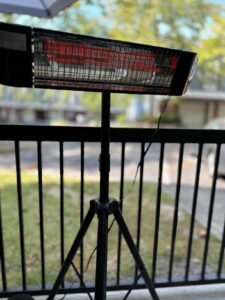
Tripod vs wall/ceiling mounting: which setup makes sense?
One of the biggest selling points here is the 3-in-1 idea: wall mounted, ceiling mounted, or tripod. And in real life, customers actually use all three depending on the space.
The tripod gets a lot of love because it makes the heater portable. People move it between garage, patio, balcony, basement, gazebo, even job sites. Several owners say the stand is sturdier than they expected — more like a solid camera tripod than a flimsy add-on. If you’re the type who wants heat “where you are tonight,” that portability is the whole game.
Wall or ceiling mounting is the cleanest look and keeps floor space open. It’s also handy for garages where you don’t want to trip over a stand, or on a screened porch where you want it up and out of the way. Customers who mount it up high often mention that the remote becomes a daily-use feature, because nobody wants a ladder just to switch Low to High.
The main frustration point isn’t the idea of the tripod — it’s the pivot hardware. More than a few owners say the tilt mechanism can slip unless it’s tightened aggressively, and wing nuts aren’t everyone’s favorite. Some people straight-up use pliers to get it snug enough. Once it’s locked in, many say it’s stable. Getting there can be annoying.
Real-world setup tips (the stuff owners wish they knew)
Treat it like a heat spotlight. Place chairs or a work area in the line of heat instead of expecting “whole patio” results.
Tighten the pivot like you mean it. Multiple owners mention the angle hardware can droop unless it’s really snug. A simple tool assist (like pliers) shows up in customer comments.
Test the remote immediately. Remote issues pop up a lot — dead-on-arrival remotes, narrow angles, replacements needed. You want to know early, not after you’ve mounted it high.
Plan your outlet location. One buyer calls out a short cord (about 6 ft), which can force awkward placement if your outlet isn’t nearby.
Be smart about power if you run two. People using multiple units mention paying attention to circuit limits and splitting outlets when running both on High.
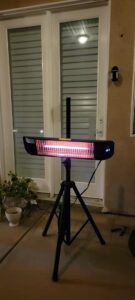
Controls & everyday use
Day-to-day, this heater is meant to be simple. Most owners describe two heat levels — Low and High — and basic on/off control. That simplicity is honestly a win if you hate fiddly settings. People commonly mention using Low more than expected on mild nights, then bumping up to High when the temperature drops.
The remote is the love/hate feature. When it works, customers say it’s the kind of convenience you end up using constantly — especially on a porch setup where you’re wrapped in a blanket and don’t want to get up. Some owners also like the “standby” style operation: plug it in, then choose Low/High.
Remote complaints are loud enough to take seriously. You’ll see everything from “remote didn’t work out of the box” to “only works at a very specific angle.” One buyer even said none of the replacement remotes solved it for them, which is rough if you mounted it high and need remote control. The good news is the seller support gets praised for sending replacement remotes and parts quickly in many cases. Still, it’s something you should expect could happen.
Build quality & reliability: the honest story
This is where the picture gets mixed.
On the good side, plenty of buyers describe the heater as heavy-duty, well-built, and strong for the price. Some people buy multiple units for patios, and a few mention it holding up outdoors. The tripod also gets described as sturdy by a lot of owners, which helps the whole setup feel less “budget.”
Now the not-so-fun side. There are repeated reports of quality-control issues: rough packaging, missing tripod parts, remotes that don’t work, and units arriving looking like they’d been opened before. A handful of owners report the heating element dying early — anywhere from a few months to under two years — which turns into a “replace or toss” situation if you can’t find parts.
Safety complaints also show up, and you shouldn’t ignore them. Some people mention smoke on first use, which can be normal burn-off, but there are also scattered reports of sparking and even one very serious “caught fire” story. That doesn’t mean it’s guaranteed to happen, but it does mean you should treat first use like a real check: watch it, keep clear space, and stop immediately if you see anything abnormal.
One more safety note the listing itself calls out: you must remove the foam protective pad from the heating tube before turning it on. Leaving it in place can cause overheating, melting, smoke, or fire. A buyer even mentioned forgetting that step and having to clean the bulb after.
Power draw: don’t ignore your circuit
At 1500W on High, this isn’t a tiny load. Customers who run two heaters mention paying attention to breaker limits and not stacking both on the same circuit if it trips. That’s just real life with 1500W appliances.
If you’re planning a patio setup with multiple heaters, the smart play is what owners describe doing: split them across different outlets/circuits so you can actually run High when you need it. If you’re using one heater, most people seem fine — but it’s still worth being mindful if you already have other big draws on the same line.
Noise, comfort, and “will it ruin the vibe?”
This is one of the easiest wins for the Paraheeter: it’s quiet. No fan means no constant whoosh, and buyers consistently like it for conversation, card games, porch hanging, and garage workouts.
The comfort is very “radiant.” You feel warmed in the direction it’s pointed, and people describe it as cozy in a way that doesn’t blast air at you. That’s why it shows up in enclosed patios and screened porches so often — it adds warmth without changing the whole atmosphere.
If you’re the kind of person who wants heat that fills a room evenly, the experience can feel uneven. That’s not a defect as much as “wrong tool.” This one is built to warm people, not air.
Maintenance notes (keep it simple)
A few owners mention a smell or some smoke early on, and that can happen with heaters like this during first use. The big thing is making sure the shipping foam pad is removed before you power it up. After that, keeping the heater clean is mostly common sense: don’t let dust and debris build up on the heating area, and keep anything flammable well away from the front.
Also, once it’s been running, it gets hot — so any angle adjustments should wait until it cools down. People mention that re-aiming can be awkward if you try to mess with it mid-session.
Who this heater is for
You’ll probably be happy if you want:
- Quiet, fan-free warmth for a patio seating area
- A garage “warm zone” for workouts, projects, or pipe protection
- A portable heater you can move between porch, garage, gazebo, and RV setups
- A wall/ceiling mounting option that keeps floor space clear
- Fast-feeling heat that kicks in quickly when you step in front of it
- A simple Low/High setup instead of a bunch of modes
You might want to skip it if you need:
- Whole-space outdoor heating for a big open patio or windy yard
- A remote you can count on without testing and possibly replacing
- A heater that spreads warmth in every direction without careful placement
- Set-and-forget reliability with zero chance of early failures
- A long cord that reaches anywhere without planning your outlet location
Pros & Cons Analysis
Based on extensive testing and Amazon customer feedback
Pros
- Instant "sun-on-your-skin" warmth — Buyers describe feeling heat within seconds, more like a heat lamp or campfire than a blower heater.
- Quiet enough for conversation — Customers love that there's no fan noise, so it works well for patios, porches, and garages without the "blower" sound.
- Tripod is sturdier than expected — Lots of owners say the stand feels "beefy" and stable once assembled, even if it looked flimsy in photos.
- Flexible setup (wall/ceiling/tripod) — People like being able to mount it for a permanent spot or keep it portable for RV trips, decks, and garages.
- Great for garages and "warm zones" — Buyers report it's a strong fit for working out, wrenching, or protecting pipes in an unheated garage by aiming heat where you are.
- Remote control is genuinely convenient — When it works, people love adjusting Low/High and power without getting up (especially if mounted high).
- Seller support gets real praise — A recurring observation is quick replacement parts and even full replacement heaters when something breaks.
- Weather resistance is a plus on covered setups — Some customers say it's handled being outdoors well, and the IP65 rating appeals to porch/patio users.
- Two heat levels are simple and practical — Owners like that Low is often enough for mild nights and High gives a noticeable punch when you're close.
- Safety shutoff helps peace of mind — Users mention tip-over protection working as intended when the unit gets knocked down.
- Feels well-built to many owners — Some call it heavy-duty and durable for the price, and a few buy multiples for larger patio setups.
Cons
- Not a whole-area heater outdoors — A common theme is that you need to be in the direct line of heat; step aside and the warmth drops fast.
- Wind and open air steal the heat — People using it on open patios mention it's best for mild-cool nights, not brutal cold unless you're close.
- Angle/tilt hardware can be annoying — Multiple users mention the pivot/wing-nut setup can slip unless you really tighten it (some use pliers).
- Can't rotate to every orientation on the stand — Some owners wish they could switch from horizontal to vertical without wall-mounting.
- Expectations mismatch for big garages — Several owners point out it won't magically heat an entire drafty garage without treating it as zone heat (or using more than one).
- Remote reliability is hit-or-miss — Some units arrive with a dead remote, limited range/angle, or remotes that never work despite battery changes.
- Packaging and missing parts happen — A few buyers report beat-up boxes, missing tripod pieces, or items that looked returned/repacked.
- Cord length can limit placement — One owner specifically calls out a short cord (about 6 ft), which pushes you toward an extension cord or a closer outlet.
- Power draw matters on high — People running two heaters mention breaker/amp limits; you may need separate circuits if you want dual High.
- Serious safety complaints exist — There are scattered reports of sparking/smoke, including one alarming "caught fire" story; it's not something to brush off.
- Reliability can be inconsistent — A handful of owners report early element failure (months to under two years), which makes it feel like a quality-control gamble.
Our Verdict
The Paraheeter QHA-15DB makes the most sense when you treat it like what it is: a directional infrared heater that creates comfort in a specific zone. People who point it at a workbench, a workout corner in the garage, or a small patio seating area tend to describe it as fast, quiet, and genuinely warming.
Go in with your eyes open on the trade-offs. Remote problems and hardware fiddliness show up often enough that you should test everything right away. And because there are a few scary-sounding safety complaints, it's worth being extra cautious on first use: remove the foam pad, watch it closely, and stop if anything seems off. If your goal is quiet, quick warmth where you actually sit, this can be a solid pick — especially if you're realistic about coverage.
Frequently Asked Questions
How much area does the Paraheeter QHA-15DB actually heat?
In real use, it behaves like a heat spotlight. If you're in front of it — especially within a few feet — it can feel genuinely toasty. On open patios or in windy conditions, people say the useful warmth shrinks fast, so it's best treated as zone heat rather than whole-space heating.
Does it heat up quickly?
Yes. Owners commonly describe feeling warmth within seconds, which is exactly what you'd expect from infrared radiant heat.
Is it noisy?
No fan means it's basically silent, which is why people like it for patios, screened porches, and garages where you still want conversation.
How well does it work outdoors in cold weather?
It can keep you comfortable outdoors if you're close and the air is fairly calm. A repeating complaint is that in very cold or very open/windy setups, you'll feel like you have to sit right in front of it to get the benefit.
Is the tripod stable?
Many buyers are pleasantly surprised by how sturdy the tripod is. The bigger issue people mention is the pivot/tilt hardware — some had to tighten it hard (sometimes with pliers) to keep the heater from drooping.
Does the remote control work well?
When you get a good one, it's very convenient. The catch is that remote problems show up a lot — dead remotes out of the box, narrow angles where it responds, or replacements needed. Some owners end up relying on the on-unit controls.
Can I mount it on a wall or ceiling instead of using the stand?
Yes, and people who mount it high love being able to keep floor space clear. If you do mount it up high, the remote becomes a bigger deal day-to-day, so you'll want to test remote function early.
Will it trip my breaker?
On High (1500W), it draws real power. Owners running two heaters mention paying attention to circuit limits and splitting them across different outlets/circuits when needed.
Why does it smell or smoke on first use?
A few buyers mention a burn-off smell or some smoke early on. Also, the product warning matters here — you must remove the foam protective pad from the heating tube before powering it on, or you can cause overheating, melting, or smoke.
Any reliability or safety concerns I should know about?
The experience is mixed. Some people run these for seasons without trouble, while others report early element failure. There are also a few serious complaints about sparking/smoke, including one report of a fire, so it's smart to inspect the unit on arrival, avoid damaged cords, and stop using it immediately if anything seems off.
Technical Specifications
| Brand | Paraheeter |
|---|---|
| Model / SKU | QHA-15DB (ASIN: B09F36PFTF) |
| Heater type | Electric infrared radiant heater for indoor/outdoor zone heating (wall/ceiling mount or tripod) |
| Form factor | Tower (listed); mountable or tripod-supported |
| Heating method | Radiant (infrared) |
| Heating element | Carbon fiber infrared tube (manufacturer description) |
| Max heat output | 1500 W |
| Voltage | Not specified |
| Amperage | Not specified (owners describe it as a high draw on High; one mentions ~12.5–13.6A behavior) |
| Coverage (manufacturer claim) | 10–15 ft radius (≈314–707 sq ft by radius math; real-world comfort depends heavily on exposure and distance) |
| Temperature range | Not specified |
| Speeds / levels | 2 heat levels: Low / High (owners commonly describe Low ~900W and High 1500W) |
| Noise level | Not specified (customers describe it as silent — no fan) |
| Oscillation | No (fixed-angle, aimable mount) |
| Controls | Remote control + on-unit touch controls |
| Timer | Not specified |
| Power source | Corded electric |
| Mounting / placement | Wall/ceiling mounting brackets + adjustable aiming; adjustable tripod stand for portable placement |
| Dimensions (D × W × H) | Not specified |
| Weight | 18.75 lb |
| Color | NEW (color name as listed) |
| Special features | Adjustable Temperature, Remote Control, Tip-over protection (tripod use), IP65 weatherproof rating, Wall/Ceiling mountable, Tripod stand included |
| Safety certification | CSA certificate |
| Included in the box | Infrared heater, Remote control, Tripod stand (ships as a separate box for some buyers), Wall/ceiling mounting hardware, User manual (some mention tools/screws included) |
| Warranty | 1-year warranty |
| Recommended room types / uses | Garages (workouts, projects, pipe protection), patios/decks, screened porches, gazebos, balconies, RV/camping setups, job sites, backyard hangouts (firepit seating and card games), baseball dugouts |
Amazon Basics Patio Heater Review — Big Warmth, Real-World Quirks (Assembly, Wind, Fuel Use)
Amazon Basics patio heater review: the “outside season extender” people actually use There’s a moment every fall where you want…
DR. INFRARED HEATER DR-998 Review: quiet warmth with less dry-air misery
Cold weather gets especially annoying when the room you actually use never feels quite right. Maybe it’s a basement office,…
Cozy Products Cozy Legs CL-2 Review: quiet desk warmth where you actually need it
There’s whole-room heat, and then there’s “my feet are freezing even though the house is fine” heat. That second problem…
FOOWIN Pyramid Patio Heater 48,000 BTU With Big Ambiance — Real-World Notes on Heat, Setup, and Daily Use
A pyramid patio heater that’s part warmth, part “backyard mood lighting” If your outdoor space gets used less the moment…


