Cozy Legs CL-2 Review: Desk Warmth, Specs and Limits
At a Glance
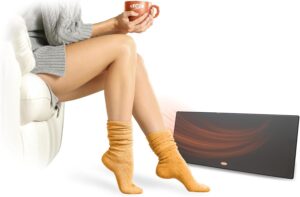
KEY FEATURES
- Original CL-2, advertised 200W input.
- Upright panel for personal desk comfort.
- Half/full cord switch with an off position.
- Freestanding feet or rear mounting points.
- Confirm physical version before buying.
PROS
- Useful mild leg warmth reported in some desk setups.
- No blower; several owners value quiet work.
- Slim panel can suit a fixed position with little spare floor space.
- Simple cord control is easy to reach when positioned deliberately.
CONS
- Mixed warmth; cold feet and drafts may remain a problem.
- Thermostat chirping reported despite otherwise quiet operation.
- No session timer described; manual switch-off matters.
- Hot-face reports and conflicting dimensions require care before purchase.
Price and availability subject to change
The Cozy Legs CL-2 is worth considering when your desk area is nearly comfortable and you want a little extra warmth near your lower legs. It is a weaker choice when your feet stay cold in a draft, you expect hot air around both sides of your legs, or you want a heater to warm the office.
Owner experiences range from useful desk comfort to barely noticeable warmth. This review assesses the original CL-2 listing and customer accounts; it is not a hands-on test.
Check which Cozy Legs you are buying
This page covers CL-2 / ASIN B01M0HYLBO, advertised as a 200W panel. The manufacturer’s CL-2 brochure identifies that rating. The current Cozy Legs page describes a different SKU, CL-RETAIL, at 150W. Do not transfer that newer product’s specifications to CL-2.
Physical measurements also vary between generations of the documentation. The collected CL-2 listing says 19 × 13 × 5/8 inches and 5 lb; the older brochure gives 18.75 × 12 × 0.5 inches and 3 lb. Neither supports the previous 19 × 8-inch figure on this site. Confirm your offered unit’s measurements and support footprint before committing to a tight desk space.
Warm shins do not necessarily mean warm feet
A desk user who wanted quiet, low-output heat found the lower setting sufficient to take the chill out of the area beneath the desk. Another owner with limited desk space liked the panel’s unobtrusive shape and modest warmth. These are useful accounts for a desk that needs a small comfort improvement.
But one owner reported warmer lower legs without warm feet. A reviewer who returned the panel disliked warming only the side of the legs facing it and preferred a fan heater. Other sampled owners found too little warmth even in a partly enclosed desk area. An enclosure is therefore no guarantee of comfort, and it must not obstruct heat release.
One enthusiastic account describes warming a bedroom. That conflicts with several much less satisfied reports and does not establish a room-area rating. Choose around the personal task you need to solve, not that exceptional outcome.
If your legs feel warmer but your toes do not, use our cold-feet desk checks to distinguish floor, draft and heater-placement problems before buying another warmer.
Simple controls, with a daily switch-off habit
The CL-2 instructions specify a cord-mounted half/full-power switch, an off position and internal temperature regulation. This is not a user-adjustable room-temperature setting. The manual describes no session timer, and one desk user repeatedly forgot to switch the hidden panel off. Keep the control accessible and turn it off when finished.
At the advertised 200W input, eight continuous hours would use 1.6 kWh. At an illustrative $0.20/kWh, that is $0.32. Actual use depends on operating time and cycling. Lower input does not establish lower cost for an equivalent heating result; a panel that leaves you cold has not replaced your room heater.
Quiet work is plausible; absolute silence is not guaranteed
Several sampled users liked the absence of a blower. However, one owner updated their review to describe a thermostat chirp that made the unit unsuitable for their noise-sensitive nighttime use. For daytime desk work, that may be acceptable; for a silent bedroom, weigh it explicitly.
Reports about surface temperature also conflict. Some owners describe comfortable accidental contact, while others describe a hot face. Do not use those anecdotes as a safe-to-touch promise.
Plan the mounting before ordering
The model instructions call for vertical use, either on its supplied feet or secured using the rear mounting points. Let it cool before moving it. Do not lay it flat as a footrest or keyboard warmer, cover it, or use it in damp conditions. The document’s zero-clearance description does not override those restrictions.
A sampled owner received a broken foot but intended to mount the panel; that makes checking the supports on arrival useful, not evidence of a general breakage rate. Owner experiments with adhesive strips, external controls and covered workspaces are not substitutes for the supplied instructions.
For a folding alternative with a session timer, compare the original WhisperHeat DSK1300. It has its own heat-strength and bracket limitations. Our personal-heater shortlist explains when either shape is worth considering and when a desk warmer is unlikely to solve the problem.
Pros & Cons Analysis
Benefits and limitations from the evidence discussed below
Pros
- A satisfied desk user found the lower setting useful for removing a local chill. That supports a modest comfort role, rather than a promise of warm feet in every office.
- An owner who wanted a light, quiet panel liked the form and lack of a blower. The later chirping update limits the silence claim, but the distinction from continuous fan noise remains useful.
- A user with limited space valued keeping the panel out of the way. That makes a fixed installation worth considering; follow the approved mounting method, not the adhesive workaround in the account.
- One owner appreciated the long control cord for positioning. Place the switch where you can reach it without crawling under the desk; the precise cord length was not independently verified.
Cons
- One returned unit warmed the facing side of the legs too narrowly for its owner. Together with a report of cold feet despite warmer legs, this argues against buying it solely to fix freezing toes.
- Thermostat noise was enough to spoil nighttime use for a sensitive listener. Quiet desk comfort and inaudible sleep operation are different requirements.
- A concealed under-desk setup made it easy to forget the power switch. A convenient location for the control is part of the purchase decision; do not assume a timed shutdown.
- An owner describing a hot panel still found the radiated warmth weak. A hot surface and insufficient personal comfort can coexist; moving your feet into contact is not the solution.
- One account describes unexpected switch and power behavior. It conflicts with the documented settings and cannot redefine the specification. If your unit behaves unlike its instructions, stop and ask the supplier to resolve the mismatch.
Our Verdict
Consider CL-2 for a fixed desk where mild, local leg warmth would be enough and you prefer no blower. Its slim form and simple control matter more than a whole-room heating claim.
Skip it for reliably toasty feet in a cold draft, adjustable room temperature or guaranteed silence. The mixed heat reports, hot-face accounts and lack of a session timer make it a conditional choice. Check the offered version, mounting space and return terms before buying.
Frequently Asked Questions
Is Cozy Legs CL-2 a 150W or 200W heater?
The original CL-2 brochure and collected listing advertise 200W. The current CL-RETAIL page describes 150W. Confirm the SKU and rating label rather than treating these as one specification.
Will CL-2 warm cold feet?
It may help, but sampled owners disagree. One described warmer lower legs without warmer feet. Do not buy it expecting guaranteed toe warmth in a drafty office.
Does it have an adjustable thermostat or timer?
Its instructions describe internal heat regulation and a half/full/off cord switch, not a user-set room temperature or session timer.
Can it lie flat under my feet?
No. The CL-2 instructions specify vertical placement and warn against horizontal use. It is not a contact foot warmer.
Technical Specifications
| Brand | Cozy Products |
|---|---|
| Model / SKU | CL-2; ASIN B01M0HYLBO; not CL-RETAIL |
| Heater type | Indoor personal flat-panel heater |
| Form factor | Upright flat panel |
| Heating method | Radiant panel; local convection also possible |
| Heating element | Panel; internal construction not independently verified |
| Max heat output | Advertised electrical input 200 W; no measured useful-output claim |
| Voltage | 110/120 V supply — CL-2 instructions |
| Amperage | Verify unit label; older brochure states 1.8 A at 115 V |
| Coverage (manufacturer claim) | No verified room-area rating |
| Temperature range | No verified adjustable room-temperature range |
| Speeds / levels | Half / full power — CL-2 instructions |
| Noise level | No measured dB value; quiet reports and a thermostat-chirp report |
| Oscillation | Not applicable to fixed panel |
| Controls | In-cord switch; internal heat regulation |
| Timer | No session timer described in model instructions |
| Power source | Corded electric |
| Mounting / placement | Vertical on supplied feet or rear mounting points; dry use |
| Dimensions (D × W × H) | Collected listing: 5/8 × 19 × 13 in; older brochure: 0.5 × 18.75 × 12 in; confirm offered version and support footprint |
| Weight | Collected listing: 5 lb; older brochure: 3 lb; confirm version |
| Color | Black — collected listing |
| Special features | Heat-sensitive surface indicator |
| Safety certification | Manufacturer brochure describes ETL zero-clearance; not independently registry-checked |
| Included in the box | Model instructions describe feet and basic wood screws; confirm offer contents |
| Warranty | Model document states six months from shipping; confirm current seller terms |
| Recommended room types / uses | Supplemental lower-leg warmth at a dry desk; not room heat or a contact footrest |
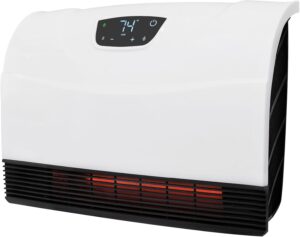
Heat Storm HS-1500-PHX-WIFI Review: smart warmth for the rooms you actually use
There’s cold, and then there’s annoying house cold — the bedroom over the garage, the basement office that never feels…
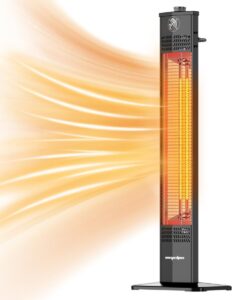
Encyclpo 11-E0300 Review — Fast, Quiet Infrared Tower Heat
There’s cold, and then there’s “why did I come out here?” cold — the kind you get on a covered…
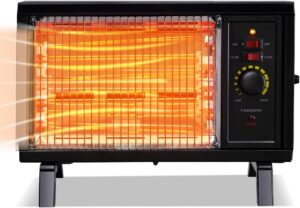
Homeleader ETL Portable Radiant Heater Review: quick warmth for the rooms you actually use
There’s cold, and then there’s small-room winter cold — the kind that hits when your bedroom still feels chilly after the furnace…
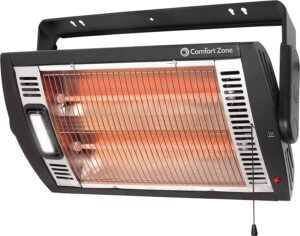
Comfort Zone CZQTV5M Review: Workbench Warmth and Tradeoffs
Conditional indoor work-position heat, with useful warmth reports but material mounting, reach and reliability concerns.


