PELONIS Oil Filled Radiator Heater Review — Quiet, Steady Heat That Feels Like “Central Heating Lite”
At a Glance
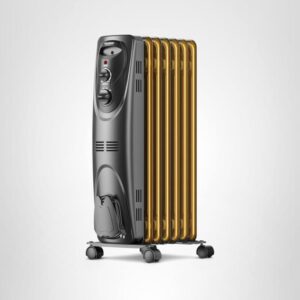
KEY FEATURES
- Oil-filled radiator design for steady, comfortable warmth
- 3 heat settings (600 W / 900 W / 1500 W)
- Adjustable thermostat dial
- Overheat protection and tip-over safety shutoff
- Wheels + carry handle for easier room-to-room moving
- Quiet operation (no fan)
PROS
- Quiet, near-silent operation (only occasional click)
- Steady, long-lasting radiant warmth (continues after cycling off)
- Energy-friendly low setting (many run it at ~600W)
- Simple manual dials; resumes after power outage
- Easy assembly (attach wheels) + compact footprint
- Safety features appreciated (tip-over/overheat protection; no exposed coils)
- Often reliable for years (many long-term positive reports)
CONS
- Slow warm-up vs. fan/forced-air heaters
- “Large space” performance varies in open/high-ceiling rooms
- Thermostat knob is basic/finicky (not a true temp setting)
- No digital display, timer, remote, or smart features
- Handle/cord-wrap design complaints; casters can struggle on thick carpet
- Exterior fins get hot; some want a protective guard for kids/elderly
- Some QC/defect reports (dents/missing parts; rare sparking/outlet concerns)
Editor's Choice
Based on rigorous testing & Amazon customer feedback
If you’re shopping for a space heater you can run while you work, read, or sleep — the PELONIS oil filled radiator heater (mechanical-dial models like NY1507-20MB / NY1507-20M) is the kind of “boring” that becomes a compliment. It doesn’t roar like a fan heater, it doesn’t pulse hot-and-cold every few minutes, and it doesn’t make the room feel like a wind tunnel.
Instead, it warms up gradually, then settles into a steady rhythm that feels closer to central heat. If that’s what you want, this style of heater can be a great fit.
What it’s like to live with
First impressions — simple, old-school, and that’s the point
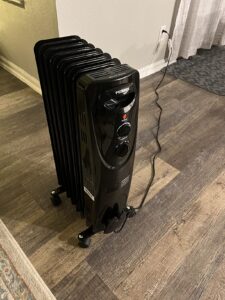
This PELONIS radiator uses the classic oil-filled design: electricity heats the sealed oil inside, and the fins radiate warmth into the room. The big advantage is comfort — the heat feels gentle and consistent, not sharp.
The controls are straightforward (dial thermostat + heat-level selector). It’s not “smart”, and it’s not trying to be.
Warm-up and heat feel
Expect a warm-up period. You won’t feel instant heat the way you do with a ceramic tower heater, but after a bit, the room temperature starts to rise in a more even way.
Once it’s been running, it tends to keep the room feeling stable — fewer big swings, fewer “now I’m too hot” moments.
Noise (or, more accurately, the lack of it)
For bedrooms and workspaces, quiet matters. Oil-filled heaters are naturally strong here because there’s no fan pushing air. Most of what you’ll notice is… basically nothing. That’s the appeal.
Where it works best
Oil-filled radiators are happiest in:
- bedrooms
- home offices
- nurseries (with sensible placement and supervision)
- living rooms where you want background warmth
If you’re trying to heat a freezing garage fast, a fan-driven heater will feel quicker. If you want the room to stay comfortable, this style tends to win.
Moving it around
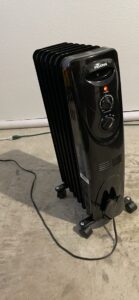
It’s not tiny, but the wheels and carry handle help. The only “daily-life” annoyance is the cord — like most space heaters, you’ll want it plugged directly into a wall outlet, so placement is sometimes dictated by where your outlets are.
Setup tips that actually matter
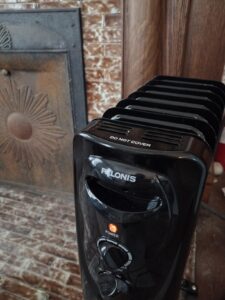
- Give it breathing room (don’t park it right against curtains or bedding).
- Start on the highest setting to get the room up to temp, then step down.
- Use the thermostat to “hold” comfort, not to chase instant heat.
Safety and day-to-day peace of mind
This PELONIS model includes common protections like overheat protection and tip-over shutoff, which is what you want for an everyday heater.
For safety basics, here’s a solid reference: NFPA portable heater safety tips.
Who should buy it
Choose the PELONIS oil filled radiator heater if you want:
- quiet heat for sleep or focused work
- steady warmth that feels less “harsh”
- a heater you can leave running while you’re in the room without it dominating the space
If you want fast, directional heat (or features like oscillation, remote control, app control), you’ll probably be happier with a ceramic tower heater.
Pros & Cons Analysis
Based on extensive testing and Amazon customer feedback
Pros
- Heats well (especially small–mid rooms): many say it comfortably warms bedrooms, bathrooms, offices, studios, RVs, and even drafty spaces when left running steadily.
- Steady, lingering warmth: once the oil is hot, heat continues radiating even after it cycles off.
- Very quiet: nearly silent; most noise mentioned is an occasional thermostat “click/tick.”
- Energy-saving options: the low-watt setting (often cited around 600W) is appreciated for keeping rooms comfortable with less impact on the electric bill compared with fan heaters.
- Safety perceived as better than coil/fan heaters: no exposed glowing element; many praise tip-over and overheat protection and feel safer using it around kids/pets (with caution).
- Simple manual controls: “no-frills,” easy dials; several like that it resumes heating after power outages (unlike some digital models).
- Easy setup: typically just attach the wheels/casters.
- Build feels sturdy/compact: many like the slim footprint, wheels for moving, and overall sturdiness; several report multi-year reliability.
- Comfort benefits: some say it doesn’t dry out air like fan heaters and may be better for allergies because it doesn’t blow dust.
- Good supplemental heat: frequently described as excellent for “taking the chill off” without heating the whole house.
Cons
- Not “instant heat”: common reminder that oil radiators warm up slowly; several note it takes hours to fully heat a space.
- “Large space” expectations vary: some say it won’t noticeably raise temps in big/open/high-ceiling rooms (often described as only a few degrees of ambient increase unless the room is enclosed).
- Thermostat control is basic/finicky: multiple users say the knob isn’t a true “set temperature” thermostat and needs tweaking as outdoor temps change.
- No modern features: repeated mentions of no digital temp readout, timer, remote, or smart controls (some prefer this, others don’t).
- Hot exterior / burn risk: fins can get hot; some want a protective guard and warn the unit can burn if touched (especially while moving).
- Ergonomics/design complaints: several criticize the small/awkward handle (hard to move safely), plus cord wrap design; casters can struggle on thick carpet.
- Initial odor for some: a number report a “new heater” smell/burn-off at first; a few report strong or persistent outgassing they found unacceptable.
- Quality-control / defects (minority but important): reports include arriving dented/bent fins, missing wheels, a switch “glitch,” and a few serious safety concerns (e.g., sparking plug, worries about leaks).
- Manufacturer support complaints: at least one report of poor/unresponsive customer service about missing parts; returns can be inconvenient (retailer-process issue, but still part of user experience).
- Cost can add up if overused: a few mention running multiple units/high settings can still become expensive.
Our Verdict
The PELONIS oil filled radiator heater is a strong pick when you want quiet, steady warmth that you can live with for hours — especially in bedrooms and home offices. It’s not the fastest heater in the world, but once it gets going, the comfort level is exactly why people choose oil-filled radiators.
Frequently Asked Questions
How quickly does the PELONIS oil-filled radiator start warming a room?
It is not instant like a fan heater. It usually takes several minutes to feel strong heat, and the whole room warms gradually as the oil heats up. The upside is the warmth stays steady once it gets going.
Is it actually quiet enough for sleeping or working?
Yes. Most owners describe it as almost silent because there is no fan. You may hear a small click or light ticking when the thermostat cycles on and off, but it is usually not disruptive.
What size room can it heat in real life?
It works best in bedrooms, bathrooms, offices, and other small to medium rooms—especially if you can close the door. In big open spaces or rooms with high ceilings, it can still help, but the temperature rise may be more modest unless you run it longer or use more than one heater.
Does it blow air or dry out the room like a fan heater?
No. This is a radiant, oil-filled heater with no fan, so it warms the room with gentle radiant heat. Many people prefer it because it does not blow dust around and feels less drying than forced-air heaters.
What are the heat settings and how do the two knobs work?
You get 3 power modes (600W/900W/1500W) and a separate thermostat knob. A common approach is to pick a wattage level first, then adjust the thermostat until the room feels comfortable. The heater will cycle to maintain that level of warmth.
Does it have a true temperature thermostat with an exact number?
It has an adjustable thermostat, but it is not a precision digital thermostat with a display. Some users say the knob can feel sensitive, so you may need small adjustments when the weather changes.
Is it safe to use around kids and pets?
It is considered one of the safer heater styles because there are no exposed glowing coils and it includes tip-over and overheat protection. That said, the fins get hot, so keep some space around it and avoid placing it where kids or pets can press against it.
Can I leave it running overnight?
Many owners do, especially on low or medium settings, because it is quiet and the heat is steady. For safety, always use a solid wall outlet (not a cheap extension cord), keep it away from curtains and furniture, and make sure it sits on a flat, stable surface.
Does it turn back on automatically after a power outage?
Yes—this manual dial style is a big reason some people choose it. If the power goes out and comes back, it can resume heating based on your knob settings, unlike some digital models that stay off until reset.
Is there any smell when it is new?
How portable is it and are the wheels any good?
It rolls on four caster wheels and is easy to move on hard floors and low-pile rugs. On thick carpet, the wheels can feel a bit stubborn. A few owners also dislike the small handle, so use care when repositioning it while it is hot.
What’s the best placement for better heating results?
Give it breathing room—don’t press it tight against walls or furniture. For faster comfort, place it in the area you use most and close the door. In larger rooms, gentle airflow like a ceiling fan on low can help spread the warmth.
Technical Specifications
| Brand | PELONIS |
|---|---|
| Model / SKU | NY1507-20M / NY1507-20MB (matches the mechanical-dial style shown) |
| Heater type | Portable indoor electric oil-filled radiator heater |
| Form factor | Radiator (freestanding on wheels) |
| Heating method | Radiant + natural convection (oil-filled fins) |
| Heating element | Electrically heated, sealed oil-filled radiator |
| Max heat output | 1500 W |
| Voltage | 120 V |
| Amperage | 12.5 A (at max power) |
| Coverage (manufacturer claim) | Up to 150 sq ft |
| Temperature range | Thermostat dial (range not specified) |
| Speeds / levels | 3 heat settings (600 W / 900 W / 1500 W) |
| Noise level | Very quiet (fanless design) |
| Oscillation | No |
| Controls | On-unit mechanical dials (thermostat + heat selector) |
| Timer | No |
| Power source | Corded electric |
| Mounting / placement | Free standing |
| Dimensions (D × W × H) | 14" × 14.7" × 23" |
| Weight | 18.5 lb |
| Color | Black (NY1507-20MB) |
| Special features | Adjustable thermostat, Tip-over protection, Overheat protection, Wheels, Carry handle |
| Safety certification | cETL Listed |
| Included in the box | Oil-filled radiator heater, User manual |
| Warranty | Varies by retailer / region |
| Recommended room types / uses | Bedroom, home office, nursery, living room |
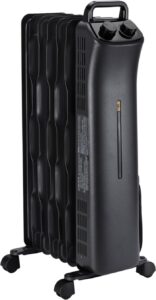
Amazon Basics Oil Space Heater – 7-Fin Portable Radiator with Thermostat, 1500W
Product Overview The Amazon Basics Oil Space Heater delivers steady radiant warmth for small to medium-sized rooms. With 7 oil-filled…
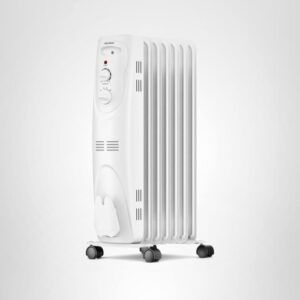
PELONIS Oil Filled Radiator Heater Review — Quiet, Steady Heat You Can Live With
If you’re searching for a PELONIS oil filled radiator heater review, you’re probably after the same thing most people want…


