For a portable electric infrared heater, use the permitted location and surface, keep combustible materials clear, plug directly into a wall outlet, and switch it off before sleeping or leaving the room. A thermostat, timer or tip-over switch does not make unattended portable heating an appropriate routine.
Infrared describes heat delivery, not a complete safety specification. This guide focuses on electric heaters. Fixed installations need their own model-specific instructions; fuel-burning radiant heaters have additional combustion and ventilation requirements that this electric-heater checklist does not cover.
Before switching on a portable heater
CPSC’s portable-heater guidance calls for at least three feet between the heater and combustible materials, direct wall-outlet connection without extension cords or power strips, and turning the heater off before sleep. Follow additional restrictions in the exact manual, including placement, orientation and clearances.
- Check the model label and matching instructions. Confirm the proposed room and support surface are permitted.
- Inspect the cord, plug and connection for damage or looseness before use. Do not use damaged equipment.
- Keep bedding, curtains, clothing, papers, furniture and pet bedding out of the required clearance area. Do not dry items on the heater or cover it.
- Keep the cord visible and away from walking routes; never route it beneath a rug or carpet.
- Check the exact model against CPSC recalls. If recalled, stop using it and follow the recall remedy.
The Texas Department of Insurance checklist supports checking plugs and connections, keeping cords out from under rugs, and turning heaters off when leaving the room. An outlet that is convenient but loose or damaged is not an acceptable connection.
Can you sleep with an infrared heater on?
Turn a portable heater off before sleeping. Do not treat a timer, thermostat, clear floor or automatic shutoff as an exception. Plan portable warmth while awake and present.
For a fixed heating system, use its documented installation and operating requirements. Being attached to a wall does not by itself establish suitability for unattended operation. For example, the DR-238 manual, version v250108, describes a mounted heater but also says not to leave it unattended during use. Do not transfer an operating assumption from one fixed system to another.
Match the location to the exact heater
| Location | What must be resolved |
|---|---|
| Bedroom or living room | Clearance from bedding, curtains and furniture; contact and movement around the heater; portable units off before sleep. |
| Garage or workshop | Permitted environment, flammable materials, storage and activities—not just the direction the heater faces. |
| Patio | Explicit outdoor-use permission, exposure limits, mounting and suitable electrical installation. |
| Bathroom or laundry | Explicit suitability for that location and compliant installation; an IP rating alone is not permission. |
The DR-238 manual prohibits use where gasoline, paint or flammable liquids are used or stored. It also excludes bathrooms, laundry areas and similar indoor locations. Those are restrictions on that documented model, not problems solved by moving a container out of the beam or choosing a higher mount.
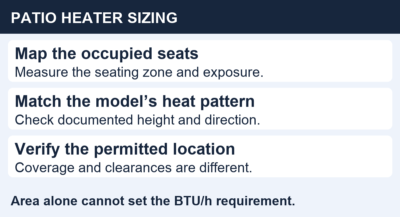
For a patio, verify exposure and connection requirements in the exact instructions. A roof, weather-resistant description or IP marking does not independently answer whether the entire installation is suitable. Have a qualified installer resolve unclear electrical or mounting requirements. The infrared placement guide helps organize the model, room and clearance information before installation.
Children, pets and safety controls
Hot surfaces can cause contact burns. Keep children and pets away and avoid positions where they can knock the heater over, pull its cord or bring bedding and toys near it. Texas’s safety guidance specifically warns about these interactions. A grille does not mean the front is safe to touch.
Follow the manual’s supervision requirements. Do not add a homemade guard or enclosure that can restrict airflow or enter a clearance area. If you cannot maintain the required separation during normal use, choose another setup rather than relying on an automatic shutoff.
When to stop using the heater
Stop use for damaged cords or plugs, loose connections, scorching, burning-plastic odors or an unusually hot plug or outlet. Switch off and disconnect only if you can do so safely; do not handle damaged or overheating parts. Have the appliance assessed by the manufacturer’s service provider and electrical connections checked by a qualified electrician as appropriate. CPSC’s home-wiring guide says to discontinue use of a hot outlet and obtain qualified help.
Do not repeatedly reset a breaker or bypass a protective device to keep heating. A shutoff can have several causes, including normal thermostat operation or a fault; the symptom alone is not a diagnosis. Record what happened and consult the exact troubleshooting instructions without opening the appliance or recreating the fault.
Do not assume an unfamiliar odor is harmless “burn-off.” Only a model’s documented first-use behavior can support that explanation. Stop if the behavior is unexpected, persistent or accompanied by damage, smoke or overheating.
If there is a fire, get out, stay out and call emergency services from safety—911 in the United States. USFA’s fire-safety guidance emphasizes leaving and calling from outside. Do not delay evacuation to unplug or troubleshoot a heater.
Maintain it according to the manual
Use only the documented cleaning and inspection method, with the heater switched off, disconnected and cooled as instructed. Keep openings clear without inserting objects or spraying liquids into the appliance. Do not apply a generic cooling time or internal-cleaning procedure to an unfamiliar model.
Before the next session, check that the room still meets the placement requirements. New furniture, a moved curtain, stored boxes or a pet bed can change an otherwise familiar setup. Keep working smoke and carbon-monoxide alarms as appropriate for the home; an electric heater does not remove hazards from other fuel-burning equipment.
If the safely placed heater cannot provide enough warmth, revisit the heating plan rather than reducing clearance or adding improvised power connections. Our large-room heating guide separates whole-room needs from supplemental warmth, and the infrared running-cost guide helps budget the intended session.