A propane patio heater usually seems foolproof — until it suddenly won’t light, won’t stay lit, or gives off a sad little flame that barely warms your knees.
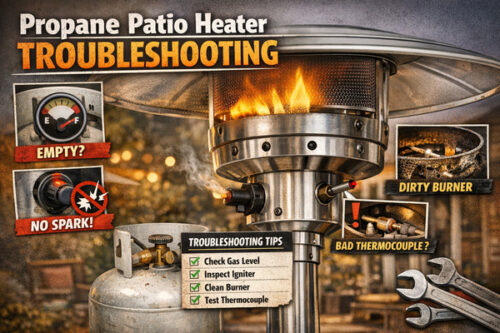
That’s what makes propane patio heater troubleshooting so frustrating. A bunch of different problems can look almost the same from the outside. Empty tank, clogged pilot, weak regulator, dirty burner, bad igniter, misaligned thermocouple — all of them can lead to the same basic complaint: “This thing isn’t working right.”
The good news is most patio heater issues are pretty predictable. This guide breaks them down in plain English so you can figure out what’s wrong faster, avoid random guesswork, and know when it’s a simple DIY fix versus when it’s time to replace a part.
What’s covered:
- The fastest way to diagnose common problems
- Why your patio heater won’t light
- Why it lights but won’t stay lit
- What weak flame, yellow flame, and odd noises usually mean
- A simple troubleshooting flow you can follow in order
- Basic maintenance that helps prevent repeat problems
Quick symptom checker
If you want the fastest starting point, use this table first.
| Symptom | Most likely causes | First thing to check |
|---|---|---|
| Won’t light at all | Empty tank, bad igniter, clogged pilot, bad regulator | Tank fuel + igniter spark |
| Clicks but won’t ignite | Gas not reaching pilot, blocked orifice, air in line | Pilot tube + gas flow |
| Lights, then shuts off | Thermocouple issue, wind, weak pilot flame | Thermocouple position |
| Weak heat output | Low tank, kinked hose, dirty burner, bad regulator | Tank level + burner cleanliness |
| Yellow flame or soot | Dirty burner, blocked air intake, bad combustion mix | Burner and air intake |
| Hissing / whistling | Regulator or gas flow issue | Regulator + hose connections |
| Popping / crackling | Debris, insects, burner corrosion | Burner ports |
That table alone solves a lot of wasted time. Instead of guessing, you match the symptom first and start with the part most likely to be responsible.
Start with the 5-minute checks
Before you grab tools, do the simple checks first. They solve way more problems than people expect.
1) Make sure the tank actually has enough propane
A patio heater can act “broken” when the tank isn’t fully empty but doesn’t have enough pressure left to run properly. Weak flame, failed ignition, and heaters that light then die can all come from a low tank.
2) Confirm the tank valve is fully open
Half-open valves can create inconsistent flow and weird flame behavior.
3) Look at the hose and regulator
Check for:
- kinks
- twists
- cracks
- loose connections
- visible wear
4) Check for wind
A patio heater that works fine on calm nights but dies in a breeze may not have a part failure at all.
5) Look for dirt, webs, and bug nests
Outdoor heaters are magnets for spiders, dust, debris, and carbon buildup. A tiny blockage in the pilot or burner area can cause a surprising amount of trouble.
Good rule: if you smell strong gas or suspect a leak, stop troubleshooting and do a proper soapy water leak check before trying to relight anything.
The most common problems — and what usually causes them
Patio heater won’t light at all
When a propane patio heater won’t light, the issue usually comes down to one of two things: no spark or no gas at the pilot.
If there’s no clicking sound or visible spark, the igniter may be dead, disconnected, dirty, or out of position. If there is a spark but no flame, the pilot tube or orifice may be clogged, or gas may not be flowing properly through the regulator and hose.
A lot of people jump straight to replacing the igniter, but that’s only half the story. A clean, strong spark won’t help much if the pilot opening is blocked with dust or spider webs.
Patio heater lights, then shuts off
This is classic thermocouple territory.
The thermocouple is a safety component that senses heat from the pilot flame. If it doesn’t get hot enough, it shuts off the gas because it assumes the flame is out. That’s why a heater can light normally and then quit a few seconds later.
Sometimes the fix is simple: the thermocouple has shifted too far away from the pilot flame. Sometimes it’s just dirty. Sometimes it’s worn out and needs replacement.
Weak flame or reduced heat
If the heater runs but feels much weaker than normal, think restricted gas flow or burner blockage. Common causes include:
- low propane tank
- kinked hose
- weak regulator
- dirty burner ports
- carbon buildup
- partially blocked orifice
This is one of the most common “it kind of works, but not really” patio heater complaints.
Yellow flame or soot
A healthy propane flame should usually look mostly blue. If your flame is yellow, lazy-looking, or leaves soot, the air-fuel mix isn’t right. That often means blocked air intake, dirty burner parts, or incomplete combustion.
Visual troubleshooting flow
Here’s the easiest order to check things without bouncing all over the heater.
| Step | Question | If yes | If no |
|---|---|---|---|
| 1 | Is there propane in the tank? | Go to Step 2 | Replace/refill tank |
| 2 | Is the tank valve fully open? | Go to Step 3 | Open it fully |
| 3 | Do you hear clicking / see spark? | Go to Step 4 | Inspect igniter |
| 4 | Does it light with a lighter? | Igniter likely bad | Go to Step 5 |
| 5 | Is pilot area dirty or blocked? | Clean pilot/orifice | Go to Step 6 |
| 6 | Does it light but shut off? | Check thermocouple | Go to Step 7 |
| 7 | Is the flame weak or yellow? | Check burner, hose, regulator | Look for leaks or worn parts |
That order keeps you from doing what most people do — replacing parts before checking the obvious stuff.
What each part actually does
A lot of troubleshooting gets easier once the parts stop sounding like random hardware-store words.
| Part | What it does | Common failure sign |
|---|---|---|
| Igniter / piezo spark | Creates the spark to light the pilot | Clicking stops, no spark |
| Pilot tube | Delivers gas to the pilot flame | Won’t light, weak pilot |
| Thermocouple | Detects pilot heat and keeps gas flowing | Lights, then shuts off |
| Regulator | Controls gas pressure from tank | Weak flame, no flow, odd noises |
| Hose | Carries gas from tank to heater | Leaks, low pressure, visible damage |
| Burner / orifice | Mixes and burns gas for heat output | Yellow flame, low heat, soot |
Once you know what each part does, the symptoms start to make more sense.
Which issues are easy vs serious?
Not every problem deserves the same level of panic. Some are annoying. Some mean “stop using this now.”
Repair urgency chart
| Issue | Usually DIY-friendly? | Use heater before fixing? |
|---|---|---|
| Dirty pilot or burner | Yes | Better to clean first |
| Bad igniter | Usually | Only if safely lit another approved way |
| Misaligned thermocouple | Usually | No — fix first |
| Kinked hose | Sometimes | No |
| Suspected gas leak | No | Absolutely not |
| Yellow sooty flame | Sometimes | Better not to |
| Damaged regulator | Sometimes | No |
| Corroded burner assembly | Usually not worth it | No |
That’s the big dividing line: dirt and minor alignment issues are usually manageable; gas leaks and badly damaged parts are not worth messing around with.
Common fixes that actually work
Clean the pilot and burner area
This is the first fix worth trying if your heater sat unused for a while. Dust, insect nests, spider webs, and carbon deposits can block the pilot tube, burner holes, or air intake.
Use compressed air, a soft brush, pipe cleaner, or straw brush. Don’t soak the area with water unless your manual specifically allows it. Moisture in the burner or ignition area usually creates new problems instead of solving old ones.
Check thermocouple alignment
If your heater starts and then quits, inspect the thermocouple relative to the pilot flame. If it’s too far away, it may not detect enough heat to keep gas flowing. On some freestanding heaters, this happens simply from moving the unit around.
Inspect the hose and regulator
Look closely at the whole hose, not just the ends. Small cracks, twists, kinks, or wear can reduce gas flow. If the regulator connection seems loose, frosts up, hisses, or behaves inconsistently, it may be failing.
Perform a leak test
Mix dish soap and water, brush or spray it on the gas connections, open the tank valve, and watch for bubbles. Bubbling means a leak. No flame, no guesses, no “it’s probably fine.”
Trouble symptoms by severity
This kind of visual ranking helps you decide what deserves immediate attention.
| Symptom | Annoying | Moderate | Serious |
|---|---|---|---|
| Won’t ignite | ████ | ||
| Weak heat | ███ | ███ | |
| Shuts off after 2–5 min | ████ | ||
| Yellow flame | ███ | ███ | |
| Strong gas smell | █████ | ||
| Soot buildup | ███ | ███ | |
| Regulator freezing | ███ | ████ |
Fast read: strong gas smell, repeated yellow flame, visible leaks, or regulator freezing deserve much more caution than “igniter won’t click.”
Maintenance that prevents most problems
A propane patio heater doesn’t need constant babying, but it does need a little seasonal attention.
At the start of the season:
- inspect the hose and regulator
- clean the pilot and burner area
- look for webs, insect nests, and carbon buildup
- test ignition before the first cold night you actually need it
During the season:
- watch for weaker heat than normal
- pay attention to flame color
- don’t ignore shutdowns that keep repeating
- keep the heater covered when not in use
For storage:
- disconnect the propane tank
- store the tank safely in a dry, ventilated outdoor area
- protect the heater from rain, snow, and wind
- clean it before storing so debris doesn’t sit inside for months
That kind of basic care does more for reliability than most people think.
Bottom line
Most propane patio heater troubleshooting comes down to a handful of likely causes — fuel level, gas flow, ignition, burner blockage, and thermocouple problems. Once you check those in a logical order, the problem usually gets a lot less mysterious.
Start simple. Check the tank. Look at the hose and regulator. Test for spark. Clean the pilot and burner. Then move to the thermocouple and flame behavior. That approach saves time, avoids random parts-swapping, and gives you a much better chance of getting the heater working again without turning it into a bigger headache.
If you want, I can also make it even more engaging with a “common symptoms at a glance” infographic-style section or a “DIY fix vs replace” comparison table.