If your feet stay cold under a desk, first work out whether the problem is the floor, moving air, or a heater warming the wrong part of you. Buying a stronger heater is not the only next step. A panel that makes your shins comfortable can still leave your toes cold.
This guide is for an otherwise usable desk where your feet feel colder than the rest of you. If the whole room is cold, treat the room’s heating as a separate problem. A small personal warmer is not a reliable substitute for adequate room heat.
Start with what changes when you move
Before adding a heated product, notice whether the discomfort follows you or stays at one desk. Try another comfortable sitting position away from an obvious draft, without blocking a vent. Compare your usual footwear with dry, warmer socks or slippers. These observations help you choose what to investigate; they do not diagnose a medical condition.
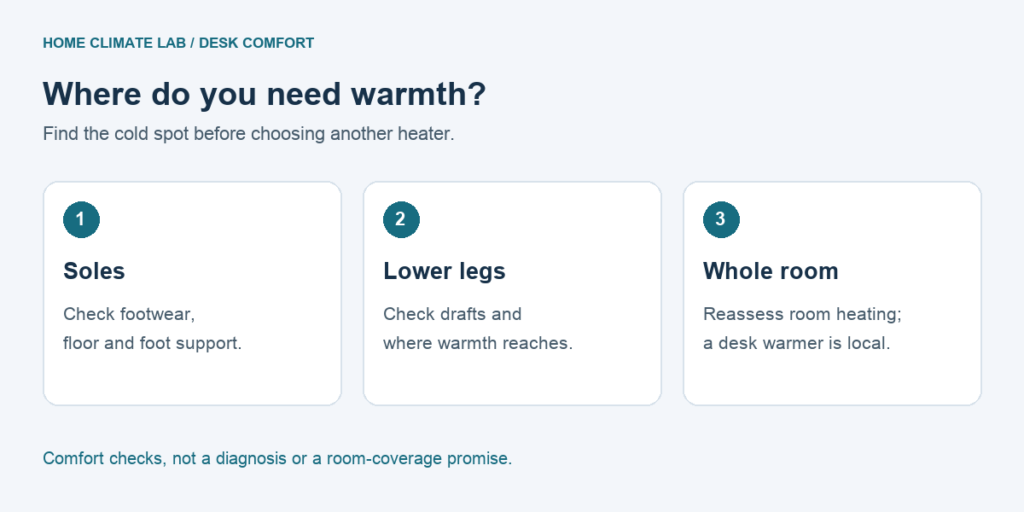
- Your soles feel cold against the floor: consider whether footwear or an unheated footrest changes your comfort before adding electricity. Keep any footrest stable and clear of the chair’s movement.
- A draft crosses your ankles: check for an open window, a door gap or a vent aimed at the desk. In a shared office, ask facilities about the airflow rather than covering a supply or return grille.
- The side facing a heater feels warmer: you may be receiving local radiant warmth without the all-around comfort you wanted.
- You are cold throughout the room: reassess the room conditions before buying a low-output desk accessory.
If you already have a heater, check its job before its setting
Identify the exact model and read its placement instructions. Check whether it is intended for a nearby personal zone or for room heating. A desktop-sized case does not by itself make a conventional space heater suitable for a cramped footwell.
In the original customer sample behind our Cozy Legs CL-2 review, one owner described warmer lower legs but not warmer feet. Another disliked warming only the facing side of the legs. These are individual experiences, not proof that every panel will perform the same way, but they illustrate a useful distinction: the body area receiving warmth matters as much as whether the heater gets hot.
Look for objects between the upright panel and your normal seated position, such as a desk support or a bag. Make changes only within the model’s permitted placement and clearances. Do not move your feet into contact with a hot panel to compensate for weak warmth. The CL-2 instructions require vertical use, cooling before moving and unobstructed heat release; laying it flat or wrapping a blanket over it is not an alternative setup.
Choose your next step around feet, legs or the room
For soles: a purpose-built heated foot mat or footrest may be the relevant category, but check whether it is intended for shoes, socks or bare feet and whether your flooring is permitted. Do not assume all products called foot warmers are interchangeable.
For shins and calves: an upright or folding panel may be more relevant. It still needs usable space around your chair and a position you can maintain. The original WhisperHeat DSK1300 review includes both satisfied desk users and reports of insufficient warmth or cold thighs.
For a generally cold room: address the room’s heating and drafts. A local warmer can add comfort but cannot promise a particular room temperature. Our panel-versus-foot-mat guide walks through the format choice; the personal-heater shortlist covers the two reviewed panel options.
Keep a failed comfort experiment from becoming a poor setup
Check workplace rules before plugging in a heater. For portable electric space heaters, CPSC guidance calls for a wall outlet rather than an extension cord or power strip, separation from combustible materials, and no unattended or sleeping use. If the required placement does not fit your desk, choose another solution instead of squeezing the heater into the available gap.
If your feet remain cold outside that desk setting, or you also notice pain, numbness or color changes, do not simply increase the heat. The NHS describes those symptoms in its Raynaud’s guidance and advises medical assessment for severe, worsening, one-sided or daily-life-affecting symptoms. This guide cannot determine their cause.
Make one practical change, then judge the area you actually wanted warmer. Comfortable shins are not a successful result if your original problem was cold soles. That distinction will tell you more than an advertised wattage or a warmer panel surface.