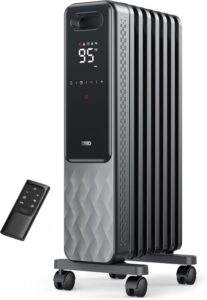
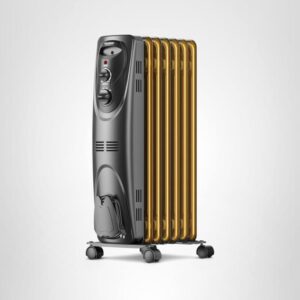
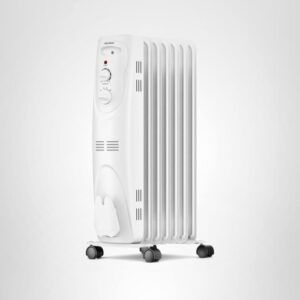
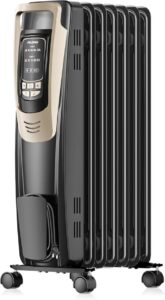
Pelonis vs DREO oil-filled radiator heaters usually comes down to whether you want simple, budget-friendly heat or more modern controls.
Both brands make quiet, fanless radiator heaters for bedrooms, offices, and drafty rooms. Pelonis tends to feel more traditional — manual knobs, lower prices, and straightforward operation. DREO usually leans more feature-heavy, with digital thermostats, remote controls, timers, and child-lock style convenience.
Here’s how they actually compare for daily indoor heating. Both brands appear in our best oil filled radiator heaters roundup.
Quick Verdict
| Feature | Pelonis Oil-Filled Radiators | DREO Oil-Filled Radiators |
|---|---|---|
| Best For | Simple, affordable, steady room heat | Digital controls, timer use, and convenience |
| Typical Price Range | About $80-$95 | About $100-$120 |
| Heat Output | Up to 1500 W / about 5118 BTU | Up to 1500 W / about 5118 BTU |
| Coverage Area | Usually around 230-255 sq ft | Usually around 250 sq ft |
| Key Strength | Lower price and easier manual operation | Better controls, remote, timer, and temperature range |
| Main Drawback | Fewer smart-style features | Costs more and may feel overbuilt if you only need basic heat |
Key Differences in Pelonis vs DREO Oil-Filled Radiator Heaters
1. Heating Performance: Both Are Slow, Steady, And Quiet
Pelonis and DREO are more similar than different when it comes to raw heat output. Most full-size models from both brands top out at 1500 watts, which is the normal limit for plug-in residential space heaters.
That said, the feel of the heat is slightly different. Pelonis models often feel like classic oil-filled radiators: slow, steady, and simple. DREO models usually add more control over temperature, modes, and timers, which can make the heat feel easier to manage in bedrooms and offices.
| Heating Metric | Pelonis | DREO | Winner |
|---|---|---|---|
| Max heat output | 1500 W | 1500 W | Tie |
| Heat-up feel | Gradual, classic radiator warmth | Gradual, but easier to fine-tune | DREO |
| Coverage | About 230-255 sq ft | About 250 sq ft | Tie |
| Heat retention | Strong residual warmth after shutoff | Strong residual warmth after shutoff | Tie |
In practice, neither brand is the right pick if you need instant heat in five minutes. For that, a ceramic fan heater usually feels faster. But for quiet, all-evening warmth, both do the job well.
It Depends:
Pelonis is better if you want basic steady heat. DREO is better if you want the same slow radiator warmth with more control.
For broader buying context, add an internal link to your best oil filled radiator heaters guide.
2. Controls And Features: DREO Feels More Modern
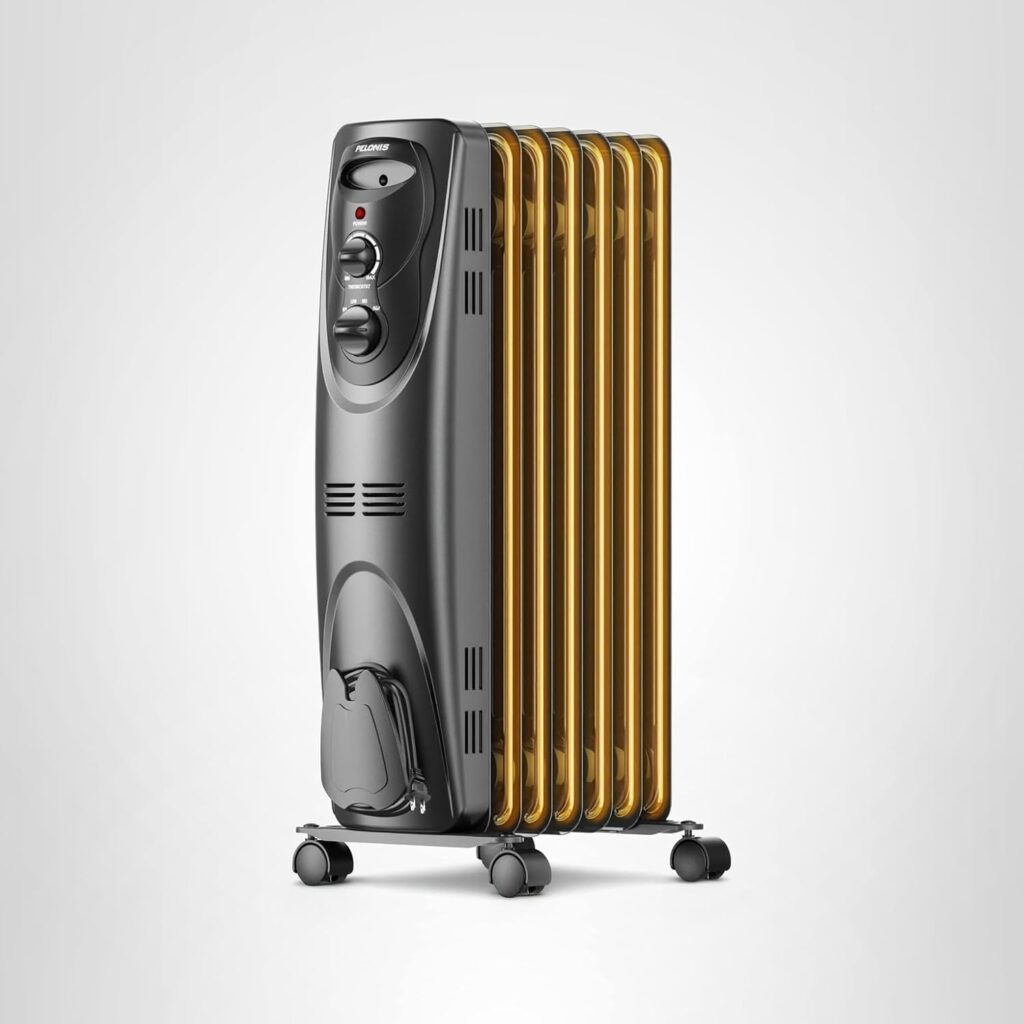
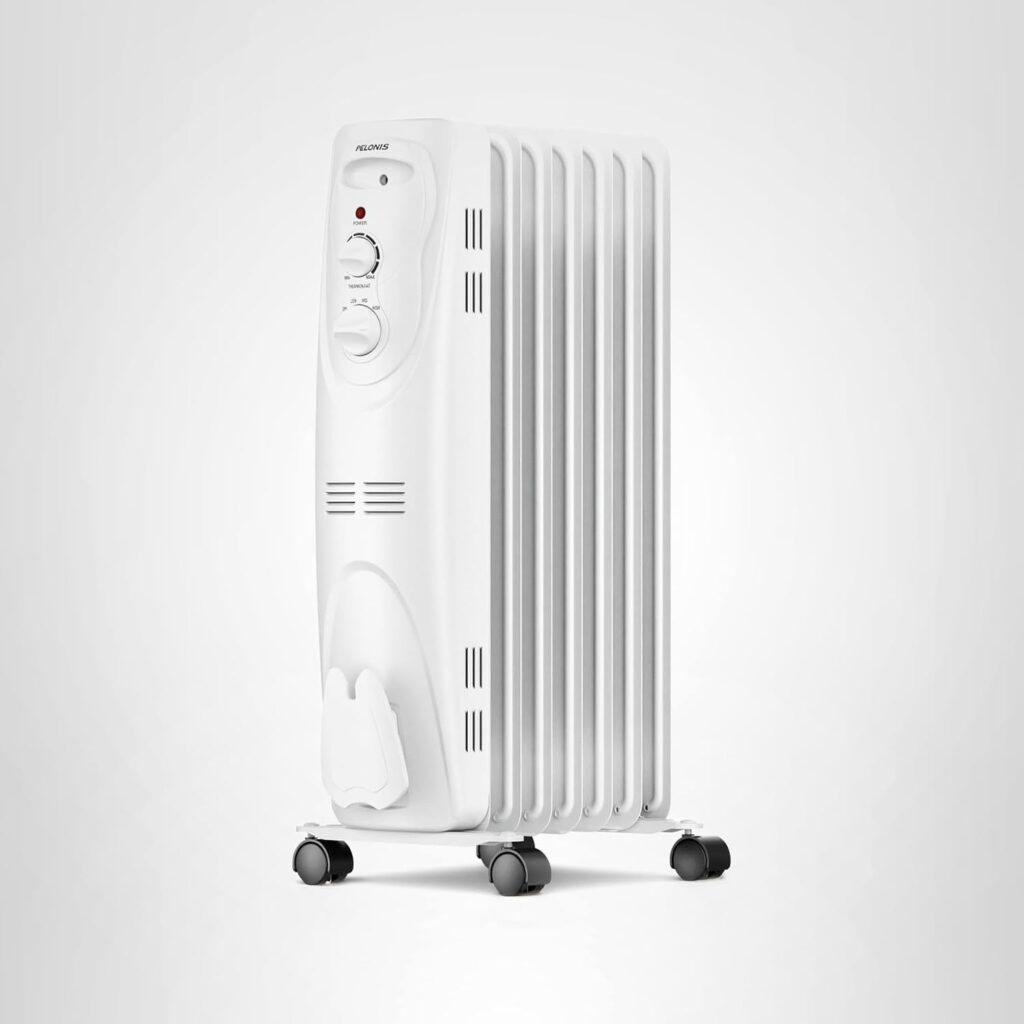
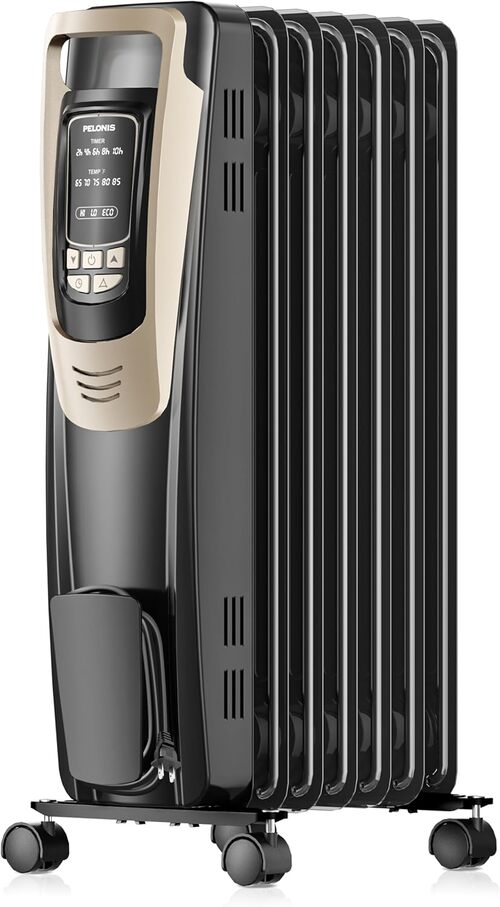
Here’s where the comparison gets clearer. Pelonis has both basic and digital-style radiator models, but the brand is strongest when you want something simple. Many Pelonis heaters use three heat settings, a thermostat dial, and safety shutoff features without making the controls complicated.
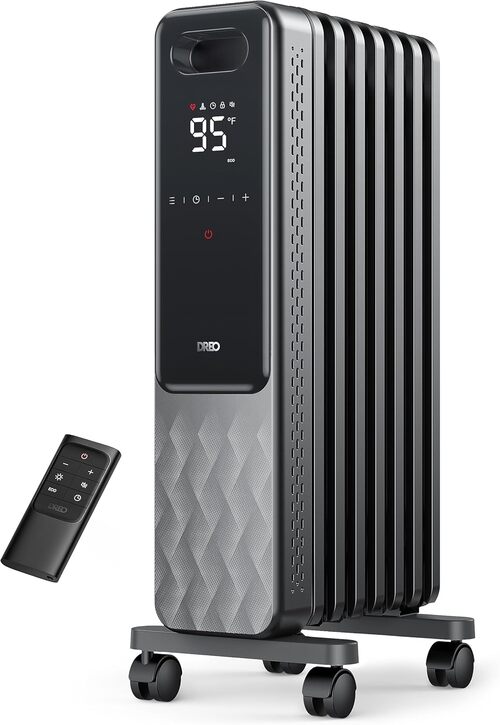
DREO, on the other hand, usually gives you a more modern experience. You’ll commonly see remote control, digital display, 24-hour timer, child lock, multiple modes, and a wider temperature range.
| Feature | Pelonis | DREO |
|---|---|---|
| Remote control | Available on some models | Common on digital models |
| Heat settings | Usually 3 | Usually 4 modes / multiple settings |
| Thermostat | Manual or digital, depending on model | Digital thermostat on many models |
| Timer | Available on digital models | Often 24-hour timer |
| Child lock | Not always included | Common on newer models |
| Ease of use | Best for simple set-and-forget use | Best if you like precise controls |
The catch is that more features aren’t always better. If this heater is for an older parent, guest room, or workshop, a manual Pelonis may actually be easier to live with. At the same time, DREO wins if you want to adjust the heater from bed or set a timer before sleeping.
Winner for Features: DREO
DREO gives you more control, especially if you care about remote use, timers, child lock, and digital temperature settings.
Both models meet essential space heater safety requirements.
3. Noise And Bedroom Use: Both Are Excellent
Since these are oil-filled radiators, neither Pelonis nor DREO uses a fan to blow air around the room. That means both are much quieter than ceramic tower heaters, forced-air heaters, and most oscillating space heaters.
You may hear small clicks as the thermostat cycles, and sometimes a faint expansion sound as the heater warms up. However, there’s no fan hum, no airflow rush, and no oscillation noise.
| Bedroom Factor | Pelonis | DREO |
|---|---|---|
| Fan noise | None | None |
| Thermostat clicks | Possible | Possible |
| Display lights | Minimal on manual models | Digital display may be visible |
| Remote from bed | Only on some models | Usually easier |
| Best bedroom fit | Light sleepers who hate screens | Users who want timer and remote control |
If you’re sensitive to light at night, a basic Pelonis with knobs may be less distracting. However, if you like setting a timer or changing temperature without getting up, DREO is more convenient.
Winner for Sleep:
Pelonis wins for simpler, darker bedrooms. DREO wins if remote control and timer settings matter more than a small digital display.
4. Price And Value: Pelonis Usually Costs Less
Pelonis is usually the better value if you’re comparing basic heat per dollar. You’re still getting 1500 watts, quiet operation, overheat protection, tip-over protection on many models, and a full-size radiator design.
DREO costs more because it adds convenience. In practice, you’re paying for the digital interface, remote, timer, wider temperature control, and a more modern user experience — not necessarily more heat.
| Value Factor | Pelonis | DREO | Better Pick |
|---|---|---|---|
| Lower upfront price | Usually yes | Usually no | Pelonis |
| Best feature-per-dollar | Good | Very good | DREO |
| Best for basic heating | Excellent | Good, but more expensive | Pelonis |
| Best for daily convenience | Good | Excellent | DREO |
Running costs are almost identical when both heaters run on high. A 1500W heater uses 1.5 kWh per hour, no matter which logo is on the front.
| Usage Pattern | Pelonis 1500W | DREO 1500W | Difference |
|---|---|---|---|
| 4 hours/day | ~$0.96/day | ~$0.96/day | No meaningful difference |
| 8 hours/day | ~$1.92/day | ~$1.92/day | No meaningful difference |
| Monthly at 8 hours/day | ~$57.60 | ~$57.60 | No meaningful difference |
Estimated at $0.16/kWh. Your actual cost depends on your local electricity rate and how often the heater cycles off.
Winner for Budget Value: Pelonis
If you mainly want quiet heat and don’t need digital extras, Pelonis gives you more value for the money.
For general heater sizing and cost planning, link naturally to your space heater buying guide.
Which Should You Buy?
| Your Priority | Best Choice | Why |
|---|---|---|
| Lowest price | Pelonis | Usually costs less while still offering 1500W heat |
| Remote control and timer | DREO | More modern controls and easier bedside use |
| Simple controls for guests or older users | Pelonis | Manual models are easier to understand |
| Bedroom heating | Either | Both are quiet and fanless |
| Best overall comfort control | DREO | Digital thermostat and modes give you more precision |
| Workshop or spare room use | Pelonis | Simple, reliable, and less expensive |
Choose Pelonis if you want quiet, steady heat without paying extra for features you may not use. It’s the better fit for simple rooms, guest bedrooms, drafty corners, and people who prefer knobs over screens.
Choose DREO if you want the heater to feel more modern. The remote, timer, digital thermostat, and child-lock style features make it better for everyday bedroom or office use, especially if you’ll adjust settings often.
Pelonis vs DREO oil-filled radiator heaters is mostly a value-versus-convenience decision. Pelonis wins for basic heat. DREO wins for control.
For more bedroom-specific options, see our best oil heaters for bedroom guide.