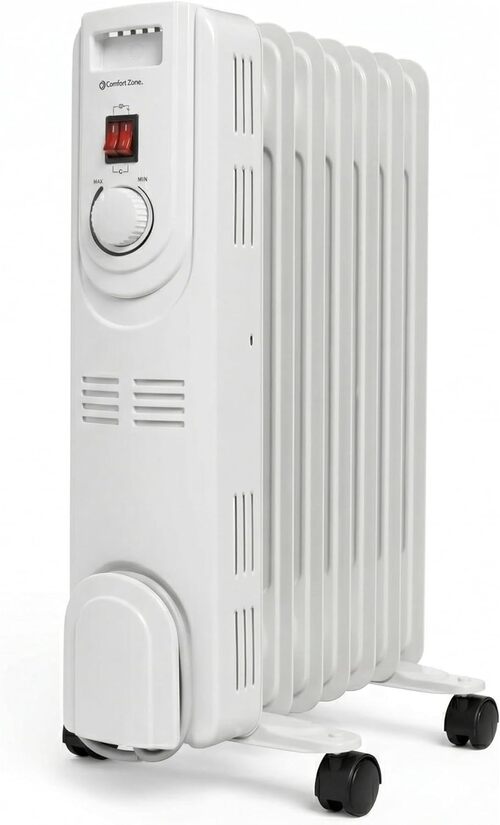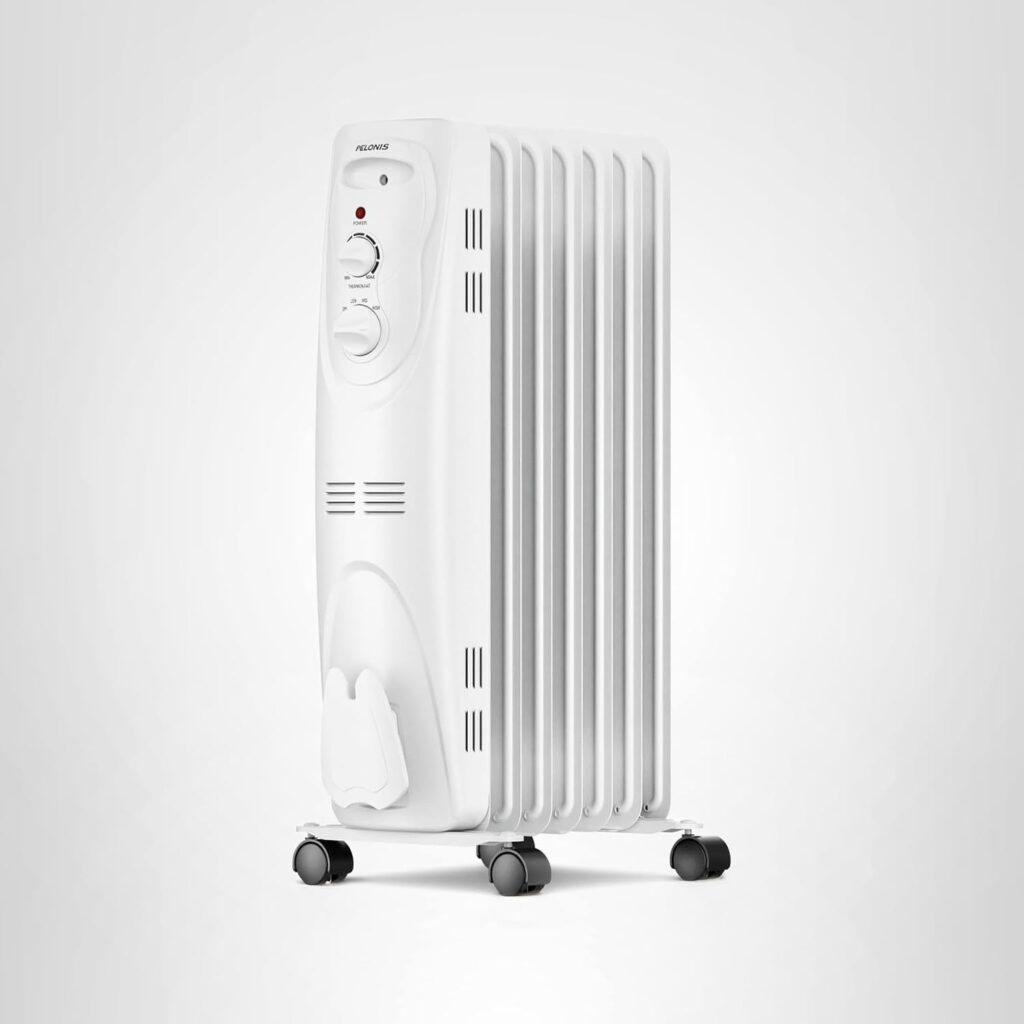
Finding the best oil heater for bedroom use means choosing steady, quiet warmth over instant blasts of hot air.
Maybe your bedroom gets cold after midnight, your guest room never feels comfortable, or one drafty corner makes the whole space feel worse than it should. A fan heater can warm you quickly, but it often adds noise, dry airflow, and temperature swings.
This guide breaks down oil-filled radiator heaters that make sense for bedrooms, based on quiet operation, practical controls, safety features, room size fit, and everyday value.
How We Chose These Heaters
We focused on bedroom-friendly oil heaters that run quietly, hold steady warmth, and make sense for real sleeping spaces. All picks meet essential space heater safety tips for overnight use. Since most plug-in oil-filled heaters top out around 1500W, we looked beyond wattage and considered room size, controls, portability, safety features, and whether each model fills a different role.
That said, we avoided picks that overlap too much, because a useful buying guide needs clear choices — not six versions of the same heater.
At-a-Glance Comparison
| Heater | Type | Power | Best For | Control Style |
|---|---|---|---|---|
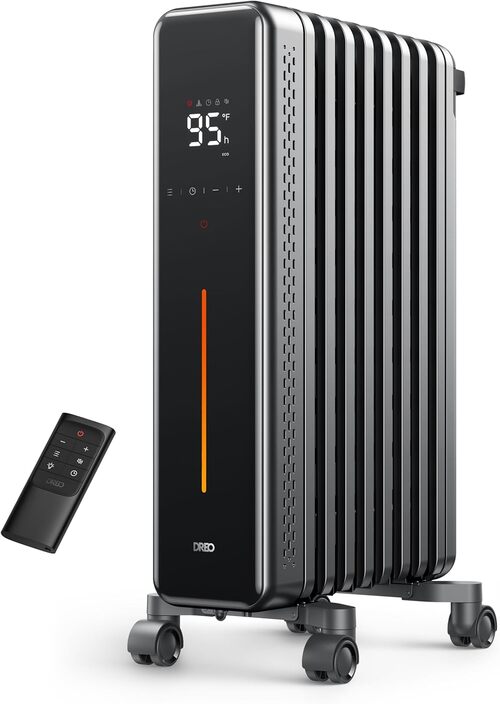
| DREO DR-HSH011 | Oil-filled radiator | 1500W | Most bedrooms | Digital / remote |
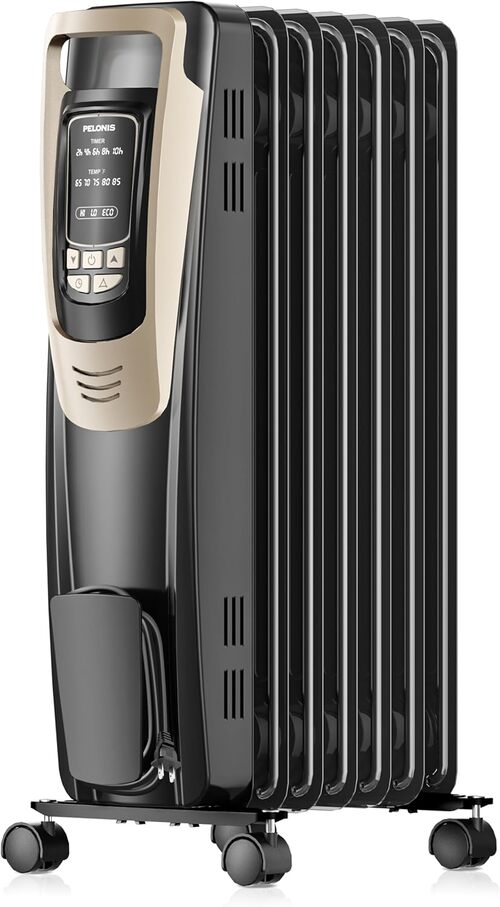
| PELONIS PH-14A | Oil-filled radiator | 1500W | Drafty small bedrooms | Manual or basic controls |
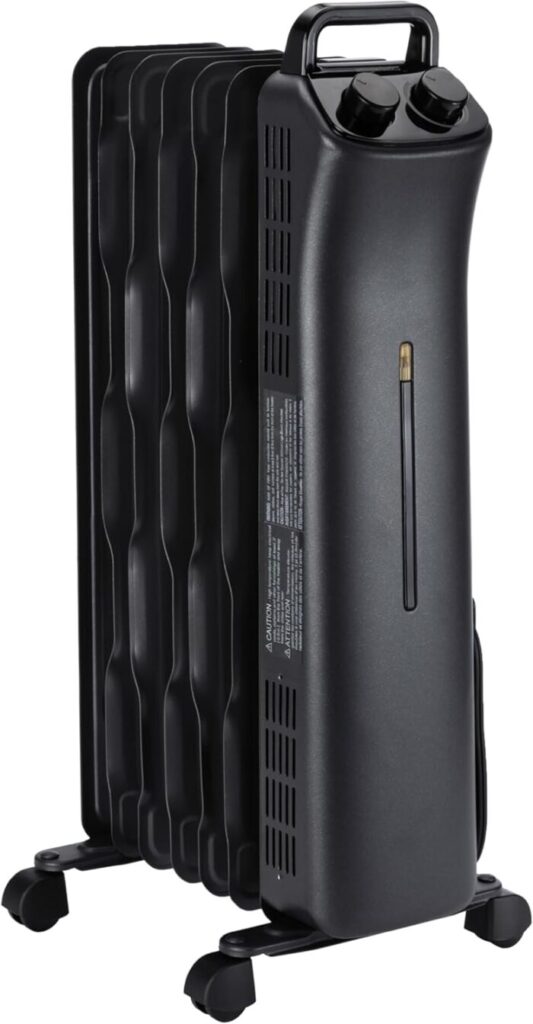
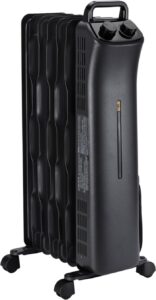
| Amazon Basics Oil Space Heater | 7-fin oil radiator | 1500W | Budget bedroom heat | Manual |
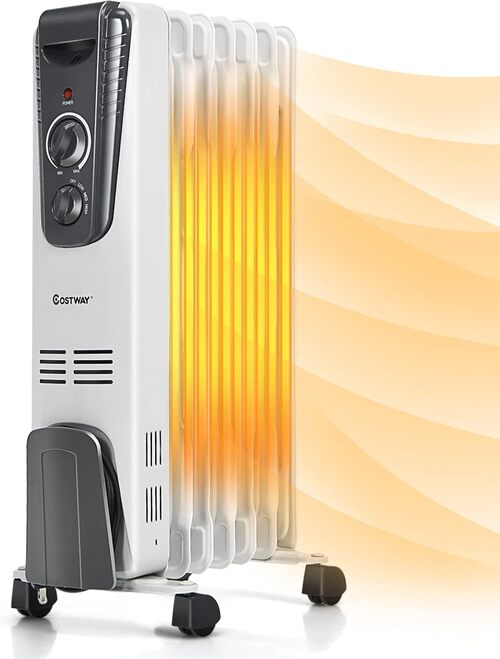
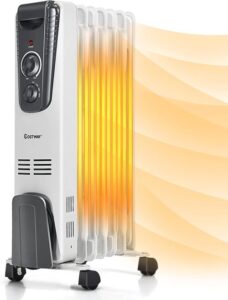
| COSTWAY Oil Filled Radiator | Oil-filled radiator | 1500W | Daily room use | Manual / simple |
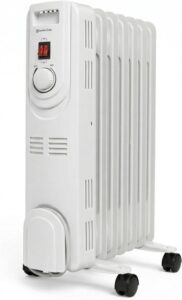
| Comfort Zone CZ7007J | Compact oil radiator | 1200W | Small bedrooms | Manual |
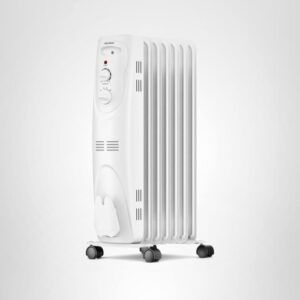
| PELONIS Oil Filled Radiator | Oil-filled radiator | 1500W | Simple set-and-hold warmth | Simple controls |
How to Choose the Best Oil Heater for Bedroom Use
When you’re choosing the best oil heater for bedroom comfort, start with the room — not the heater. A small, well-insulated bedroom needs less help than a corner room with two exterior walls and old windows.
Here’s a simple way to think about sizing:
| Bedroom Size | Recommended Power | Best Fit | What to Expect |
|---|---|---|---|
| Up to 100 sq ft | 700-1200W | Compact oil heater | Good steady warmth |
| 100-180 sq ft | 1200-1500W | Standard oil-filled radiator | Comfortable if insulated |
| 180-250 sq ft | 1500W | Full-size radiator | Works best as supplemental heat |
| 250+ sq ft | 1500W plus help | Radiator + better insulation | May struggle in cold weather |
For spaces larger than typical bedrooms, see our guide on how to warm a large room efficiently with the right heating strategy.
The catch is that oil heaters are slow by design. They warm the oil first, then the metal fins, then the air around them. So, in practice, they’re best when you turn them on before the room feels freezing.
Bedroom Tip: For the most comfortable results, start an oil-filled heater 30-60 minutes before bedtime, then lower the setting once the room feels warm. Oil heaters are better at maintaining warmth than creating instant heat.
Oil-Filled vs Fan Heaters for Bedrooms
Oil-filled heaters are popular in bedrooms because they’re quiet. There’s no fan blowing air across the room, no constant whoosh, and usually no harsh hot-air blast near your face.
At the same time, they’re slower than ceramic heaters. If you walk into a freezing bedroom and want heat in two minutes, a fan heater wins. But if you want calm, steady warmth while sleeping, reading, or working, an oil-filled radiator usually feels better.
| Heater Type | Heat-Up Speed | Noise Level | Bedroom Fit |
|---|---|---|---|
| Oil-filled radiator | Slow | Silent or near-silent | Best for steady overnight-style warmth |
| Ceramic fan heater | Fast | Low to moderate fan noise | Good for quick warm-up |
| Infrared heater | Fast direct warmth | Usually quiet | Better for spot heating than whole-room comfort |
That’s why this roundup sticks to oil-filled models. For a bedroom oil heater, the goal isn’t dramatic airflow — it’s quiet, consistent comfort.
Safety Features You Shouldn’t Skip
A bedroom heater needs to be boring in the best possible way. It should sit flat, shut itself off if something goes wrong, and never need sketchy cord setups.
Important: Never plug a 1500W oil heater into an extension cord or power strip. Use a wall outlet only, keep the heater away from bedding and curtains, and leave clear space around the unit.
Essential Safety Checklist
- Tip-over automatic shutoff
- Overheat protection
- Stable base or caster design
- ETL, UL, or similar safety certification
- Timer or thermostat for better control
Also, don’t place an oil heater right next to your bed. Even when the design feels safer than an exposed-element heater, the surface can still get hot. For more general rules, see space heater safety tips.
Running Costs: What’s Realistic?
Most full-size oil-filled bedroom heaters use up to 1500W on high. That doesn’t mean they pull full power every second, especially if the thermostat cycles on and off, but it’s a useful way to estimate cost.
The table below uses a sample electricity rate of $0.16 per kWh. Replace that with your local rate for a more accurate number.
| Usage Pattern | Energy Used | Estimated Cost | Best Use |
|---|---|---|---|
| 2 hours/night | 3 kWh | ~$0.48/night | Preheating before bed |
| 4 hours/night | 6 kWh | ~$0.96/night | Evening bedroom use |
| 8 hours/night | 12 kWh | ~$1.92/night | Long overnight use |
| 8 hours/day for 30 days | 360 kWh | ~$57.60/month | Heavy seasonal use |
On the flip side, a bedroom oil heater can save money if you use it for zone heating. For example, you might lower the whole-home thermostat and only warm the bedroom you’re actually using. For bigger heating strategy questions, see how to heat a large room efficiently.
Manual vs Digital Controls
Simple manual heaters are cheaper and easier to understand. Digital heaters usually give you better control, especially if you want a timer, remote, child lock, or more exact temperature setting.
| Control Type | Best For | Downside |
|---|---|---|
| Manual knobs | Simple operation, lower price | Less precise temperature control |
| Digital controls | Timers, exact settings, remote use | Usually costs more |
| Remote control | Adjusting from bed | Easy to lose |
If you’re buying for a guest room or occasional use, manual controls are fine. However, for your own bedroom, digital controls can be worth it because small temperature changes matter more when you’re trying to sleep.
For broader product comparisons, check best space heaters comparison guide.