PELONIS Oil Filled Radiator Heater Review — Quiet, Steady Heat You Can Live With
At a Glance
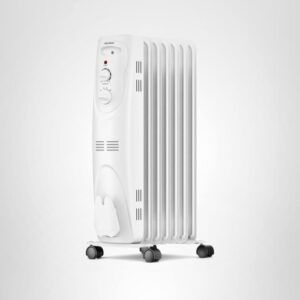
KEY FEATURES
- Oil-filled radiator design for steady, long-lasting warmth
- 3 heat levels up to 1500 W
- Adjustable mechanical thermostat
- Quiet operation with no fan
- Overheat and tip-over safety protection
- Easy-roll caster wheels for room-to-room movement
PROS
- Nearly silent; steady radiant warmth
- Efficient on low (600W); heat lingers after cycling
- Simple manual dials; resumes after power outage
- Easy setup (attach wheels); slim/compact footprint
- Safety features praised (tip-over/overheat); no exposed element
CONS
- Slow to heat compared to fan heaters
- “Large space” performance varies; may need 2 units for big/open rooms
- Thermostat knob can feel finicky/not truly temperature-based
- No digital display/timer/remote/smart controls (manual model)
- Initial burn-off odor + hot fins; handle/cord-wrap design complaints
Editor's Choice
Based on rigorous testing & Amazon customer feedback
🔥 Will This Heater Work For Your Room?
Answer a few quick questions about your space to see if this heater is a good match.
If you’re searching for a PELONIS oil filled radiator heater review, you’re probably after the same thing most people want in winter — steady warmth that doesn’t feel like a hair dryer pointed at your ankles. This PELONIS oil-filled radiator (often sold as PHO15A2AGW, but you’ll rarely see anyone call it that in real life) is very much the “quiet comfort” type. It’s built for slow, even heating you can live with for hours, not quick blasts you constantly babysit.
Below is the real user experience: what it’s like to unbox, place, run day to day, and rely on once the room starts getting that familiar winter chill.
We included this in our bedroom oil heater guide.
First impressions: simple, solid, and not fussy
Oil-filled radiators aren’t trying to be cute, and this one doesn’t pretend otherwise. The vibe is practical: a sturdy body, a footprint you’ll notice (like most radiators), and a presence that says “park me near a wall and let me do my thing.”
It feels like the kind of heater you buy once, then keep dragging from room to room for years. Not glamorous — just reassuring.
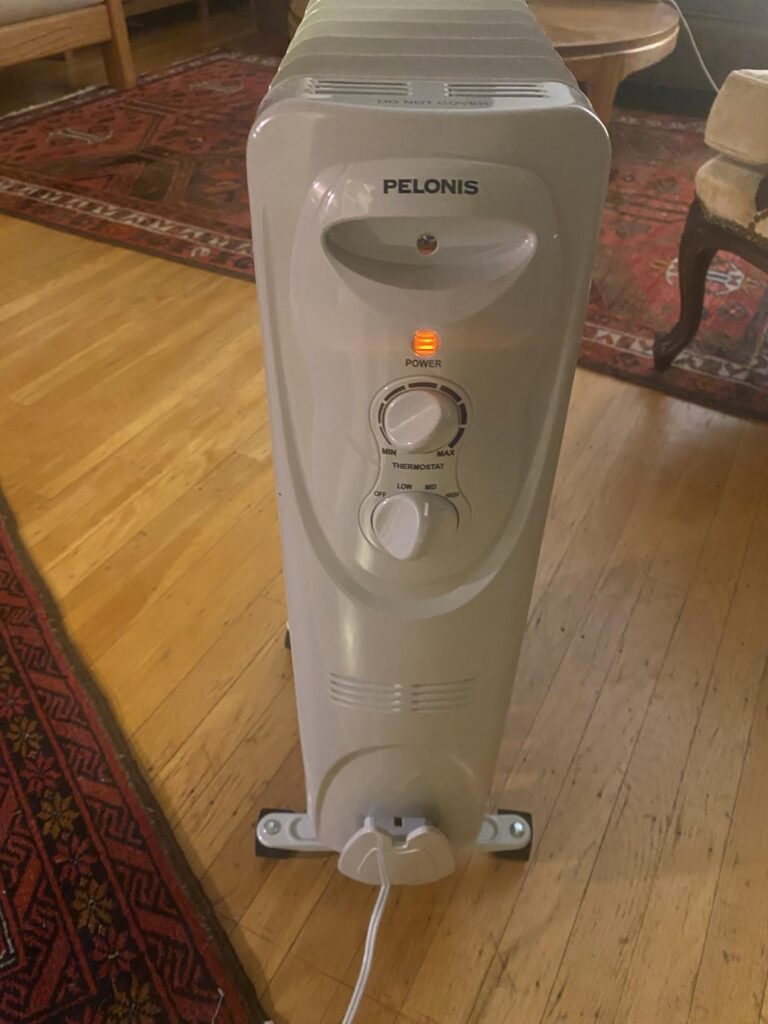
PELONIS oil filled radiator heater review: what the heat feels like
The biggest difference versus a fan heater is the texture of the warmth.
With an oil-filled radiator, the room doesn’t spike hot and then cool off five minutes later. Instead, it eases into comfort. You feel it most when you stop thinking about it — the chill fades, the air feels less sharp, and you’re not getting that blown-air “dryness” some people can’t stand.
A few real-life notes from daily use:
- Warm-up is gradual. You won’t get instant gratification. If you walk in freezing and want heat right now, this style can feel patient to a fault.
- Once it’s going, it’s steady. It’s the “keep the bedroom comfortable all evening” kind of heat.
- It’s nicer for long sessions. Reading, working, gaming, sleeping — situations where you want stable background warmth, not constant whooshing airflow.
If you’ve ever turned off a fan heater because the airflow got annoying, this is basically the opposite experience.
Noise: basically the point of owning this style
A big reason people switch to an oil-filled radiator is noise — and in normal use, this PELONIS stays pleasantly low-drama. No roaring fan, no wind-tunnel sound, no feeling like your heater is “performing” in the corner.
You may still notice small, occasional noises as the unit heats and cools (sometimes a light click or soft ping), but it’s the kind of thing that fades into the background fast. For bedrooms and home offices, that’s a genuine quality-of-life upgrade.
Living with the controls: “set it and let it run”
This isn’t a smart-heater experience, and honestly, that’s part of the appeal. Day to day it’s old-school: you pick a heat level, dial in comfort, and let it coast.
What matters is how it behaves when you’re not actively managing it:
- It’s easy to get to “good enough” comfort without constant tweaking.
- It works best when you treat it like a gentle room warmer, not something you flip on and off every ten minutes.
- In a bedroom or office, it’s the kind of heater you can run while you focus on literally anything else.
If you want scheduling, app control, or a temperature number on a display, you’ll probably prefer a different category. But if you want straightforward and predictable, the simplicity is the feature.
The newer PELONIS PH-14A adds more features.
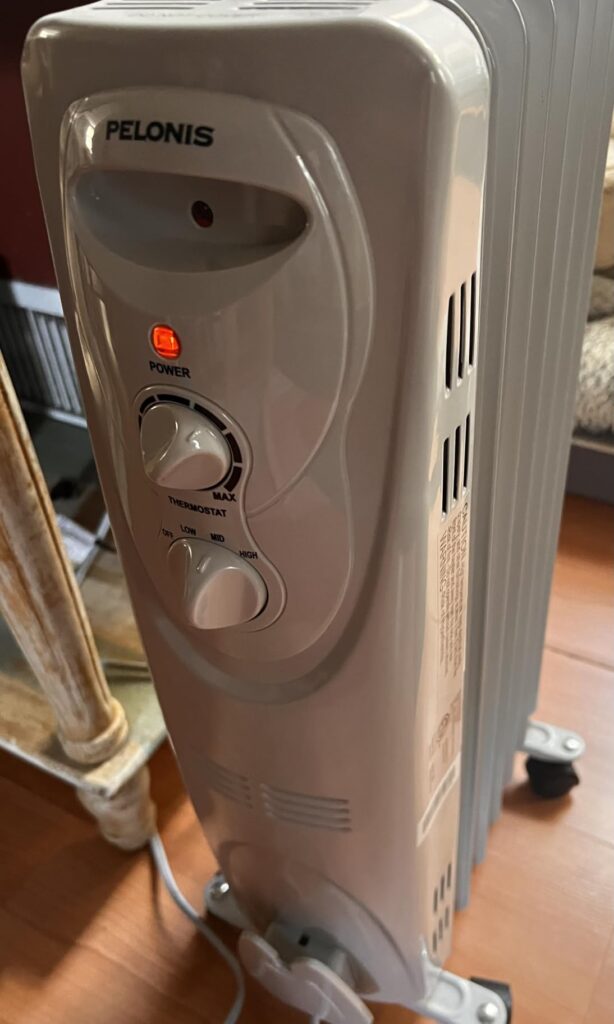
Comfort across the room: less “hot spot,” more “overall warmth”
Oil-filled radiators tend to create fewer annoying hot spots than compact fan heaters. With this PELONIS, you’ll still want to think about placement (more on that below), but the warmth spreads in a calmer, more natural way over time.
It’s especially noticeable in rooms where fan heat always seemed to collect in one corner or make the air feel restless. Here, the room gets comfortable in a quieter way — like the temperature is evening out instead of being shoved around.
Moving it around: practical, but you’ll still plan your spots
Most people don’t buy this style expecting true grab-and-go portability. In real life, it’s movable — just not in the “one hand while holding coffee” sense.
If you rotate between an office in the morning and a bedroom at night, it fits that rhythm nicely. If you want something you’ll carry up and down stairs constantly, a smaller heater will feel like less of a commitment.
Placement and day-to-day safety habits
Oil-filled radiators are popular for good reasons: they’re stable, quiet, and designed for longer run times. Still, basic space-heater common sense applies.
A solid quick refresher from the U.S. Fire Administration includes: keep anything that can burn at least 3 feet away, plug heaters directly into a wall outlet (not an extension cord/power strip), and turn heaters off when you go to bed or leave the room.
In practical terms, that means:
- Give it breathing room (not wedged into clutter).
- Keep fabrics and furniture at a safe distance.
- Avoid extension cords and power strips for high-wattage heaters.
Check our heater safety guide before overnight use.
Where it fits best: bedrooms, offices, and “always-chilly” rooms
This heater makes the most sense when your goal is comfort over time. Think:
- a bedroom that gets cold at night
- a home office where you don’t want fan noise on calls
- a drafty corner room that never feels “done” in winter
If your goal is fast spot-heating (warming hands for five minutes, quickly heating a bathroom, or blasting heat the moment you walk in), this category can feel slower than you’d like.
Read our Pelonis vs Dreo analysis for more details.
Pros & Cons Analysis
Based on extensive testing and Amazon customer feedback
Pros
- Quiet operation (often described as nearly silent; only an occasional thermostat “click”)
- Steady, comfortable radiant heat that “lingers” even after it cycles off (oil retains heat)
- Energy-efficient for many users, especially on low (≈600W); several mention lower electric bills vs fan/forced-air heaters and reduced propane use in RVs
- Heats many real-world spaces well (bedrooms, bathrooms, offices, kitchens/living areas, drafty rooms, garages, RVs) — especially when the door is closed / space is insulated
- Simple manual controls (dual knobs, no “fancy gadgets”), easy to understand and adjust
- Power-outage friendly: manual dials mean it resumes heating when power returns (unlike some digital units)
- Safety features praised: many like oil-filled design (no exposed glowing element) and several specifically say tip-over shutoff works; also appreciated overheat protection
- Easy setup (mostly “attach wheels/casters and go”)
- Portable / convenient: wheels make room-to-room moves easy for many; compact/slim footprint and “nice looking” design
- Better for air comfort for some (no blowing dust; less “dry” feeling than fan heaters)
Cons
- Slow warm-up is common (not “instant heat”); takes time to know if it’s enough for your space
- “Large space” expectations vary: some report only a modest temp increase in big/open rooms (often ~a few degrees) unless you use multiple units or improve circulation (fans)
- Thermostat behavior can be frustrating: several say the knob isn’t a true temperature setting and can feel finicky / inconsistent as outdoor temps change
- No modern features on this manual version (no digital display, timer, remote, app/smart controls) — a downside for some
- Initial odor / outgassing: many note a burn-off smell at first (some say it fades; a few say it’s strong/persistent)
- Hot surface / burn risk: fins get hot; some want a protective guard / encasement, especially for kids/elderly
- Handle / ergonomics complaints: multiple mention the handle is too small / awkward, making it hard to move safely while warm; cord-wrap design also annoys some
- Mobility limits: casters can be “cranky” on thick carpet; some find it heavy (others find it relatively light for the type)
- Quality control / shipping issues: reports of dents / bent fins, missing wheels, and at least one report of a switch “glitch”
- Reliability & safety concerns in a minority of reviews: a few mention early failure, worry about leaks, or a serious report of sparks at the plug — also frequent reminders that old/loose outlets can be a hazard with any 1500W heater
Our Verdict
This PELONIS oil filled radiator heater review comes down to a simple idea: it’s built for livable warmth. It’s quiet, steady, and comfortable once it gets rolling — the kind of heater you can run while you work, relax, or sleep without feeling like the room is fighting you.
If you like heaters that disappear into the background and keep the chill away without noise or gusts of air, this one plays that role well.
Frequently Asked Questions
How long does an oil-filled radiator take to heat a room?
Oil radiators warm gradually — expect a slower start than ceramic heaters, but more stable comfort over time. Most users report feeling warmth within 15-30 minutes.
Is the PELONIS PHO15A2AGW safe to leave on overnight?
It includes safety shutoffs for tip-over and overheat protection, but always follow manufacturer guidance and keep clear space around the heater.
Does it dry out the air?
Oil-filled radiators typically feel less drying than forced-air heaters because there's no fan blowing hot air around.
How much electricity does this heater use?
It has 3 settings: 600W (low), 900W (medium), and 1500W (high). Running on low is very economical for maintaining comfort.
Can I use this in a large room?
It's rated for up to 230 sq ft. It works best in small to medium rooms. For large spaces, you might need multiple units or a different heater type.
Technical Specifications
| Brand | PELONIS |
|---|---|
| Model / SKU | PHO15A2AGW |
| Heater type | Portable indoor electric space heater |
| Form factor | Oil-filled radiator / tower-style radiator |
| Heating method | Radiant heat / oil-filled convection |
| Heating element | Oil-filled radiant heating element |
| Max heat output | 1500 W |
| Voltage | 120 V |
| Amperage | 12.5 A |
| Coverage (manufacturer claim) | Listed as 161–45 sq ft (manufacturer data appears inconsistent) |
| Temperature range | 41°F to 95°F |
| Speeds / levels | 3 heat settings: 600 W, 900 W, 1500 W |
| Noise level | Fanless / whisper-quiet operation (claimed) |
| Oscillation | No |
| Controls | Dual knob controls |
| Timer | Not specified |
| Power source | Corded electric |
| Mounting / placement | Floor mount / free standing |
| Dimensions (D × W × H) | 11" × 14.2" × 26.1" |
| Weight | 7.6 kg / 16.8 lb |
| Color | White |
| Special features | Portable design, Wheels, Front carrying handle, Tip-over protection, Overheat protection, Power indicator light, Flame-resistant plastic parts |
| Safety certification | Not specified |
| Included in the box | PELONIS radiator heater, User manual |
| Warranty | Not specified |
| Recommended room types / uses | Bedroom, home office, study room, garage, greenhouse, home, office |
COSTWAY Oil Filled Radiator Heater Review: Quiet, Steady Heat for the Rooms You Actually Use
This COSTWAY 22611-CYPE review looks at whether this 1500W oil-filled radiator is a smart fix for cold bedrooms, offices, bathrooms,…
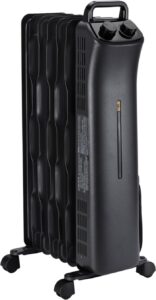
Amazon Basics Oil Space Heater – 7-Fin Portable Radiator with Thermostat, 1500W
Product Overview The Amazon Basics Oil Space Heater delivers steady radiant warmth for small to medium-sized rooms. With 7 oil-filled…
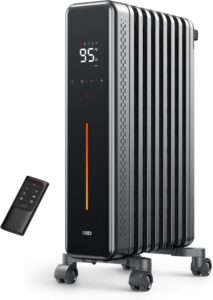
DREO DR-HSH011 Radiator Heater Review: Quiet, Steady Heat for Cold Bedrooms and Offices
This DREO DR-HSH011 review explores whether this portable 1500W oil-filled radiator is the perfect solution for cold rooms in your…
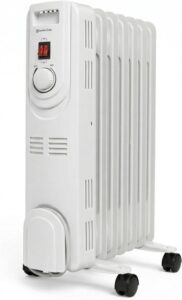
Comfort Zone CZ7007J Review: Quiet, Steady Warmth for Small Rooms
This Comfort Zone CZ7007J review looks at whether this compact 1200W oil-filled radiator heater is a smart choice for small…


